Why the FX market gives delayed reaction to some news
Sometimes important announcements produce significant and instantaneous reactions in currencies. Be they about data, policy – central bank sackings. But sometimes they...
In many analysts’ opinions, if artificial intelligence (AI) is the gift that keeps on giving for US productivity it won’t be the gift that keeps on giving for the US...
The theory and historical precedent show that countries that raise tariffs will see their currency rise. But the US dollar has fallen.
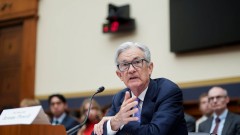
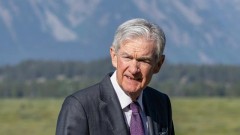
At Jackson Hole, Fed Chair Powell signaled a possible interest rate cut at the U.S. central bank's meeting next month.
According to many analysts, the gold price is unlikely to rise sharply next week after the Jackson Hole Symposium because investors remain cautious.
The US tariffs’ impact on eurozone growth could be bigger than the models might suggest that inflation will be lower, and that the ECB will be pushed into at least one...
G10 currency volatility remains at very low levels but many analysts expect volatility to pick up as we go through the rest of the year.
There are some discussions about whether tariffs are harmful for US productivity.
What if global asset prices go into a meltdown as we saw in the wake of President Trump’s ‘liberation day’ announcement in early April?
We see three reasons why the US dollar could slide in coming weeks and months. The slide could push euro/dollar into a 1.20-1.25 range and drag dollar/yen down to the...
Even if some of the uncertainty related to the US’s erratic tariff policy starts to ease off, there are still the economic impacts of tariffs to consider and, these are...
Borrowers and investors can choose to borrow (or invest) in non-domestic currencies and, if they do, they usually choose the US dollar. But there is a good case for both...
The fact that the surge in tariff-generated risk aversion this year saw the US dollar and treasury bond prices fall, not rise as they usually do when risk aversion...
The tariff-related vulnerability of the US dollar switches to a vulnerability borne of Federal Reserve policy. As a result, the US dollar could fall with euro/US dollar...
The IMF has just released its annual External Sector Report (ESR). Included in this is an assessment of how far currencies lie from levels that are consistent with...
The US has introduced punitive tariffs this year and the US dollar has fallen. This is not how it’s supposed to be. Theory and historical experience suggest that the...
It seems that “crunch time” on US tariffs has been reached on a number of occasions already.
Experts have called for technology-driven farming, large-scale cultivation, and deep processing to unlock the industry's full potential.
Many economists and financial markets are banking on only a modest and temporary lift to US inflation from tariffs.
From controlling planting areas and product quality to organising domestic and international consumption, the cooperative model is becoming an important “link” that...
With longer-term bond yields rising, in spite of widespread policy easing, there seems to be more reason to think that neutral rates are still rising.
The pound remains under modest pressure on a trade-weighted basis after marking out a recent high back in late May. The Standard Bank lowered its expectations for...