Power of private economy unlocked
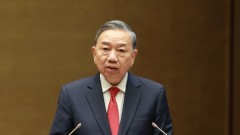
According to a recent report compiling assessments from the business community by the Viet Nam Chamber of Commerce and Industry (VCCI), Politburo’s Resolution...
After one year of implementing Politburo Resolution No. 57-NQ/TW on making breakthroughs in the development of science, technology, innovation and national digital...
In 2025, the agricultural sector faced numerous disruptions, ranging from extreme weather events and consecutive floods to uncertainty in global markets and...
Resolution 68/NQ-TW of the Politburo places private enterprises at the center of Vietnam’s transition to a green, circular, and sustainable economy, fully aligned with...
It is essential to accelerate the restructuring of the Vietnam energy sector to gradually establish a healthy competitive energy market while ensuring political and...
Vietnam is a country shaped like an “S,” with a coastline stretching 3,440 kilometers and a unique geographic position in the East Sea and Southeast Asia. Yet because it...
With trade turnover nearing the US$900-billion mark, Vietnam enters 2026 with renewed confidence despite global volatility, rising trade barriers and shifting supply...
Solar energy is emerging as a leading trend in the renewable energy sector, particularly as technological costs fall sharply and the global shift towards renewables...
The Vietnam Impact Investment Forum 2025 took place in Hanoi on December 10, bringing together over 150 investors, social impact businesses (SIBs), support...
Viet Nam holds significant advantages in marine aquaculture, yet this economic sector has so far developed below its potential. One of the key reasons for this situation...
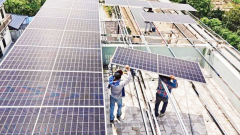
Rooftop solar in industrial zones has the foundations to become a new driver of Hanoi’s energy transition.
The green transition is no longer a choice but has become a top strategic priority for businesses, especially as Viet Nam committed to achieving net-zero emissions by...
From a system that once operated primarily on imported equipment, Viet Nam’s electricity sector is now entering a period of strong growth, striving to master core...
As major cities in Vietnam undergo rapid transformation, urban agriculture can expand green spaces, improve the ecological environment and support sustainable living.
In the context of rising electricity demands, the development of rooftop solar power is becoming one of the most effective solutions, helping households and businesses...
With the geographical advantage of being the “core nucleus” of the southern key economic region, Ho Chi Minh City holds numerous opportunities as well as major...
The International Financial Centre (IFC), built under the model of “one centre, two destinations,” is considered a breakthrough institutional step to raise global...
In recent times, amid global economic uncertainties, the domestic market has served as a vital pillar, providing a solid foundation for Viet Nam’s economic development....
To achieve the target of two million enterprises by 2030, experts emphasise the need to build a truly favourable, transparent, and trustworthy business environment — one...
The implementation of environmental, social and corporate governance (ESG) standards is becoming an increasingly mandatory requirement for Vietnamese enterprises in the...
It is crucial for Vietnam to drive economic growth from the economy’s internal strengths alongside foreign investment, notably in a world defined by volatility.
The government wants faster, simpler social housing development with online registration, better access to capital and strong oversight to meet Vietnam’s goal of one...