VN
VN
 EN
EN
22/07/2026, 11:00
Business economics
Urgently remove bottlenecks for stalled projects
A large number of real estate companies have urged Ho Chi Minh City to promptly remove legal bottlenecks, improve administrative procedures and land valuation processes in order to revive projects that have been stalled for many years.
At a conference held on 13 May by the Ho Chi Minh City Real Estate Association (HoREA) to implement Directive 45/CT-UBND dated 5 May 2026 issued by the Ho Chi Minh City People’s Committee, the issue most frequently raised by businesses was the prolonged backlog of administrative dossiers, which has prevented projects from moving forward, weakened cash flows and undermined investment motivation.
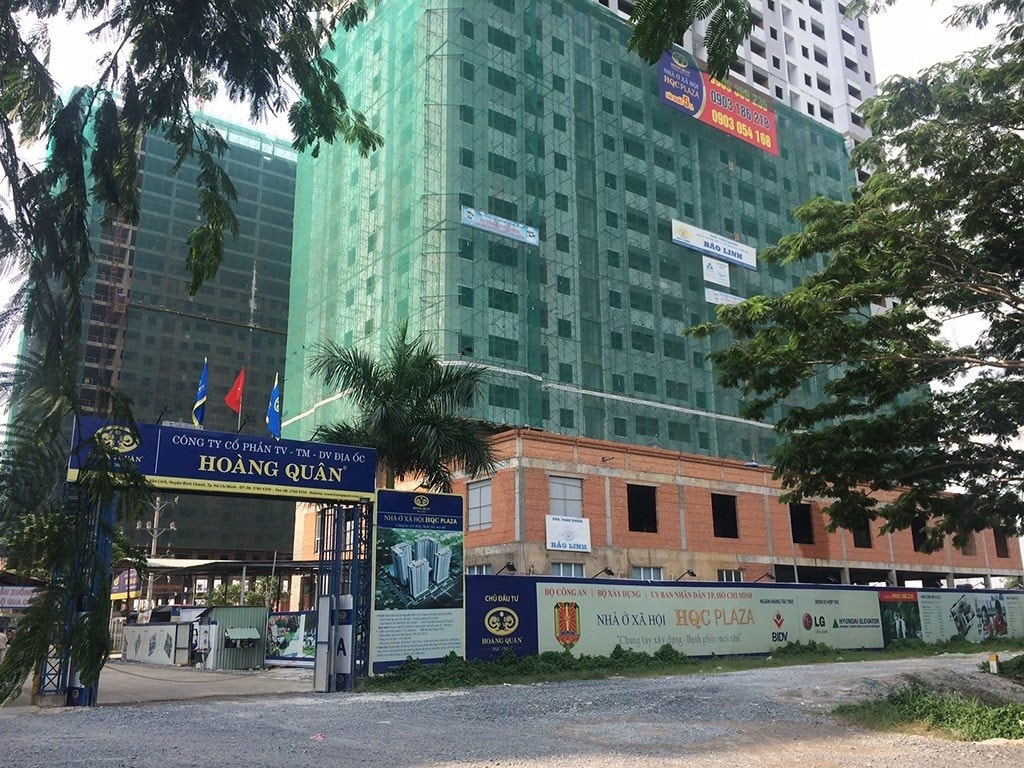
Many real estate companies stated that their projects have been stalled for years due to legal procedures and the determination of financial obligations.
Businesses Hope for a “Revival” Opportunity
Ms Nguyen Nam Phuong, Chairwoman and CEO of Lan Anh One Member Co., Ltd., said that many of the company’s projects in the Ba Ria–Vung Tau area are facing major obstacles related to financial obligations and land use fee determination.
According to Ms Phuong, although the company has invested private capital in social housing and housing for low-income groups, many projects have remained stalled for years simply because the process of determining financial obligations has not been completed.
Ms Phuong noted that in some cases, companies have had to wait four to five years for land use fees to be determined, resulting in prolonged business losses. “There were cases where the tax authority temporarily estimated the amount at around VND24 billion, but because it exceeded the VND20 billion threshold, the dossier had to be reassessed and transferred across multiple agencies, causing further delays,” she said.
Companies have also faced difficulties in deducting infrastructure investment costs. Many roads were financed, cleared and built by the companies themselves, yet the actual value was not adequately reflected when determining financial obligations.
According to Ms Phuong, the current residual land valuation method does not accurately reflect the market, as output values are calculated based on market prices while deductible costs are applied using much lower state-regulated price frameworks. This has resulted in an imbalance of interests between the State and businesses.
“When tax notifications are issued late, businesses are also charged late payment penalties, further increasing financial pressure,” Ms Phuong added.
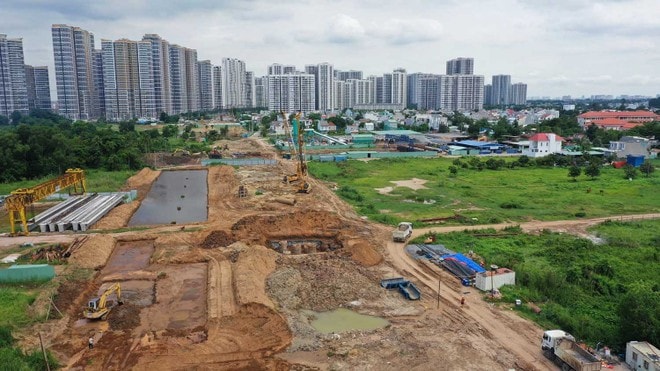
Businesses urged Ho Chi Minh City to establish a sufficiently empowered focal agency to coordinate the handling of stalled projects.
At the same conference, Mr Truong Anh Tuan, Chairman of Hoang Quan Consulting–Trading–Service Real Estate Corporation, said the business community has placed high expectations on recent directives and resolutions issued by the Party Central Committee and the Government to resolve difficulties facing the real estate market.
As a company that has long focused on the social housing segment, Mr Tuan said he was deeply moved when reading recent resolutions and directives supporting the real estate market. “I cried when reading the resolution aimed at removing difficulties for real estate businesses,” he shared.
According to him, recent policy signals demonstrate strong determination to support business recovery and create conditions for the real estate market to resume operations after a prolonged difficult period.
However, the Hoang Quan executive noted that the company still has many projects trapped in legal procedures. Of the approximately 50 completed projects, several major ones in Ho Chi Minh City have yet to be resolved. In addition, around 30 ongoing projects are facing various obstacles, with some remaining unresolved for up to five years.
“Businesses are currently standing on a very thin line between survival and dissolution. Without decisive intervention from authorities at all levels, it will be extremely difficult for them to recover and continue contributing to the economy,” Mr Tuan said.
Calls for Clear Processing Deadlines
Based on these realities, Mr Truong Anh Tuan proposed that Ho Chi Minh City establish a coordinated mechanism among departments and agencies to address stalled projects. According to him, the overwhelming volume of dossiers has placed many agencies under pressure, while businesses lack a clear focal point to monitor progress.
Businesses therefore proposed assigning a sufficiently empowered agency to coordinate the entire process, suggesting that the Department of Finance take on this role.
When companies submit petitions, there should be clear assignment of departments or responsible officers within agencies such as the Department of Construction, Department of Natural Resources and Environment, Department of Planning and Architecture, or local authorities to facilitate communication and processing.
Mr Tuan also proposed extending the deadline for receiving business petitions to 18 May instead of 15 May as currently planned, as many companies have not yet completed their dossiers.
In addition, businesses urged the city to digitize the entire process for receiving and handling dossiers in order to better monitor progress and reduce prolonged circulation of documents among multiple agencies. They also called for clear processing timelines for each category of issue to avoid situations where businesses wait for years without receiving any results.
Author: DIEU HOA - TRUONG DANG
RELATED TOPICS
RECOMMENDED TOPICS