VN
VN
 EN
EN
09/07/2026, 02:00
Business economics
Viet Nam’s railway sector on the journey of digital transformation and workforce-driven renewal
The renewal of Viet Nam’s railway sector has been shaped not only by governance and investment strategies, but also by the intelligence, responsibility and determination of its workforce along the nation’s tracks.
Unlocking creative potential
For more than 145 years, the railways, bridges, stations and locomotives spanning the country have borne witness to struggles for national liberation, as well as the construction and defence of the Fatherland. Today, the sector faces the challenge of repositioning itself within the national transport system, gradually evolving into a space for economic activity, culture, tourism and unique experiences.
Dang Sy Manh, Secretary of the Party Committee and Chairman of the Members’ Council of Viet Nam Railways Corporation (VNR), stressed that VNR regards culture as the foundation of business, and standards as the essence of governance. This consistent approach underpins its renewal journey, enhancing competitiveness and forging a distinct identity for the railway sector.
The transformation now under way reflects the ingenuity, responsibility and aspirations of railway workers through thousands of initiatives—improving equipment, upgrading rolling stock, developing tourism products and advancing digital transformation.
The sector's transformation reflects the ingenuity, responsibility and aspirations of railway workers through thousands of initiatives—improving equipment, upgrading rolling stock, developing tourism products and advancing digital transformation.
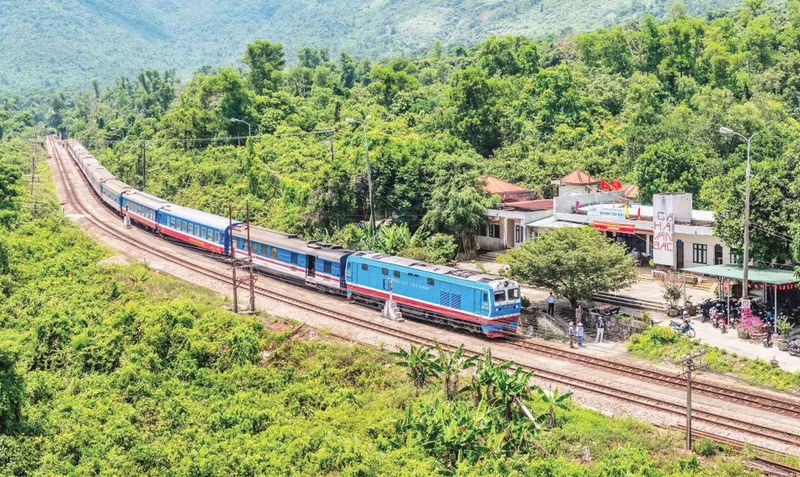
Currently, trains SE19/20 and SE21/22, with fully refurbished carriages, present a fresh face for North-South passenger transport. Beyond improved comfort, the trains have been redesigned to enhance aesthetics, functionality and passenger experience.
Meanwhile, technological mastery and creativity are evident in new services that draw on the cultural, historical and scenic resources of each locality.
The “Hoa Phuong Do” (Red Flamboyant) train on the Ha Noi–Hai Phong route is a prime example, with interiors blending modern design and the cultural atmosphere of the port city. Features such as 180-degree swivel seats, an Indochine-style VIP carriage and distinctive detailing have redefined the travel experience.
Similarly, the “Da Lat Night Journey”, with its La Reine carriage on the Da Lat–Trai Mat line in Lam Dong Province, harmonises heritage architecture, local culture and transport services. The refined design allows passengers to savour the beauty of the “city of a thousand flowers” in a distinctive way.
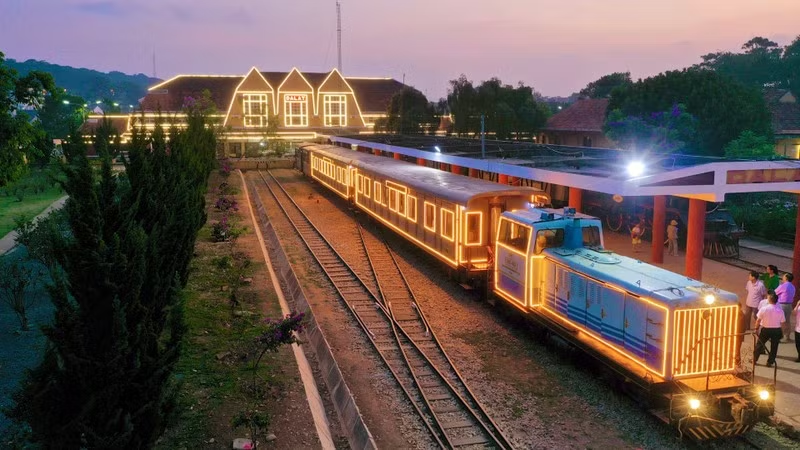
The latest version of the “Connecting Central Heritage” train on the Hue–Da Nang route is another model, showcasing regional culture through colours, patterns, spaces and service offerings.
According to VNR leaders, the sector has introduced automatic ticket kiosks, expanded online ticketing, partnered with technology firms, and deployed AI callbots and chatbots in customer care. Each step of transformation requires workers to shift their mindset, upgrade skills and adapt to new working environments.
In this process, the trade ’s role has become increasingly significant. Beyond supporting members’ material and spiritual wellbeing, VNR’s trade works alongside the enterprise to provide training, improve professional qualifications and digital skills, and foster a culture of innovation across the sector.
From initiatives to ecosystem
The railway sector is gradually shaping a new development ecosystem, integrating transport with culture, tourism, technology, the environment and international cooperation.
On its renewal journey, the sector is expanding the value of heritage and international links. On May 7, 2026, at the French Embassy in Viet Nam, VNR and the French National Railway Company (SNCF) signed a twinning agreement between Viet Nam’s Da Lat Station and Deauville–Trouville Station in Normandy, opening opportunities for heritage preservation, tourism development and cultural exchange.
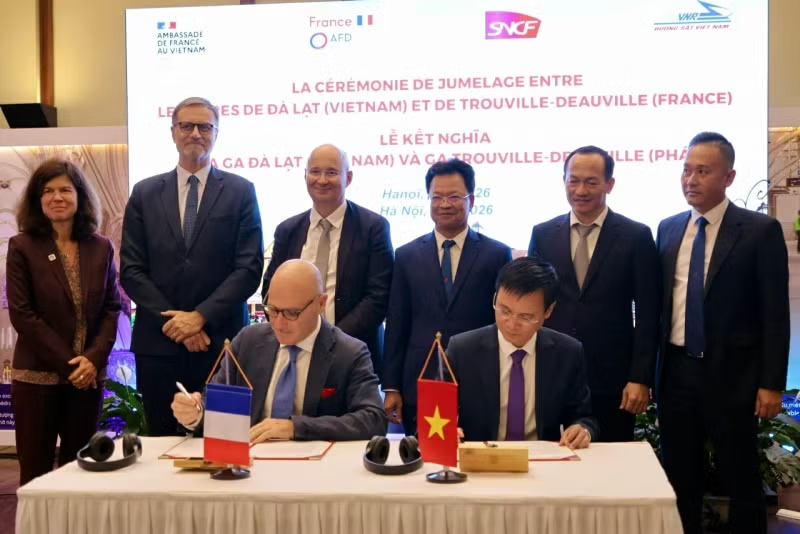
French Ambassador to Viet Nam Olivier Brochet remarked that railways form part of the two countries’ shared heritage—a bond between cultures, peoples and nations. Nguyen Chinh Nam, Deputy Director General of VNR, expressed confidence that the twinning would mark the beginning of broader cooperative projects, strengthening the friendship between Viet Nam and France.
The “Red Journey” initiative is another milestone, linking historic sites and revolutionary landmarks with culturally rich destinations nationwide, fostering national pride and awareness of heritage preservation.
The sector’s vision also extends to regional cooperation. The gradual development of a Viet Nam–China railway ecosystem highlights efforts to integrate more deeply into international economic, tourism and trade networks, while promoting services and people-to-people exchanges.
Every step of renewal today is preparation for the future, ensuring the railways continue to play a vital role in the national transport system.
Dang Sy Manh, Chairman of the VNR Members' Counci
Modernisation is advancing alongside expansion. On May 29, 2026 VNR unveiled a modern train equipped with Wi-Fi, 5G connectivity and an AI-powered robot as part of its digital transformation. The new QT3/4 train, introduced on the Ha Noi–Thai Nguyen route, is designed as a multi-functional service combining passenger transport, digital connectivity and onboard amenities.
A standout feature is a command coach fitted with advanced communications technology, enabling meetings, operational coordination and decision-making while travelling. Officials noted that the carriage could also serve as a mobile command centre during emergencies such as natural disasters, security incidents or transport disruptions.
Dang Sy Manh, Chairman of the VNR Members' Council emphasised that the greatest value of renewal lies in the transformation of workforce mindset. Sustainable development, he said, depends not only on traditional strengths but also on innovation and human resource quality. “Every step of renewal today is preparation for the future, ensuring the railways continue to play a vital role in the national transport system,” he affirmed.
Author: NDO
RECOMMENDED TOPICS