VN
VN
 EN
EN
25/07/2026, 02:38
Investment
What currencies could be the ones to watch in 2026?
Many analysts think that the yen and renminbi could be the ones to watch in 2026 and both for similar valuation-type reasons.
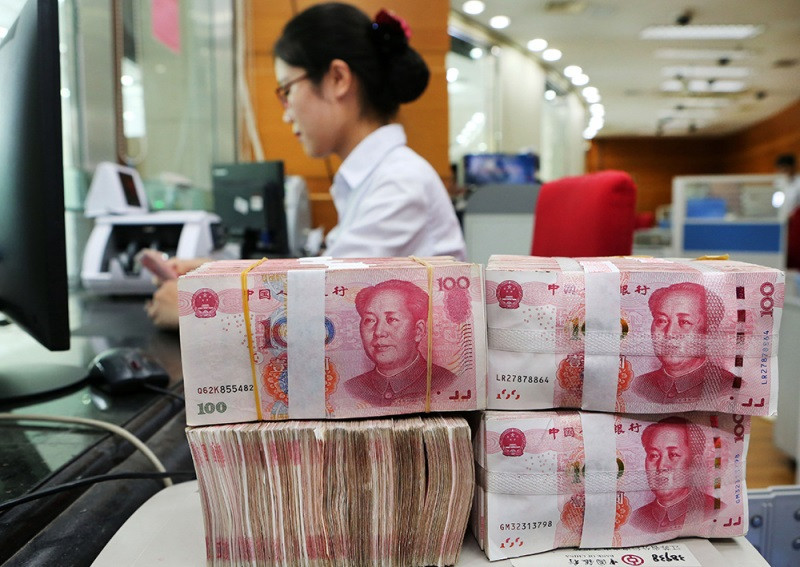
The renminbi could be one of the currencies to watch in 2026 for similar valuation-type reasons.
2025 has been a funny year for the US dollar. There was enormous volatility—and weakness—in the first half of the year, followed by virtually no movement at all in the second half. If 2026 starts out looking like the second half of 2025, as we suspect it will, traders and investors may be forced to look to Asia for any hope of more significant FX volatility.
Many people don’t know why the US dollar went from extraordinary volatility to becoming motionless through the course of 2025. The volatility early in the year was due to the tariff tumult coming from the US, but the subsequent calm is harder to fathom. After a massive one-time adjustment by investors to the tariff shock, the dollar crept back into its shell again.
Don’t forget that much of 2023 and 2024 had seen the US dollar stick within a narrow range. Even so, if we take one-year euro/dollar implied volatility, the 6% yearly low seen earlier this month was the lowest in four years and less than half of the 13% peak seen in April. As we look ahead, we wonder what sort of 2026 we will get. Will we see a return to the volatility of early 2025, or is the H2 snoozefest the more relevant template?
Steven Barrow, Head of Standard Bank G10 Strategy, suspects it might be the latter. If that’s the case, it will be good news for those wanting some degree of stability and predictability in currencies. Firms exporting to the US, for instance, might be grateful if the hit to competitiveness from US tariffs is not compounded by a substantially weaker dollar. But those looking to speculate on currencies might feel shortchanged in 2026.
If that’s the case, we have to look at where we might see some volatility, and in Steven Barrow’s view, that’s most likely to be in Asia, at least amongst the more heavily traded currencies. More specifically, he thinks that the yen and renminbi could be the ones to watch in 2026, both for similar valuation-type reasons. For there is no getting away from the fact that the yen appears very undervalued in a historical sense, while the renminbi seems particularly undervalued given its huge trade surplus.
Of course, neither has corrected this undervaluation to any significant extent in the past, and we have to wonder why now might be the time. In the case of the yen, the first point to note is that in real (inflation-adjusted) terms, the yen is just about as low as we have ever seen in the 50-plus-year history of floating exchange rates, losing nearly two-thirds of its value in the last thirty years.
A stock and housing bust, low inflation, low policy rates, high debt, and debasement concerns are probably some of the reasons for this calamitous fall. But many of these have turned, or are in the process of turning, and as they do, so the yen should recover. Foreign purchases of Japanese stocks this year are on course to be the highest since 2013, and rising JGB yields could work similar magic, increasing foreign participation as well as redirecting Japanese demand back to the home market.
Clearly we can’t tell whether factors such as BoJ rate hikes and rising JGB yields have reached a point that sucks capital back to Japan and spurs the yen right now. But as long as these sorts of trends continue, Steven Barrow suspects that there will come a point when the yen responds more powerfully, and this could be one of the currency surprises of 2026. If the renminbi starts to correct its ‘undervaluation’ in 2026, it won’t be for the same reasons as the yen and most likely won’t be as dramatic given the PBoC’s hold on the currency.
Nonetheless, the relentless improvement in the trade balance, in defiance of US tariffs, seems likely to increasingly alert traders and investors to the undervaluation of the renminbi. Of course, much of the currency’s competitiveness comes from the fact that inflation has been falling and there’s nothing that the FX market can do about this. But traders and investors can lift the nominal value of the renminbi, and with the break below 7.0 for USD/CNY recently, Steven Barrow suspects that the bulls of the renminbi will feel emboldened and will continue to pile on the pressure through 2026.
“We look for the renminbi to rise by around 5% against the US dollar in 2026 and the yen to appreciate by around 7%. That might not sound huge, but if the US dollar remains comatose against other currencies, it may be better than nothing,” said Steven Barrow.
Author: THANH LIEM
RECOMMENDED TOPICS