VN
VN
 EN
EN
26/07/2026, 11:20
Investment
Will the ECB cut rates again?
Market pricing suggests that there is little chance of the ECB cutting rates again. But many analysts think it is too soon to come to this conclusion as two specific factors could still produce undershooting inflation and hence a need for the ECB to respond with lower rates.
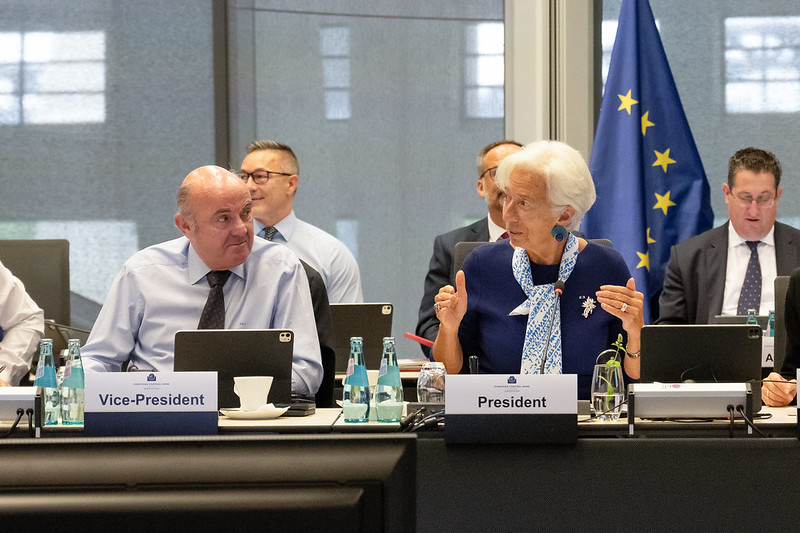
Market pricing suggests that there is little chance of the ECB cutting rates again.
It is fair to say that the ECB seems to be in a comfortable place right now. Economic growth is occurring, albeit at a modest pace, while inflation is close to the 2% target, and the deposit rate of 2% is in the middle of the range that most ECB members seem to think is neutral.
The minutes from the last meeting showed that many seem to think that the easing cycle has come to an end although there is still sufficient caution to mean that the Bank wants to leave the door open to further rate cuts, not shut it altogether. Financial markets seem fully on board with this view. For while the Overnight Interest Swaps (OIS) market makes some allowance for the possibility of easier policy, it is very modest, with OIS rates only around 8-bps below the current overnight rate when we look out towards the end of 2026.
In short, if the ECB were to cut 25-bps, let alone 50-bps the OIS market would have to shift a lot and the same can be said for other money market rates and bond yields. But are rate cuts possible? In the Standard Bank’s view, there are two particular factors that could help push the ECB in such a direction.
The first relates to wages; the second to the prices of goods imported from China. On the former, forward-looking data on wages that captures negotiated wage deals as they come through suggests that wage pressure is falling fast.
ECB Chief Economist Lane argued last week that wage growth in the range of 2.5%-3.5% is consistent with an inflation rate of 2%; the ECB’s target. He also said that wages seem to be moving in this direction, but our sense from the negotiated wage deal data is that wage growth is likely to be at the bottom end of this range, if not below. Last week’s release of Q3 data on negotiated wages showed a sharp fall to a 1.87% annual rate from just over 4% in Q2. Now the data are volatile from quarter to quarter but, even so, the slowdown has been substantial and entirely consistent with an annual inflation rate that runs under the 2% target.
A second factor is the weakness in export prices from China. It was widely believed that US tariffs on China would cause the country to discount export prices elsewhere in order to try to make up for lost exports to the US. This was the view when US tariffs were first announced, and the data seems to be bearing this out. Don’t forget that China is still experiencing deflationary pressure in domestic PPI prices, which is important when it comes to export prices. Trade data from China does seem to broadly show that the reduction in exports to the US has been made up by stronger exports elsewhere, with this improvement coming in part because of lower prices.
ECB members themselves referenced the downside risks to eurozone inflation stemming from this source at the last meeting. What’s more, it is not just prices of direct exports to the EU from China that could bear down on inflation, but also indirect prices as China reduces export prices to other countries that may then export to the EU.
Here we have talked about what we think are the two most important influences that could cause eurozone inflation to persistently undershoot the target, but there are others as well. One is the outlook for import prices more widely should the euro continue to rise in value. Another is the possibility of an end to the Ukraine/Russia war if a peace deal can be agreed upon.
For while the help this might give to reduced inflation, via any decline in commodity prices and strength in the euro, might be a fraction of the upside price pressure we saw when Russia invaded in early 2022, it may still be sufficient at the margin to help keep euro zone inflation too far below the ECB’s 2% target for comfort. Putting all these factors together it leaves us feeling that strategies designed to benefit from a ‘surprise’ ECB rate cut, or cuts, could pay dividends in the first half of next year.
Author: NGOC ANH
RECOMMENDED TOPICS