VN
VN
 EN
EN
21/07/2026, 10:30
Investment
Will the US dollar strength persist over coming months?
The Standard Bank has lifted its forecasts for the US dollar. Previously, it had expected modest US dollar strength to persist over coming months but now it has pushed this on a bit further.
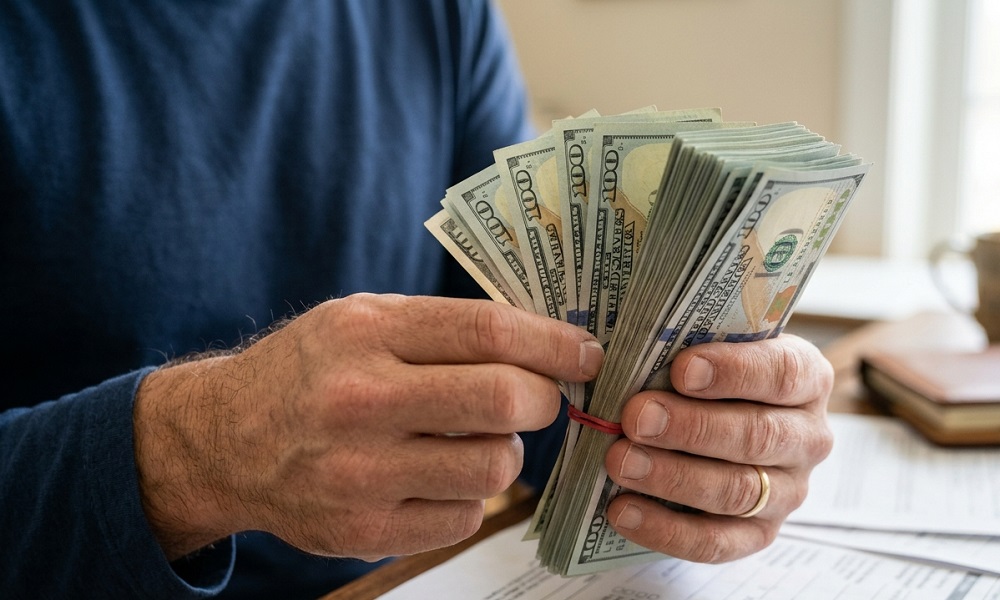
The Standard Bank has lifted its forecasts for the US dollar.
So far this year, the Standard Bank has been forecasting modest strength in the US dollar. For instance, at the start of the year when the euro/US dollar was around 1.1750, the Standard Bank had a six-month forecast of 1.15. So far things have gone to script. However, those same forecasts at the start of the year envisaged that the dollar would wane over the second half of the year, with euro/dollar closing 2026 around the 1.20 level. But this script has to change in its view. Its end-2026 forecast is now for euro/dollar to be 1.10 as part of a generally stronger forecast for the US dollar through the second half of this year. A significant part of this change relates to the way in which the Fed and ECB are behaving.
On the Fed, the Standard Bank changed its call a few weeks ago from one of policy rate stability through 2026 to one of higher rates by the end of this year. This matches the view that it has for the ECB, but the key point here is that we feel that the Fed will hike rates from a position of strength while the ECB’s policy tightening reflects weakness. What it means by this is that the Fed is expected to hike later in the year against the backdrop of a robust economy, while the ECB’s actions risk making a soft economy even weaker.
“It is not so much the size of any rate hikes that is of importance but, instead, the context of the policy tightening. Indeed, we can make the same comparison if we contrast the Bank of England with the Fed. For in the BoE’s case any rate hike seems likely to be carried out because inflation is overshooting the target as a result of supply-side considerations rather than as a consequence of surging demand-led economic growth. To put some numbers on this, at the start of the year when sterling/dollar was around 1.35, we forecast a fall to 1.28 by today with a recovery to 1.32 at the end of the year. But now our end-year forecast is for 1.29," said Steven Barrow, head strategist of the Standard Bank.
Although the Standard Bank has pointed out some changes to its forecasts for the US dollar, it is also worth noting that these changes are pretty modest. This is in keeping with the fact that the level of volatility seen in major currencies remains low by historical standards. What’s more, it has remained low in spite of some significant shocks. The last of these, the conflict in Iran, should have led to a significantly firmer dollar against the likes of the euro and the pound for two main reasons.
The first is that the resultant surge in energy prices works as an adverse terms of trade shock for most European countries given their lack of energy resources, compared to the US, which is a net oil exporter. Usually, adverse terms of trade shocks cause big falls in currencies, as indeed, the Russian oil shock did back in 2022 for European currencies.
However, in the case of the Iran shock, the US dollar has barely risen. The greenback has also been largely irresponsive to the second positive aspect of the Iran shock, which is safe asset demand. Usually geopolitical conflicts prompt safe-haven demand for the US dollar, but this has largely failed to appear in the case of Iran. All told, it suggests that, if a shock as big as a war in Iran cannot move the US dollar substantially, the prospect of really big changes in the greenback seems quite limited.
Right now, that means a modestly higher US dollar based largely on better US growth dynamics and the Fed’s response. Steven Barrow finds it hard to predict really significant strength in the US dollar due to this ‘volatility constraint’ that we’ve just talked about, and also the fact that the absence of a substantial rally in the dollar on the outbreak of the Iran conflict suggests that something is ‘wrong’ with the US dollar.
“If the US dollar cannot rally substantially on positive terms of trade shocks, it suggests that traders and investors are reticent for some reason. This could be due to many factors, such as concern over US geopolitical policy, its trade policy, political pressure on the Fed to cut rates, and more. We can’t be sure what it is, but as long as there seems to be a reticence by investors to go all-in on US dollar strength, any—bullish—changes to our dollar forecasts will remain modest," said Steven Barrow.
Author: NGOC ANH
RECOMMENDED TOPICS