VN
VN
 EN
EN
09/07/2026, 11:15
Investment
A breakthrough opportunity for Ho Chi Minh City
With 433 out of 438 deputies voting in favour, the National Assembly has just passed a Resolution amending and supplementing a number of articles of Resolution 98/2023/QH15 on piloting some special mechanisms and policies for Ho Chi Minh City’s development. The southern economic hub now has new, even more far-reaching special mechanisms in hand.
Moving swiftly into action
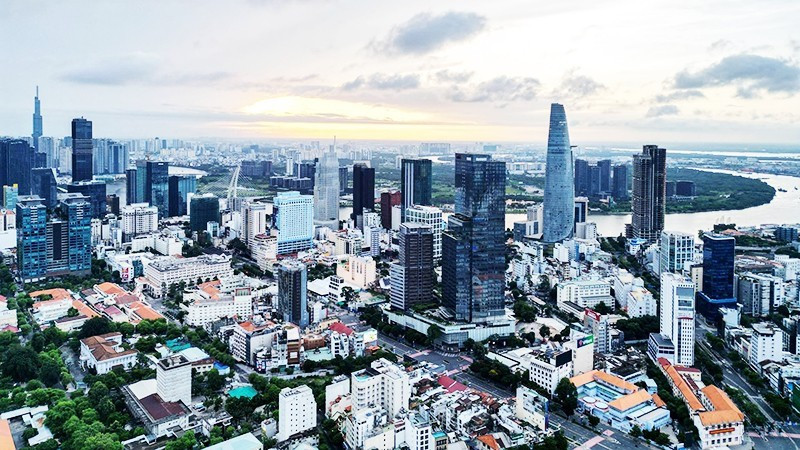
Immediately after the National Assembly pressed the button to pass it, Ho Chi Minh City held an urgent meeting to concretise the amended Resolution 98 and roll out a range of specific tasks. Nguyen Van Duoc, Chairman of the Ho Chi Minh City People’s Committee, said that at this stage, the city must be flexible rather than perfectionist, as it has to carry out multiple tasks at once in time to submit them to the City People’s Council for approval at the end of December. Specific tasks have been assigned to each department and sector, with clear deadlines for completion. The head of the city administration asked departments and sectors not only to coordinate with one another to fulfil their assigned tasks, but also to work with the investors who have registered to implement the special projects stipulated in the Resolution.
According to Duoc, the issue at hand is no longer merely the institutional framework, but the solutions for effective implementation so that the Resolution can quickly come to life. The amended Resolution not only opens up new policy space, but also places on Ho Chi Minh City the responsibility to take the lead with a stronger development roadmap, particularly in planning, land, development oriented towards public transport, and the attraction of strategic investors. The overarching goal is to give the city a “new institutional outfit” that is sufficiently broad, well-designed, and strong to meet development requirements in this period of rising, commensurate with expectations of a mega-city and the nation’s growth locomotive.
In the recent period, the Ho Chi Minh City People’s Committee has proactively and actively coordinated with the Ministry of Finance and central ministries and agencies to build and finalise the implementation contents for Resolution 98. In parallel, the city has prepared specific schemes and action programmes to ensure that special mechanisms and policies operate smoothly and are not bottlenecked at the execution stage. The city is seeking mechanisms, not money, and is ready to serve as a pilot for new policies, especially policies and models for economic development. In the period ahead, the city will redesign its development space towards a multi-polar, integrated, and connected approach. The city commits to continuing to accompany the business community, investors, and experts, building an open, transparent, and fair investment environment, and creating new breakthroughs.
Dr. Tran Du Lich, Chairman of the Advisory Council for the implementation of Resolution 98, assessed that the latest amendments and supplements have helped enhance Ho Chi Minh City’s institutional competitiveness after the merger. Removing certain procedures and formalities in Resolution 98 has strengthened the city’s autonomy and accountability. As a result, the five growth pillars of this mega-city will gain additional momentum to accelerate, the scale of development will expand, and policies to attract major investors will become more open.
Lich said: “Based on experience in implementing Resolution 98 over the past period, this time Ho Chi Minh City will act faster and more effectively. The most important thing is implementation. The contents must be concretised with clear, consistent regulations.”
Seizing the moment
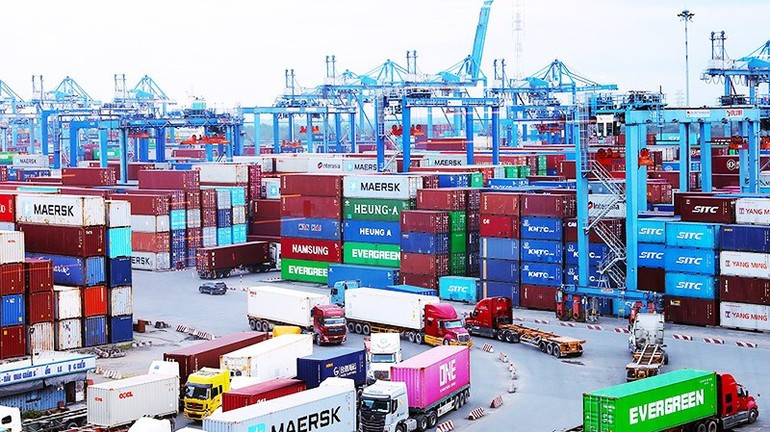
After the administrative merger, Ho Chi Minh City has become a mega-city with a population of more than 14 million and a labour force of around 7.28 million. The city currently contributes 23.5% of national GDP, with budget revenue projected at more than 750 trillion VND. The city’s GRDP per capita is estimated at 220 million VND, 1.7 times the national average.
Many experts believe that amending and supplementing Resolution 98 under current conditions is highly timely; otherwise, the city would miss many development opportunities. However, to make the best use of the special mechanisms, the city must soon develop an action programme with specific items, priority areas, spearhead sectors, and readiness to implement controlled piloting mechanisms across many projects.
According to Le Van Thinh, Deputy Head of the Ho Chi Minh City Export Processing and Industrial Zones Authority, the amended Resolution 98 opens up many policies that are more advanced than current legal provisions; some contents are even “path-opening” in nature — something a dynamic city must seize promptly on its breakthrough journey. This is seen as a “key”, providing an important basis for Ho Chi Minh City to remove long-standing bottlenecks in implementing socio-economic development tasks.
Accordingly, the city can boldly invest in new models, especially green industrial parks and eco-industrial parks, aligning with the green transition and circular economy trends, thereby effectively pursuing sustainable development goals in the coming period. On this foundation, the city will be better positioned to create a modern living and working environment meeting international standards, attracting foreign experts as well as high-quality human resources for many key sectors. Alongside focused investment policies, high-quality human resources play an important role in fair competition and in asserting the city’s position internationally.
The city’s FDI capital in the past year reached 8.9 billion USD, up more than 30% year on year. Of this, more than 2 billion USD was invested in science and technology and innovation, in line with the development orientation for this period. In 2026, Ho Chi Minh City targets “double-digit” growth along with major multi-sector changes, based on criteria that deliver substantive, clear, and measurable shifts in governance methods, economic development, and the quality of services for residents and businesses. The city has set five groups of targets in economics; culture and society; urban development and environmental protection; administrative reform; and security, with 26 component indicators. Alongside these are five groups of key tasks and solutions to unlock all resources.
In 2025, most of Ho Chi Minh City’s socio-economic indicators met and exceeded the plan. In particular, GRDP is estimated to rise by 8.03%, with the scale reaching nearly 3 million trillion VND. GRDP per capita reached 8,755 USD, while state budget revenue accounted for one third of the national total.
National Assembly deputy Tran Hoang Ngan said that the amendments and supplements to Resolution 98 have created additional impetus enabling Ho Chi Minh City to better leverage its existing strengths. With an economic scale exceeding 120 billion USD and an ecosystem of hundreds of thousands of enterprises and business households, the city requires a compatible institutional framework that is flexible and superior.
Ngan explained that the amended Resolution 98 adds mechanisms enabling Ho Chi Minh City to mobilise social resources, offsetting limitations stemming from a budget retention ratio that remains low relative to actual development needs. In a context where retained budget covers only a small portion, expanding mechanisms to attract strategic investors is a matter of survival. The amended Resolution has supplemented the list of priority projects across many key fields such as infrastructure, culture, healthcare, the environment, a financial centre, a free trade zone, and logistics.
Along with this is the removal of obstacles in BT contracts, greater decentralisation and delegation of authority in planning, permission to effectively utilise land funds adjacent to major infrastructure projects such as urban railways, ring roads, and expressways. These are seen as important “levers” to form new growth poles, linking transport infrastructure with urban and economic development. The most important thing at this moment is for the city to quickly complete specific schemes, submit them to the City People’s Council to issue implementing resolutions, and simultaneously step up investment promotion in a transparent and effective manner, ensuring a balance of interests among the State, the people, and businesses. Over the longer term, the city needs to be studied for the development of a separate legal framework, moving towards a law on special cities.
Author: NDO
RECOMMENDED TOPICS