VN
VN
 EN
EN
26/07/2026, 02:00
Investment
Exceptionalism knocked back, less likely to lift the US dollar
Up to this year, so-called US economic and financial market ‘exceptionalism’ propelled the US dollar forward. But the US has not been as exceptional in 2025, and efforts to try to regain this exceptionalism have become more dubious and hence less likely to lift the US dollar.
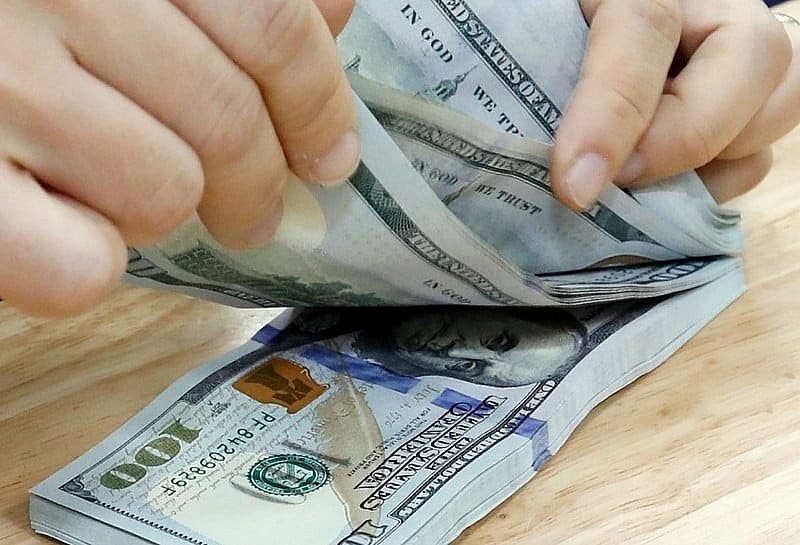
This so-called ‘exceptionalism’ appeared to be a key factor in lifting the US dollar over the past years.
Prior to this year, the US has enjoyed notable outperformance of both its growth rate and the return on assets, especially stocks, relative to its peers. This so-called ‘exceptionalism’ appeared to be a key factor in lifting the US dollar. But this year exceptionalism has been knocked back, as has the US dollar.
Tariffs, for one, have not so much undermined this exceptionalism as created the perception that exceptionalism is to be achieved by ‘stealing’ growth from others. This does not relate just to the tariffs themselves but also to US political pressure to make other countries commit to greater investment in the US as a precondition for a reduced tariff rate. It is as if exceptionalism is not organic but being forced, and forced in a very counterproductive way.
Political pressure on the FED to lower policy rates represents another dubious method of trying to maintain US exceptionalism. For it is not just the jawboning by the US President Trump, which we also saw during his first term, but the gerrymandering of Fed personnel, which was not a common feature of his first term.
The appointment of one White House economist, Stephen Miran to the Board, possibly followed by another, Kevin Hassett to the role of Fed Chair next year, raises alarm bells, as does the President’s attempt to sack Governor Lisa Cook. These changes may well result in a lower policy rate than would have otherwise existed. And they may create more economic and financial asset ‘exceptionalism’ that might not have existed otherwise, but at what cost? If the cost is a perception that exceptionalism is somehow false, rather than natural, it seems bound to create some apprehension amongst investors.
A third example of ‘forced exceptionalism’ relates to crypto. For here, the Administration can clearly see a lifeline for the treasury market as hungry stablecoin issuers gobble up ‘safe’ treasuries as demand for their stablecoins surges. Should this help keep yields down, it will bolster the effects of the policy easing that the Fed seems tasked to engineer—and maintain US exceptionalism into the bargain.
However, there is a sense here that the US is rather rushing headlong into something that might bolster this sense of exceptionalism but could do so in a way that creates significant risks and apprehension amongst investors. For instance, the stablecoin market is dominated by Tether which had its stablecoin rating lowered to “weak” by S&P just recently; its lowest rating, on concerns about the ‘safe’ assets backing Tether’s USDT, some of which are in Bitcoin.
The fact that other policymakers around the world are putting emphasis on ‘safer’ central bank digital currency (CBDC) rather than stablecoins might not help their cause in becoming more ‘exceptional’ in this area than the US. But if the US approach proves dubious in its safety, it will be another example of the Administration trying to enhance exceptionalism in a way that ultimately fails.
Could the US’s lead in AI prove another contentious route to exceptionalism? Highly valued, perhaps overvalued, AI-related stock prices clearly represent a potential weak spot for the exceptionalism story should the returns projected and the investment made in AI fall short of investor hopes. In addition, data centre construction is incredibly power-hungry; something that is lifting electricity prices sharply and could ‘crowd out’ other productive sectors of the economy.
In the end, Steven Barrow, Head of Standard Bank G10 Strategy thinks that investing in US assets, like the US dollar, represents a ‘head over heart’ decision. The head might be saying that US exceptionalism will not just rebound but will soar ahead, in which case the US dollar is the place to be. The ‘heart’ may question the way that exceptionalism is being achieved and the risks that surround it. The heart may suggest that the US dollar is a sell – and that’s where our sympathies lie.
Author: NGOC ANH
RECOMMENDED TOPICS