VN
VN
 EN
EN
29/06/2026, 02:00
Business economics
From “Yellow card” to “Green card”: An opportunity to reposition the fisheries sector
Complying with the European Commission’s (EC) recommendations is not only about maintaining export markets, but also about opening up opportunities to reposition Vietnam’s fisheries sector toward sustainability—a foundation for achieving a “green card” within the global value chain.
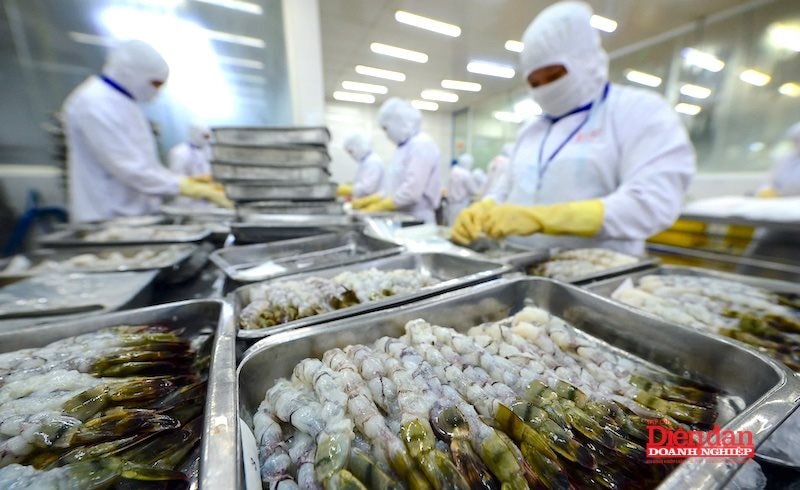
Positive progress has laid an important foundation for Vietnam to enter a decisive phase.
Following the EC inspection mission in March 2026, the Government, ministries, and local authorities are now focused on addressing the shortcomings identified by the EC’s IUU (Illegal, Unreported and Unregulated fishing) inspection team.
After more than eight years of effort, although the goal of lifting the “yellow card” warning has not yet been achieved, positive progress has laid an important foundation for Vietnam to enter a decisive phase.
Most recently, during the fifth EC inspection mission from March 9 to 19, 2026, the EC acknowledged Vietnam’s significant progress in combating IUU fishing. At a meeting on March 19, 2026, between Deputy Prime Minister Tran Hong Ha and the EC delegation, Mr. Fernando Andresen Guimaraes, Director for International Ocean Governance and Sustainable Fisheries at DG MARE and Head of the IUU inspection mission, noted that Vietnam has made remarkable efforts and achieved substantial progress in eliminating IUU fishing for national interests, sustainable development, and a green economy.
Examples include the establishment and operation of the national fisheries database (VNFishbase), the electronic catch documentation and traceability system (eCDT), and a vessel monitoring system (VMS) installation rate reaching nearly 100%. Notably, Vietnam has adopted a comprehensive approach, with strong direction from the Government and Prime Minister, as well as regular meetings of the National Steering Committee on IUU.
Deputy Minister of Agriculture and Environment Phung Duc Tien emphasized that the fifth EC inspection mission provided preliminary recommendations across four key areas: legal framework, fleet management, traceability, and law enforcement.
Regarding the legal framework, the EC recommended introducing stricter sanctions such as license revocation and vessel confiscation for serious violations. Disabling or tampering with VMS devices should be classified as a serious offense and subject to the highest penalties.
In terms of fleet management, all vessels must be properly marked and display registration numbers in accordance with regulations, even while docked. Inter-agency coordination in monitoring vessel entry and exit, as well as activities at sea, should be strengthened to prevent violations early.
On traceability, the EC stressed the need for strict control of raw materials from ports to enterprises and exports, particularly for container shipments. Inspections at enterprises should also be intensified to detect and penalize the use of illegal inputs.
Based on these recommendations, the Ministry of Agriculture and Environment is urgently coordinating with relevant ministries and localities to develop a corrective action plan, categorizing tasks into short-, medium-, and long-term priorities, with the aim of submitting a comprehensive report to the EC ahead of its official announcement.
In parallel with policy improvements, the Ministry is drafting a new decree to replace existing regulations, significantly increasing penalties. Some violations may face fines of hundreds of millions to up to one billion VND, including turning off VMS devices, crossing fishing boundaries, or legalizing illegal seafood sources.
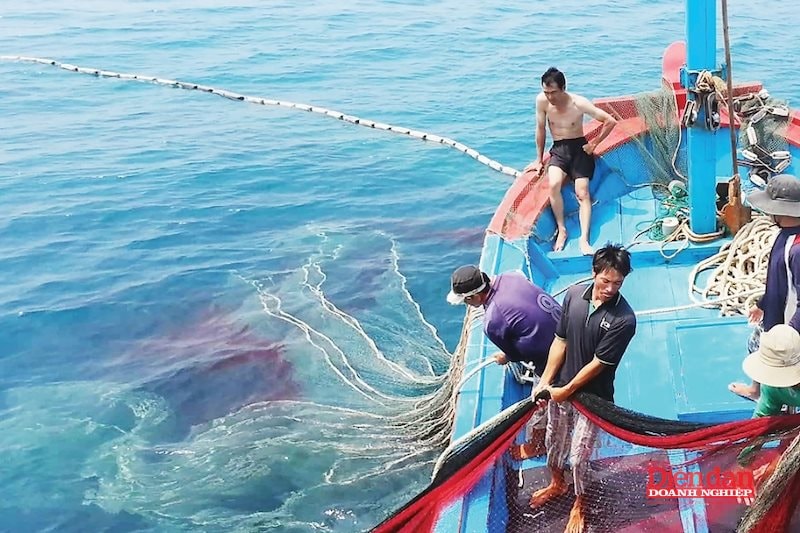
Lifting the “yellow card” should not be seen as the final destination but rather as a gateway to a new phase of development.
Beyond fishing vessels, related activities in the supply chain—such as collection, transportation, and trading of IUU seafood—will also be subject to stricter controls, with escalating penalties based on volume and additional sanctions such as suspension of operations or license revocation.
In reality, the journey to remove the “yellow card” has been far from easy. Vietnam has demonstrated persistent and sustained efforts, not only to meet the stringent requirements of the European market—one of its key export destinations—but also to safeguard the reputation of its fisheries sector globally.
As global consumers increasingly prioritize sustainability, traceability, and environmental responsibility, non-compliance with IUU regulations will hinder long-term development. Conversely, meeting these standards allows Vietnamese seafood products not only to retain market access but also to expand market share and enhance value.
Thus, lifting the “yellow card” should not be seen as the final destination, but rather as a gateway to a new phase of development. In this phase, quality, transparency, and accountability become competitive advantages.
The Prime Minister’s directive on achieving “dual objectives” sets an even higher bar: not only removing a warning but also building a sustainable foundation for the entire sector. The fisheries sector can only achieve a true “green card” when fishing activities are effectively controlled, marine resources are protected, and the value chain operates transparently.
When this goal is consistently realized, the “yellow card” will no longer be a burden but a catalyst for transforming a traditionally exploitative sector into a modern, responsible, and globally integrated marine economy.
This transformation requires strong structural changes, from restructuring the fishing fleet and controlling catch volumes to developing high-tech aquaculture. Importantly, a closed-loop value chain must be built, alongside strengthened management capacity and law enforcement.
Above all, it requires a shift toward “responsible fishing” by each individual fisher. When fishing practices move from habit to compliance, and short-term gains are sacrificed for long-term benefits, the IUU “yellow card” will gradually turn “green” on every vessel that heads out to sea.
Author: THY HANG - TRUONG DANG
RELATED TOPICS
RECOMMENDED TOPICS