VN
VN
 EN
EN
09/07/2026, 11:15
Investment
Hung Yen: Human ressource as a soft lever for investment attraction
Developing high-quality human resources is becoming a key competitive advantage for Hung Yen. In this effort, the Kim Dong Vocational and Continuing Education Center plays an important role in supplying labor to businesses.
Amid shifting investment flows, as enterprises increasingly prioritize sustainability, human capital has become a critical anchor influencing location decisions.
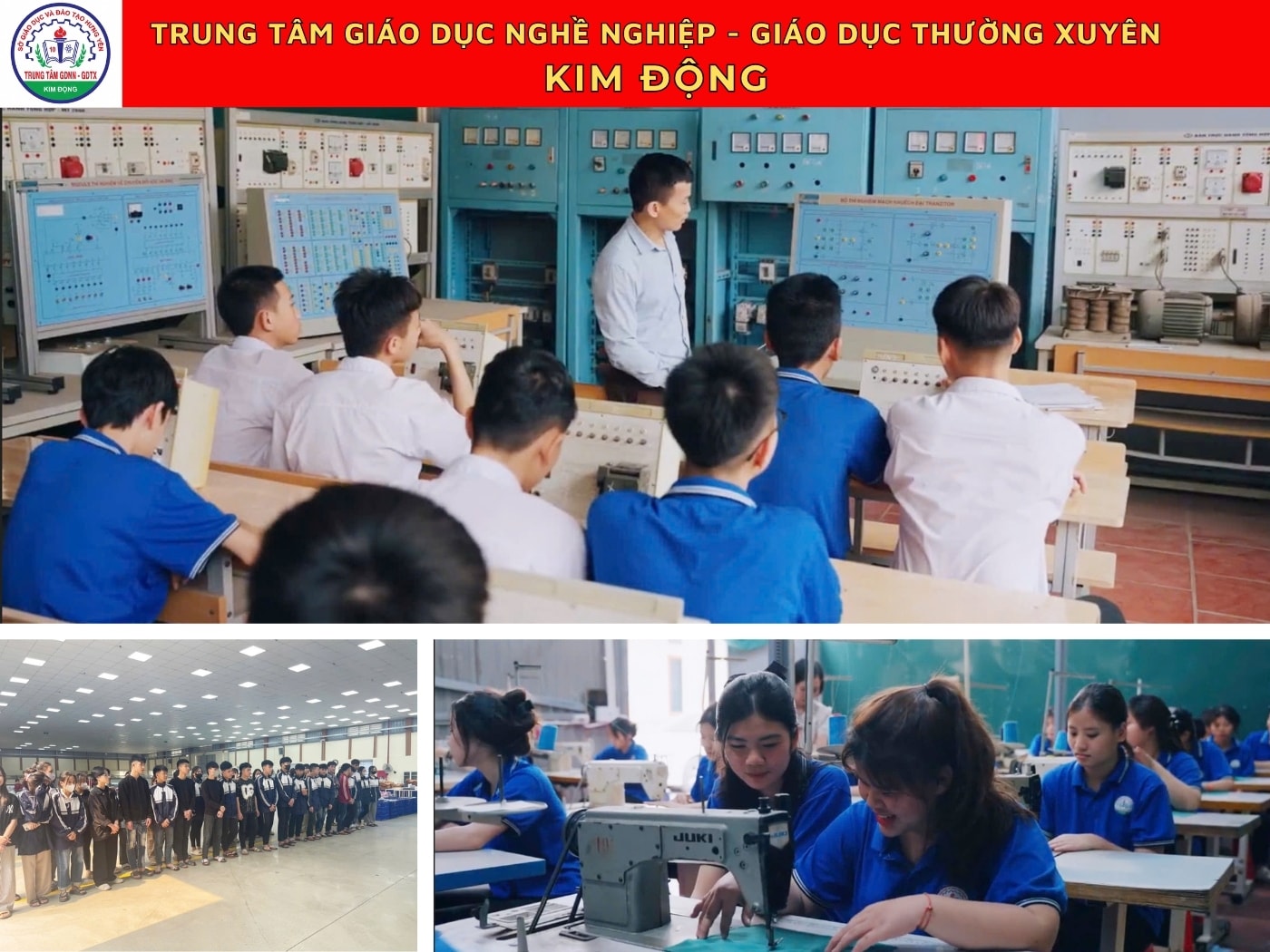
Training classes at the Kim Dong Vocational and Continuing Education Center, Hung Yen Province
For Hung Yen, alongside its rapidly expanding industrial parks, a strategy to enhance labor quality is being implemented systematically from the grassroots level. To meet this demand, the Kim Dong Vocational and Continuing Education Center is progressively reforming its training activities, strengthening linkages with businesses and educational institutions, and contributing to the development of a skilled workforce ready to participate in modern production chains.
Linking Training With Business Demand
At the Kim Dong Center, a blended model combining general education and vocational training is delivering clear results. Beyond equipping learners with foundational academic knowledge, the Center focuses on practical skills, enabling students to enter the labor market early. In particular, stronger collaboration with enterprises and training institutions has helped align curricula more closely with real-world needs.
According to Tran Thi Duc Hanh, Deputy Director in charge of the Center, in the current context, the institution has clearly defined its development orientation as “training aligned with societal needs, with businesses as the benchmark for quality.” She noted that the Center regularly coordinates with enterprises both within and outside the province to provide career guidance, while continuously updating recruitment requirements to adjust training content accordingly.
“We do not train what we have; we train what the market needs. This ensures that graduates can start working immediately,” Hanh emphasized.
From a technical perspective, Nguyen Hue Khanh, Deputy Director in charge of vocational education, said that the Center is expanding short-term training programs with a strong focus on practical skills and industrial work discipline.
According to Khanh, partnerships with training institutions and businesses allow learners to access real working environments, thereby improving technical skills and adaptability—qualities that are particularly important for FDI enterprises.
In practice, this orientation has been consistently implemented over many years, including training programs for a large number of rural workers in the former Kim Dong district. Since 2020, the Center has further expanded its scale, offering elementary-level vocational training for small and medium-sized enterprises in the province and surrounding areas, significantly increasing the number of skilled workers. Among these, industrial garment training has attracted strong interest from businesses, with many production and service facilities committing to recruit trainees upon completion.
Currently, in response to the growing industrial development demands of Hung Yen, the Center is focusing on expanding intermediate-level training programs in fields such as industrial garment production, electrical engineering, accounting, sales operations, and e-commerce, in order to better meet the demand for technical labor in the market.
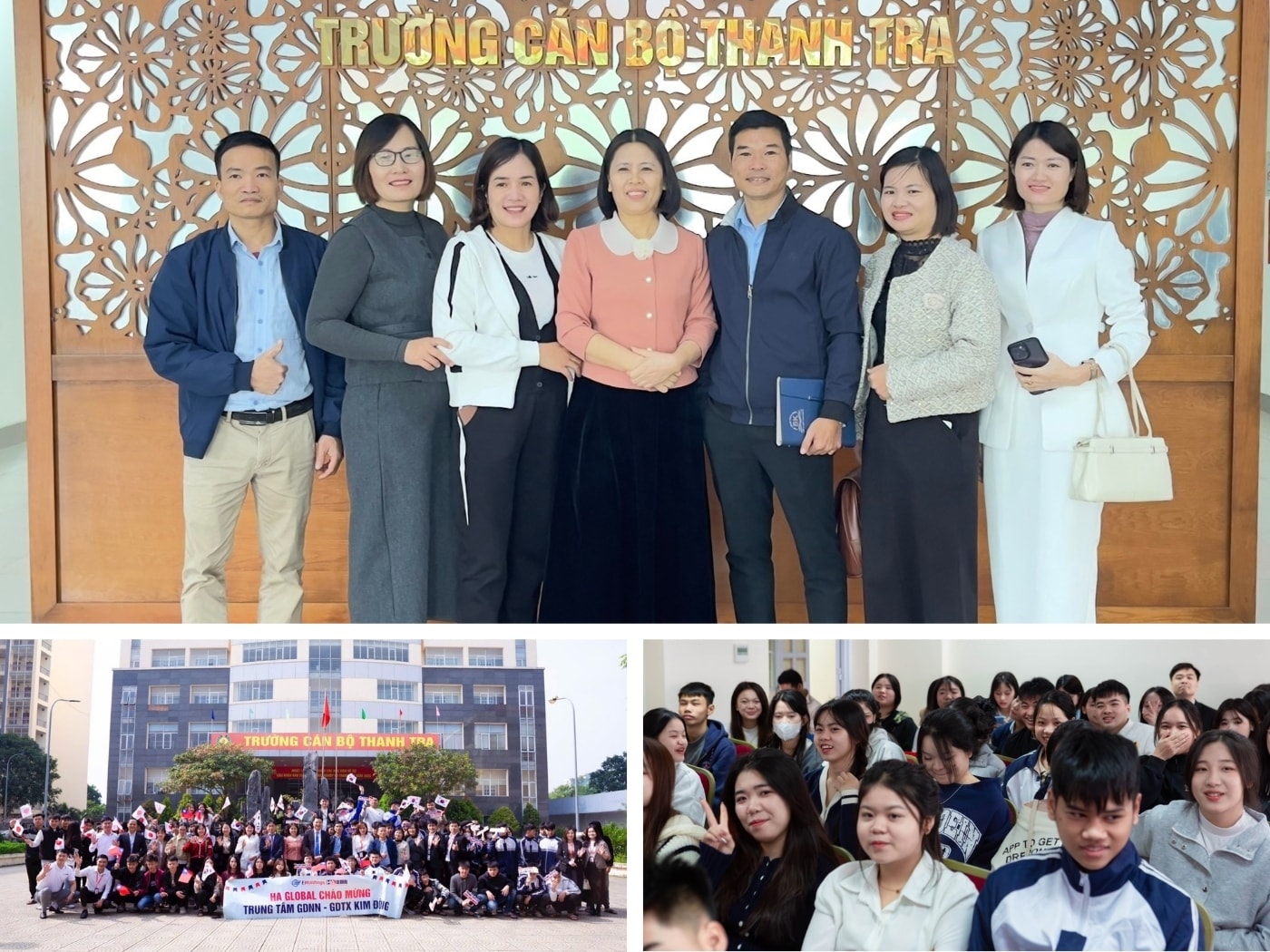
Nearly 100 students from the Kim Dong Vocational and Continuing Education Center (Hung Yen) attended a career guidance workshop and field visit organized by HA Global’s Hung Yen branch in Hanoi (06/12/2025)
Building Investor Confidence
In reality, the quality of local human resources is increasingly becoming a factor that builds investor confidence. Park Wan Soo, Deputy General Director of Hyundai Aluminum Vina Joint Stock Company (Pho Noi A Industrial Park), noted that Hung Yen has a strong advantage in its young workforce, with vocational training institutions serving as a crucial bridge. The company values locally trained workers, as they possess solid skill foundations and strong discipline, significantly reducing retraining costs.
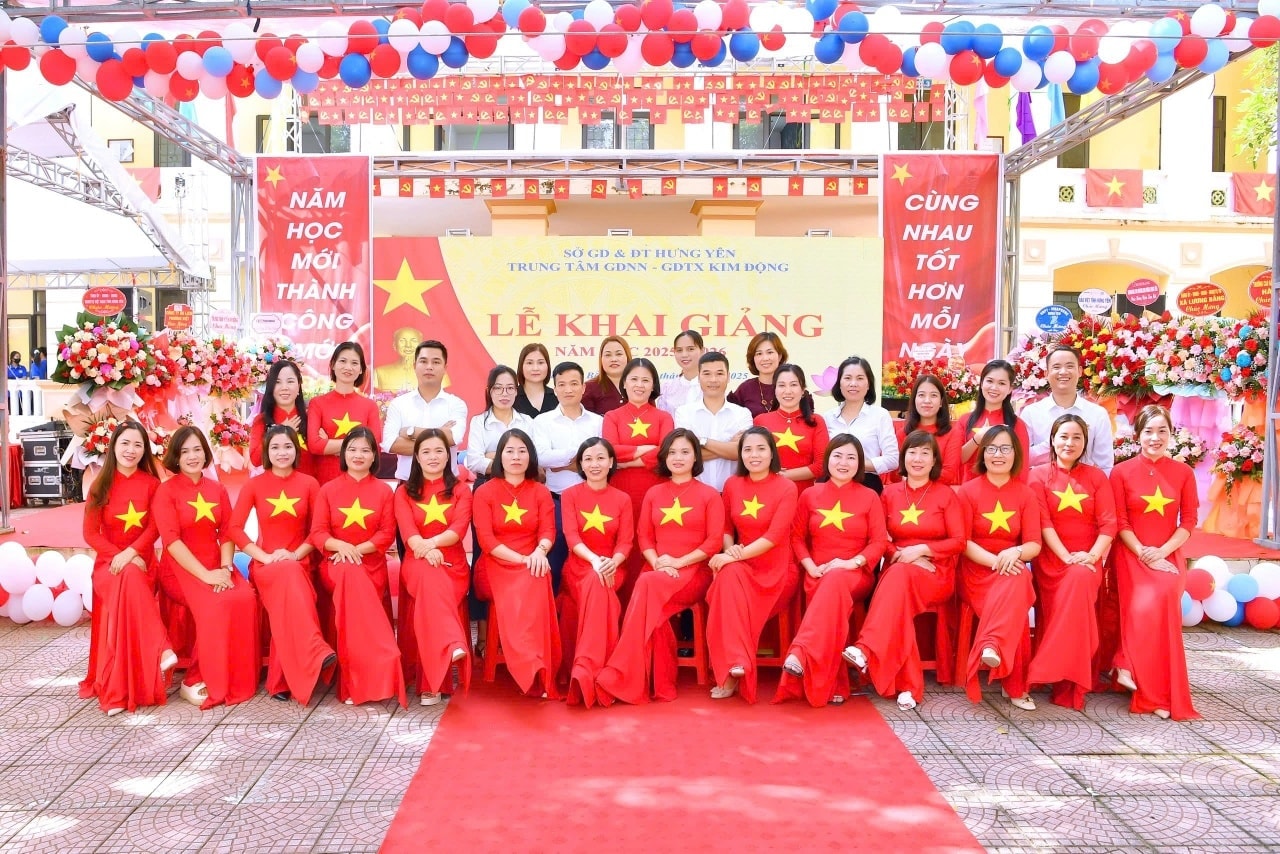
Staff and teachers at the Kim Dong Vocational and Continuing Education Center continuously improve their professional capacity and teaching quality to meet labor market demands
From the perspective of industrial park infrastructure investors, Trinh Khanh Duong, Head of Project Management at Hung Phu Industrial Park (Geleximco Group), emphasized that as businesses increasingly adopt high technology, the development of a skilled, high-quality workforce becomes critically important, even decisive, for attracting and implementing investment projects.
According to Duong, technical infrastructure can be developed relatively quickly, but building a workforce capable of meeting modern production requirements requires a long-term, systematic process. Therefore, businesses recommend that the State, together with schools and vocational training centers, further strengthen collaboration in workforce training, closely aligning curricula with practical business needs. When such linkages are firmly established, they not only reduce retraining costs for enterprises but also enhance the competitiveness of industrial parks, creating a sustainable foundation for attracting high-quality investment flows.
Similarly, Nguyen Chi Kien, Deputy Director of Sendai Vietnam Plastics Joint Stock Company (Industrial Park No. 3), observed that the proactive efforts of vocational and continuing education centers in connecting with businesses have created a workforce that precisely meets demand. What enterprises require is not just quantity, but young workers who can immediately operate in modern production environments. The close linkage between training institutions and businesses is therefore a highly positive signal.
It is evident that from the classrooms of the Kim Dong Center, a new workforce is gradually taking shape, meeting the increasingly demanding requirements of modern production. The strong connection between schools, enterprises, and learners not only improves training quality but also contributes to building an attractive and sustainable investment environment for Hung Yen in its next phase of development.
Author: KIM DUNG - VU PHUONG (Dang Truong translates)
RELATED TOPICS
RECOMMENDED TOPICS