VN
VN
 EN
EN
22/07/2026, 07:24
Investment
Hung Yen strengthens workforce development for the semiconductor industry
Hung Yen is intensifying efforts to develop a highly skilled workforce for the semiconductor industry, laying a solid foundation for the province to move up the value chain and strengthen its position on Vietnam's industrial landscape.
As the global technology race intensifies, the semiconductor industry has emerged as the "heart" of the digital era, serving as the core foundation for smart devices and artificial intelligence systems. Recognizing this strategic opportunity, Hung Yen Province is proactively implementing a long-term strategy to capitalize on the ongoing shift in the global semiconductor supply chain.
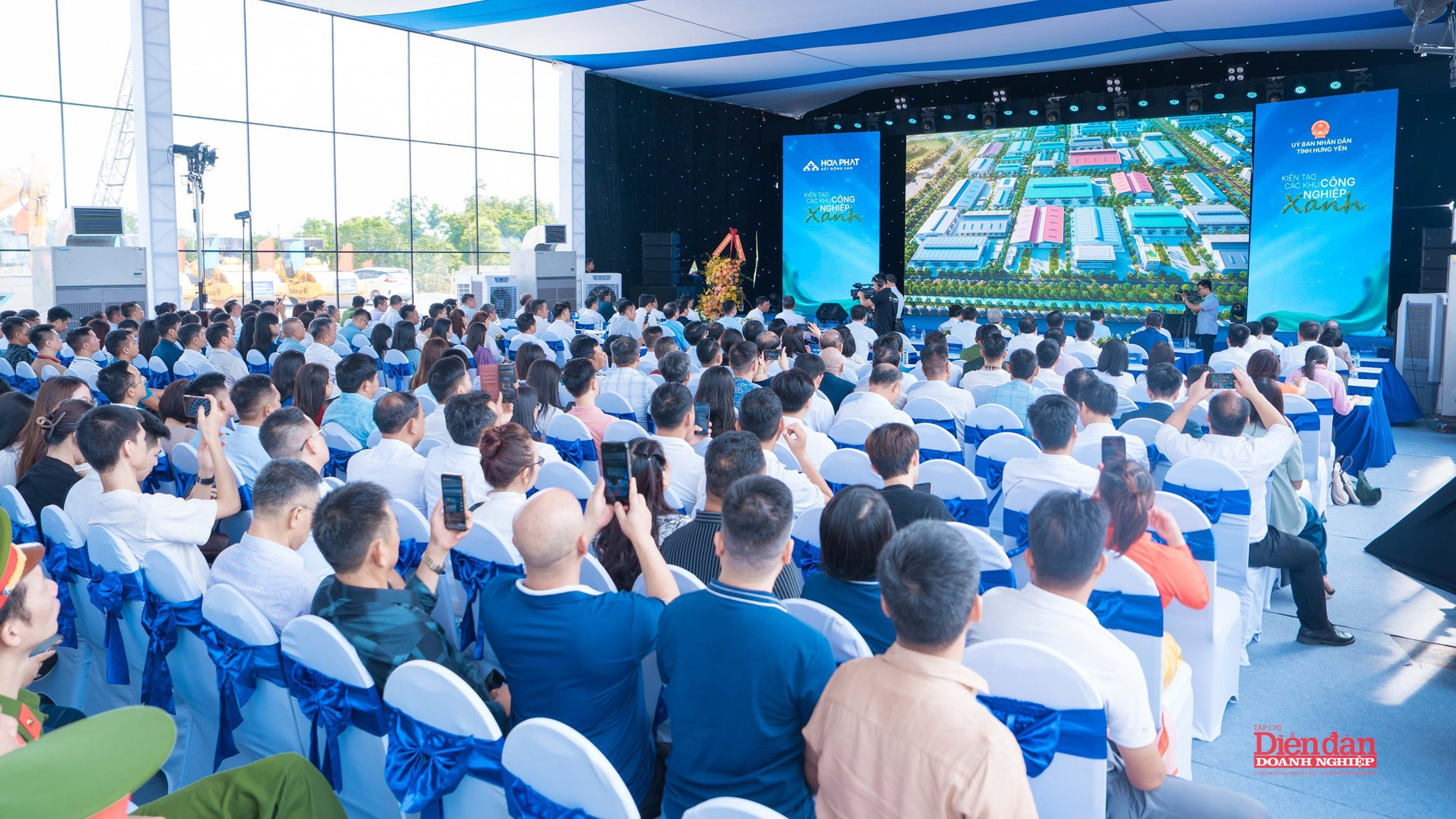
Industrial Park No. 02 in Hung Yen, developed by Hoa Phat Group, has officially broken ground and is being positioned as a strategic supporting industrial park designed to attract high-tech manufacturing and integrate into global technology supply chains.
Strategic vision and breakthrough actions
Hung Yen has established itself as one of the most dynamic industrial hubs in Vietnam's Red River Delta. Bordering Hanoi, with well-developed transport infrastructure and an abundant supply of industrial land, the province has attracted billions of US dollars in foreign direct investment (FDI). However, most existing projects remain concentrated in downstream manufacturing, including assembly, mechanical and basic electronic components, and textiles and garments, industries that rely heavily on low-cost labor and generate relatively limited added value.
As the Fourth Industrial Revolution accelerates, Hung Yen recognizes that achieving its ambition of becoming a modern industrial province requires a fundamental restructuring of its economic model. The semiconductor industry, characterized by its knowledge-intensive, capital-intensive, and technology-driven nature, has emerged as a strategic pathway toward higher-value industrial development.
The greatest challenge facing both Vietnam and Hung Yen, however, is not infrastructure or investment incentives, but the severe shortage of highly skilled talent. Semiconductor engineers require strong foundations in mathematics, semiconductor physics, integrated circuit design, and cleanroom operations. As a result, developing a semiconductor industry demands not only industrial investment but also a comprehensive transformation of the province's education and vocational training systems.
Building an ecosystem through the triple-helix partnership
To address the growing shortage of semiconductor talent, Hung Yen is pursuing a comprehensive strategy rather than isolated initiatives. The province is developing an integrated ecosystem based on close collaboration among government, educational institutions, and industry.
The provincial government serves as the key facilitator by introducing targeted policies and long-term development strategies. These include planning high-tech industrial parks, allocating financial resources for scholarships and tuition support for students pursuing STEM (Science, Technology, Engineering and Mathematics) and semiconductor-related disciplines, as well as streamlining administrative procedures to attract overseas Vietnamese professionals and international experts to teach and work in the province.
Hung Yen also benefits from the presence of several higher education institutions with strong engineering and technology programs, including Hung Yen University of Technology and Education, Thai Binh University, and Thai Binh Vocational College. In line with the province's development strategy, these institutions have begun upgrading their curricula, introducing specialized programs in integrated circuit (IC) design, semiconductor packaging and testing, and incorporating artificial intelligence (AI) into teaching and research to better meet the evolving needs of the semiconductor industry.
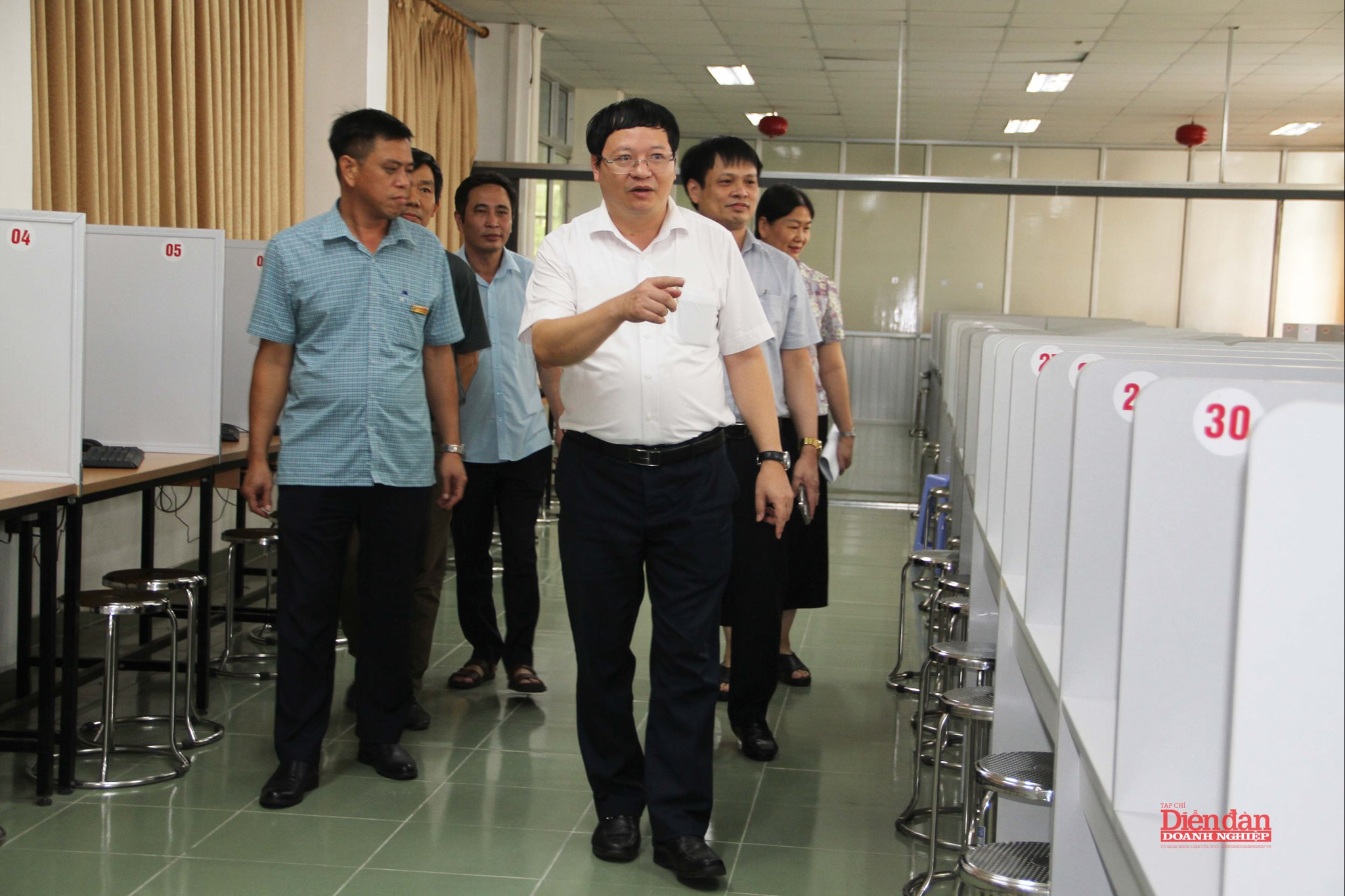
President of Thai Binh University, Pham Quoc Thanh, inspects the university's facilities in preparation for the 2026-2027 academic year.
The curricula are being aligned with internationally recognized programs from the United States, Taiwan, and South Korea. Laboratories and practical training facilities are also being upgraded, giving students early exposure to industry-standard electronic design automation (EDA) software and advanced simulation tools.
Industry commitment
High-tech enterprises operating in Hung Yen are no longer merely employers but active partners in talent development. Many leading companies have signed memoranda of understanding with universities and vocational colleges in the province to sponsor laboratory equipment, establish specialized training facilities, provide industry experts as lecturers, and offer employment opportunities for graduates. This industry-oriented training model helps bridge the gap between academic education and industrial practice, enabling graduates to enter the workforce with job-ready skills and reducing the need for additional training.
Hung Yen has also adopted a clearly defined strategy for semiconductor workforce development, tailoring training programs to different segments of the semiconductor value chain in line with local capabilities and global industry trends. In collaboration with leading universities, the province is focusing on developing engineers with strong algorithmic thinking and expertise in electronic design automation (EDA) tools and electronic design processes. This segment represents the highest value-added area of the semiconductor industry, while also requiring rigorous, long-term education and specialized training.
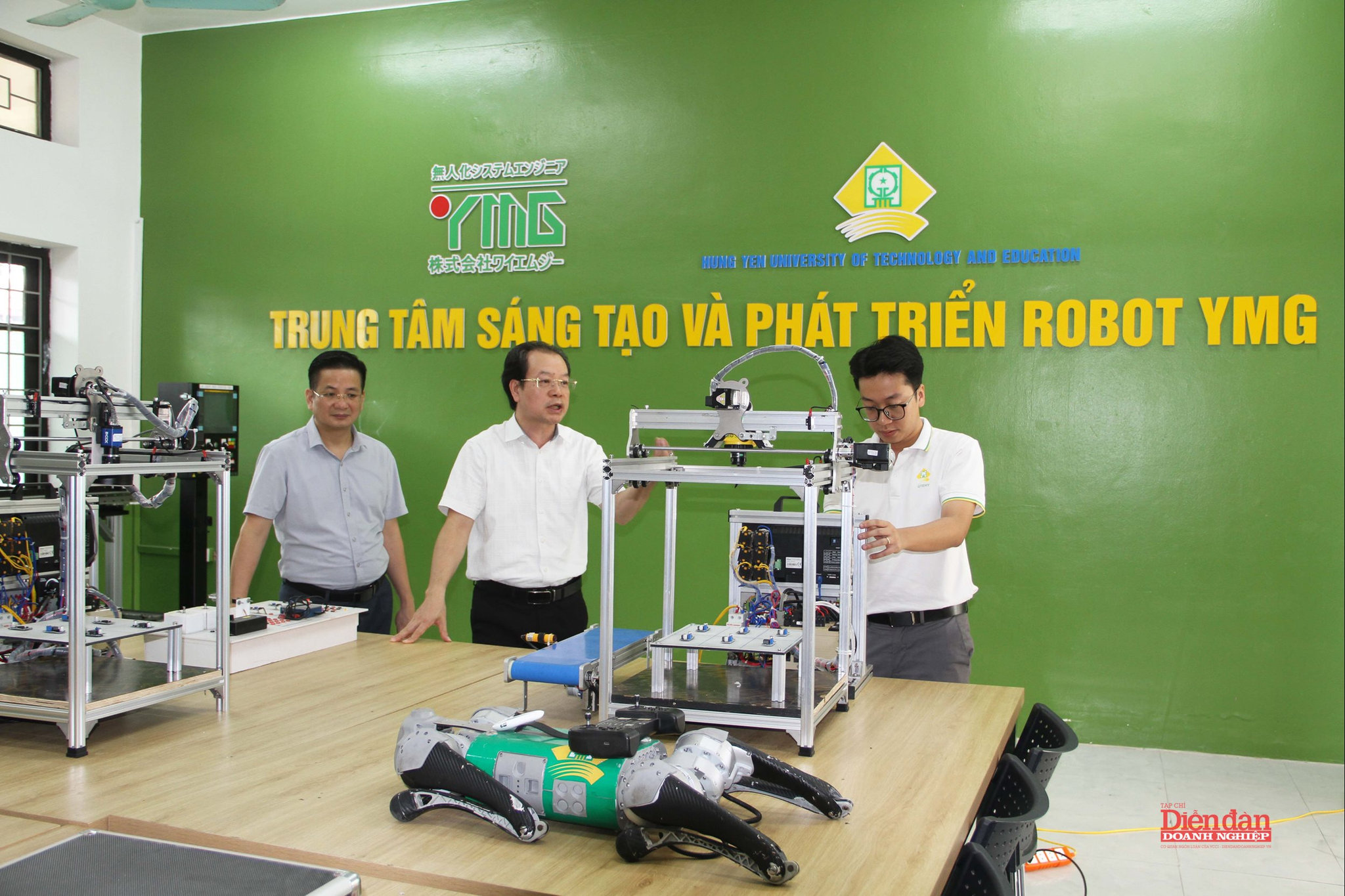
The President of Hung Yen University of Technology and Education (center) is introduced to a student-developed robotics project at the YMG Center for Robotics Innovation and Development.
Developing engineers and technicians in semiconductor packaging and testing has been identified as Hung Yen's primary short- and medium-term priority. As multinational semiconductor companies increasingly seek to relocate packaging and testing facilities from neighboring countries to Vietnam, Hung Yen is well positioned to attract this investment thanks to its abundant industrial land and well-developed infrastructure. Success, however, will depend on the availability of a sufficiently skilled technical workforce.
To meet this demand, the province is encouraging and supporting workers currently employed in the electronics and mechatronics sectors to upskill and transition into semiconductor-related occupations, enabling them to adapt quickly to the requirements of advanced manufacturing facilities.
Vision toward 2030
By 2030, Hung Yen aims to become one of northern Vietnam's leading centers for semiconductor education and workforce development. The province targets the annual training of thousands of semiconductor engineers and technicians, not only to meet local industrial demand but also to supply talent to major technology hubs across the region.
Despite the significant opportunities ahead, building a sustainable semiconductor talent pipeline will inevitably present major challenges. Overcoming these obstacles will require strong political commitment and coordinated action from provincial authorities. Funding constraints can be addressed through public-private partnership (PPP) models, while the shortage of qualified instructors can be alleviated by attracting leading international experts through exchange programs, industry collaboration, and online teaching initiatives.
Above all, Hung Yen seeks to inspire the younger generation to pursue careers in science and technology. By fostering a passion for innovation and semiconductor engineering, the province hopes to cultivate a new generation of professionals who recognize that contributing to the semiconductor industry also means contributing to Vietnam's long-term technological and economic future.
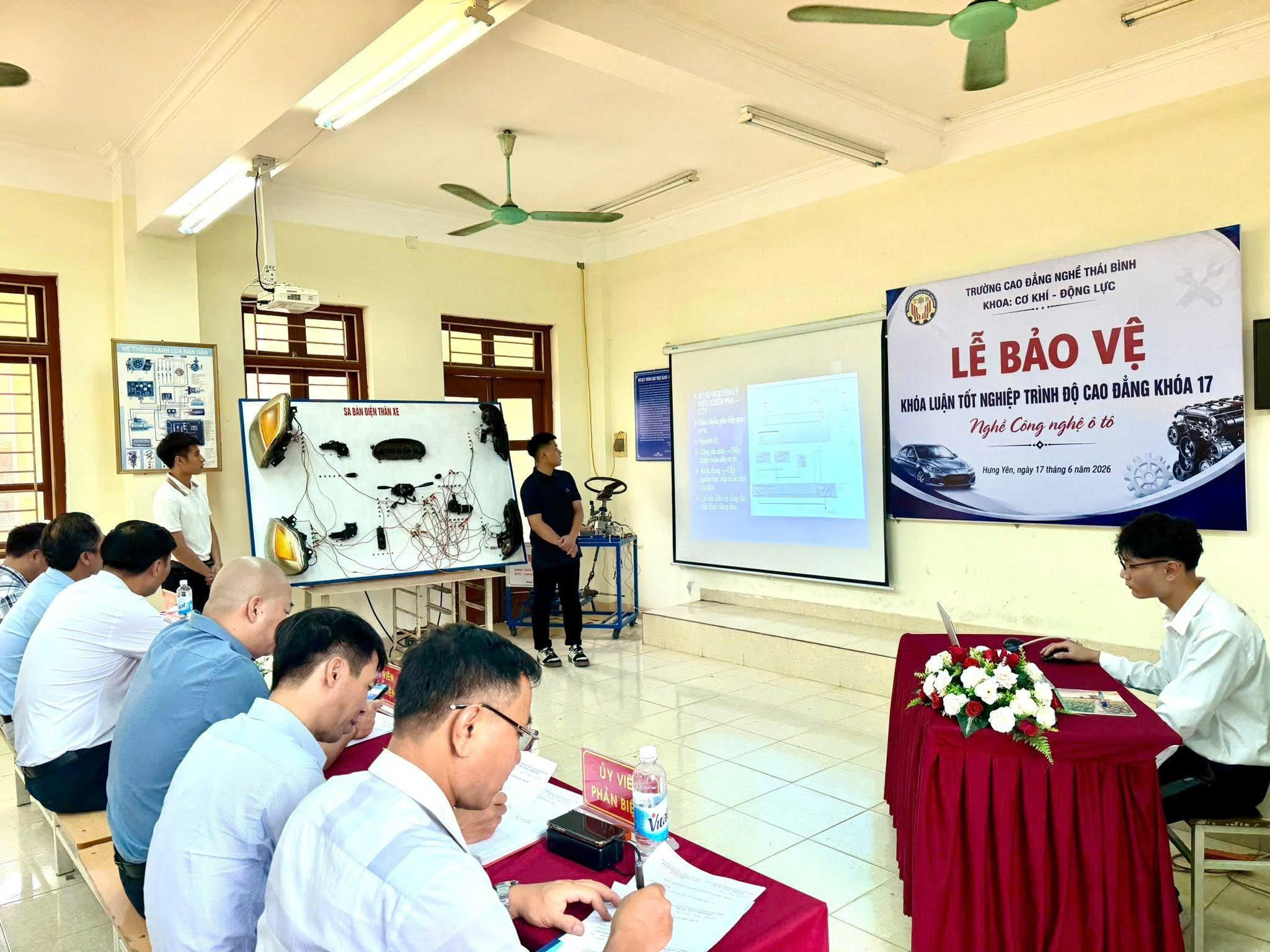
On June 17, 2026, at Campus 2 of the Faculty of Mechanical Engineering and Automotive Technology, Thai Binh Vocational College held the graduation thesis defense for Cohort 17 associate degree students majoring in Automotive Technology.
Investing in semiconductor talent development is a long-term undertaking that requires substantial resources and sustained commitment. The benefits cannot be realized overnight. However, without taking decisive action today, Hung Yen will find it difficult to secure a meaningful position in the global semiconductor value chain.
The province's proactive and determined efforts to strengthen semiconductor workforce development reflect its commitment to implementing the Party Central Committee's resolutions on building a knowledge-based economy. By cultivating a highly skilled workforce with expertise in core technologies, Hung Yen aims not only to attract high-quality, billion-dollar foreign direct investment (FDI) projects, but also to become an important contributor to Vietnam's ambition of establishing itself as a competitive player in the global semiconductor industry.
Author: KIM DUNG (THANH TRA translates)
RECOMMENDED TOPICS