VN
VN
 EN
EN
17/07/2026, 01:00
VCCI
ILO strengthens support for Vietnam in building a sustainable and inclusive labour market
Amid growing challenges posed by climate change and increasingly stringent requirements across global supply chains, ILO Vietnam is placing strong emphasis on forecasting green skills needs and promoting responsible business conduct.
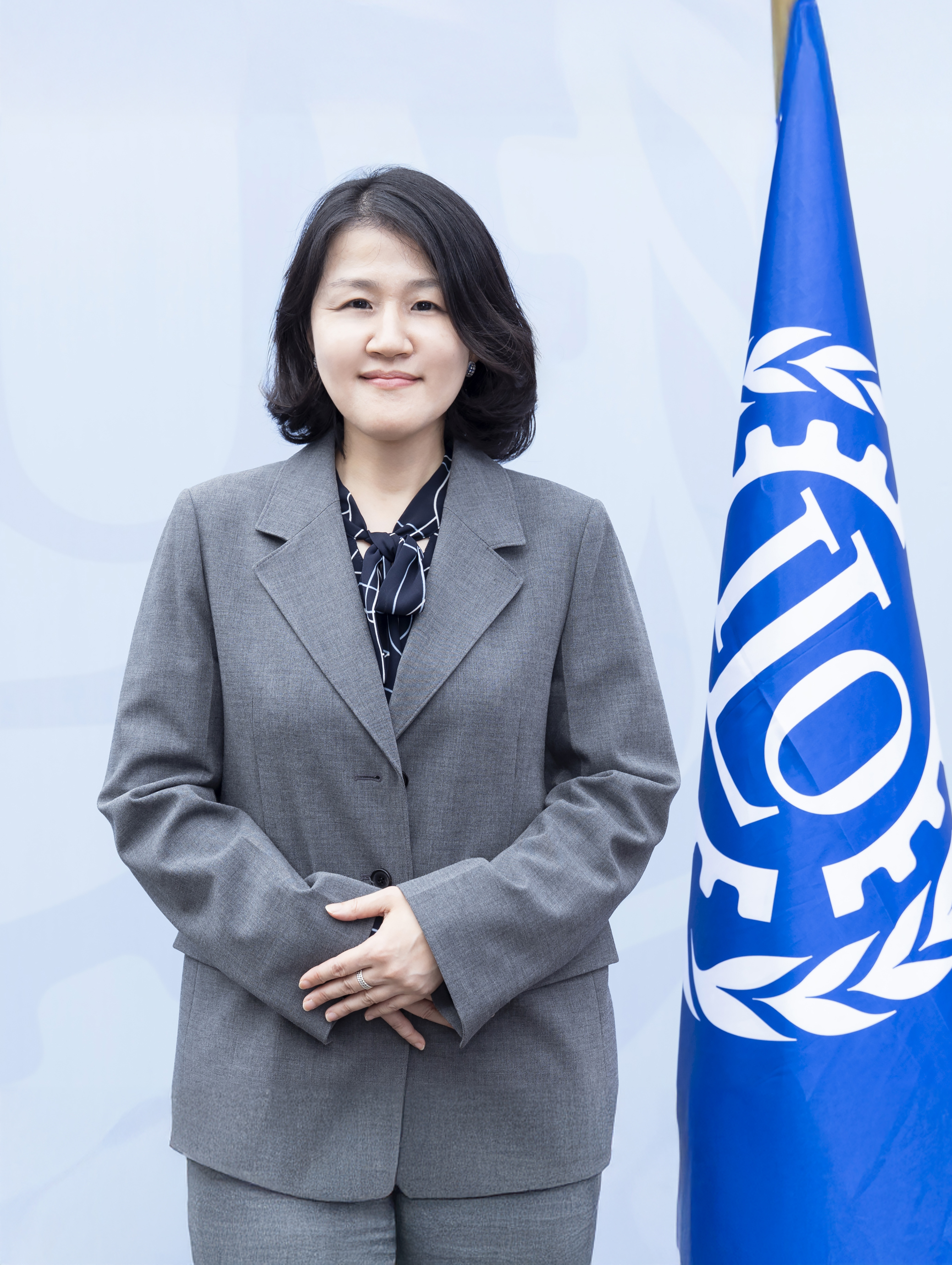
Business Forum Magazine conducted an exclusive interview with Ms. Sinwon Park, the newly appointed Country Director of ILO Vietnam, to gain insights into the organization’s upcoming plans to support sustainable employment development and advance responsible business practices in Vietnam.
As the newly appointed Director of the ILO in Viet Nam, what are your strategic priorities for this term, particularly in the context of the global economy and Viet Nam’s recovery in the post-pandemic period and ongoing digital transformation?
First and foremost, I would like to express my honour in assuming the position of Country Director of the International Labour Organization Country Office for Viet Nam. This role is particularly meaningful given Viet Nam’s long-standing partnership with the ILO, at a pivotal moment as the country advances towards its goal of becoming a high-income country by 2045. This ambition is underpinned by Viet Nam’s dynamic economic transformation and its strong commitment to inclusive and sustainable growth. I take on this responsibility with a strong sense of purpose and continuity, building on the collective efforts of the Government, employers’ and workers’ organizations, and development partners.
In this context, my strategic priorities in Viet Nam are firmly anchored in the framework of the Decent Work Country Programme (DWCP) 2022–2026, which was jointly agreed between the Government of Viet Nam, employers’ and workers’ organizations, and the International Labour Organization.
In practical terms, we will focus on supporting a sustainable, inclusive and gender-responsive economic transformation, including a just transition, based on innovation and entrepreneurship, to enhance productivity, competitiveness and decent work. Another priority is to ensure that people benefit from a more just, safe and inclusive society, through strengthened governance and institutions, and stronger protection for those at risk of being left behind.
In this context, strengthening the care economy is both a social imperative and an economic opportunity. Expanding access to quality care services, investing in care-related jobs, and improving working conditions for care workers, many of whom are women, are essential to advancing gender equality, increasing labour force participation and supporting productivity growth. These efforts need to go hand in hand with stronger and more inclusive social protection systems, which help reduce vulnerability, support workers and families across the life cycle, and enable people to participate fully in economic and social life.
In the increasingly interconnected global economy and evolving supply chain requirements, this means helping Viet Nam strengthen resilience in its labour market and enterprises, particularly MSMEs, while supporting their growth and integration into regional and global value chains.
At the same time, it aims to improve job quality and workforce participation for women, young people, and workers in vulnerable situations. It also means continuing to support efforts to align policy and practice with international labour standards and to strengthen effective social dialogue at enterprise, sectoral and national levels.
On digital transformation, our approach is to ensure the digital economy works not only for productivity and competitiveness, but also for fairness and protection. The ILO is supporting evidence and policy capacity with regard to new forms of work, for example, by supporting improvements in how digital platform employment is measured in labour force surveys, so that policymaking is grounded in data.
We are also drawing on global ILO analysis on how employment policies can better integrate digitalization and AI, covering issues such as employment services, active labour market policies, and inclusion to help supply the labour market with a more skilled, adaptable and future-ready workforce.
Energy transition and climate change are driving the growth of green jobs. How will the ILO support Viet Nam in anticipating future skills needs and developing vocational education and training programmes, to ensure that Vietnamese workers are well prepared for the jobs of the future?
Climate change and the transition towards a low-carbon economy are driving profound changes in labour markets worldwide. For Viet Nam, a country highly vulnerable to climate impacts but also rich in renewable energy potential, this transition presents both significant opportunities and challenges for workers, enterprises and skills development systems.
The ILO’s approach is grounded in the concept of a just transition, ensuring that environmental sustainability goes hand in hand with social justice and decent work. As the international community looks ahead to COP30, the importance of a just transition-one that aligns climate ambition with decent work, social dialogue and inclusion-has never been clearer. One of the important areas of ILO support is anticipating future skills needs through robust labour market information and sectoral foresight.
Through the Skills for Trade and Economic Diversification (STED), the ILO works with governments, employers, and workers’ organizations to strengthen skills forecasting, conduct in-depth sectoral analysis, and foster dialogues among relevant stakeholders. This ensures that skills policies and training programmes are evidence-based and aligned with the economic sectors’ growth and demands,
For example, our recent work with industry stakeholders in the textile and garment sector has identified priority skills needs and developed actionable recommendations for sectoral skills strategies and education and training systems. These supported the sector in responding to technology adoption, climate change, and the transition to greener practices, as well as evolving global market requirements.
The ILO places strong emphasis on linking vocational education and training (VET) and skills development with decent work outcomes. Training alone is not sufficient if it does not lead to quality employment. The ILO therefore supports stronger sectoral engagement, work-based learning, and quality assurance through promoting industry led-initiatives such as the establishment and effective functioning of sector skills bodies to address skills mismatch.
It also supports education and training systems, including VET, to proactively respond to emerging labour market demands, particularly those driven by the green transition and national priorities outlined in Resolution No. 71 on breakthroughs in education and training, as well as the recent adoption of several key laws.
This includes raising awareness and strengthening institutional capacity, enhancing teacher competencies, and integrating green jobs into career guidance packages. By equipping teachers with updated and practical tools, students can better navigate dynamic career pathways and seize opportunities in a greener economy.
In addition, the ILO works to improve connections between education and training systems, public employment services, and labour market information. These efforts ensure that training programmes reflect real labour market needs and that graduates possess not only technical expertise but also core employability skills such as problem-solving, teamwork, adaptability, environment and sustainability-oriented skills. This holistic approach supports Viet Nam’s ambition to build a future-ready workforce and accelerate its transition toward inclusive, green growth.
Youth employment is a key priority in the green transition. Young people are often at the forefront of climate action, but they also face higher risks of unemployment and underemployment. Building on diagnosis on green jobs and career development support for youth, the ILO, together with tripartite partners is developing system-wide recommendations and action plans to enhance young people’s access to decent work and green jobs.
Notably, in December 2025, the ILO launched its first-ever Youth Network for Green Jobs, Decent Work and Career Development Support. By supporting youth-led initiatives on advisory services for the ILO, research, training, skills development, awareness raising on decent work and green jobs as well as career development, the ILO aims to help young women and men view the green transition not as a challenge, but as n opportunity for the pathway to meaningful and productive work.
Finally, social dialogue plays a critical role in ensuring that the energy transition is “just” and sustainable in the light of the ILO Just Transition Guidelines. Transition policies inevitably involve trade-offs, and some workers and communities may be adversely affected. Engaging workers’ and employers’ organizations in planning and implementation helps ensure that reskilling, income support, and social protection measures are in place strengthening public trust and increasing the likelihood of a successful transition.
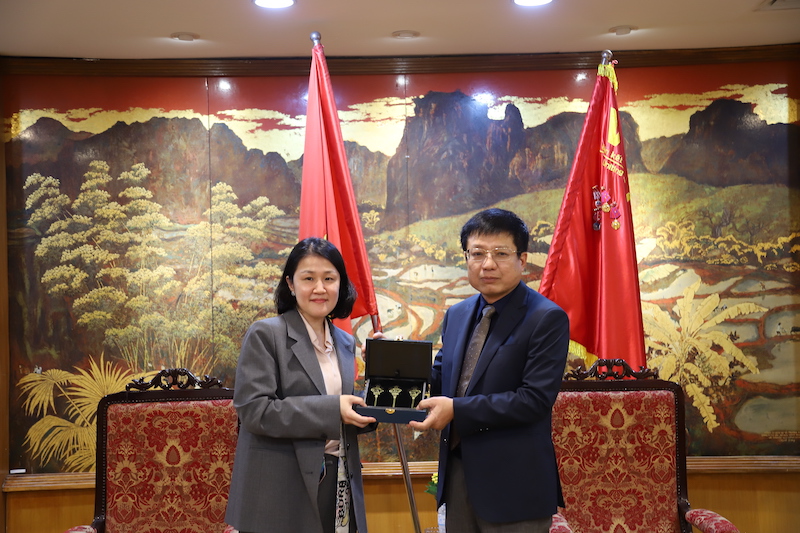
The Viet Nam Chamber of Commerce and Industry (VCCI) plays an important role in representing the business community and employers in Viet Nam. Could you please share the ILO’s plans for strategic cooperation with VCCI in the coming period to promote sustainable labour practices and responsible business conduct?
VCCI is a long-standing and essential constituent of the tripartism in advancing decent work in Viet Nam, and will continue to play a central role in the ILO’s engagement with the business community and employers in the coming period. Our cooperation with VCCI has been particularly important in connecting enterprise competitiveness with fair labour practices and we will continue to deepen the partnership in several mutually enforcing priority areas.
A key focus will be on promoting productivity, sustainable enterprises and responsible business practices across Viet Nam. This includes scaling up the adoption of responsible business conduct (RBC), environmental, social and governance (ESG) approaches, and sustainable labour practices, as well as strengthening responsible supply chains in sectors deeply integrated into global value chains.
Through training, advisory services and practical due diligence tools, this collaboration will support enterprises in responding to rising expectations in global markets on labour standards, environmental sustainability and good governance. ILO-supported capacity-building initiatives implemented through VCCI’s extensive network are designed to create a nationwide multiplier effect, ensuring that knowledge and good practices reach enterprises well beyond major urban centres.
At the same time, the ILO will continue to engage VCCI in tripartite and multi-stakeholder dialogue, recognizing its key role in representing employers’ perspectives. This engagement helps ensure that policy reforms and enterprise practice move together, supporting stable industrial relations, improved productivity, and workplaces that are safe, inclusive and sustainable development. This approach is fully consistent with Viet Nam’s decent work priorities and with partnership models that have demonstrated results in key sectors over time.
Looking ahead, in 2026, the ILO together with the tripartite partners (Ministry of Home Affair, VGCL, VCA and VCCI) will develop the new Decent Work Country Programme Framework for 2027-2031, of which the ILO sees its partnership with VCCI as a strategic platform to jointly identifying emerging labour and business issues and addressing future priorities, align enterprise competitiveness with international labour standards, and support Viet Nam’s transition towards a more sustainable, resilient and inclusive economy.
Thank you so much!
Author: Cam Anh
RECOMMENDED TOPICS