VN
VN
 EN
EN
26/07/2026, 02:00
Investment
Oil and gas sector in 2026: Corporate earnings diverge
Geopolitical volatility has triggered a global oil and gas supply shock. However, Viet Nam has proactively stabilized its market while opening up investment opportunities amid the ongoing energy transition.
Vietnam Creates a Stabilizing “Buffer Zone”
Since the outbreak of conflict in the Middle East, oil and gas have evolved from commodities for production and consumption into strategic instruments in international negotiations. The interplay of military conflict, economic sanctions, and geopolitical competition has forced many economies to redefine “energy independence” in an increasingly uncertain and risk-laden environment.
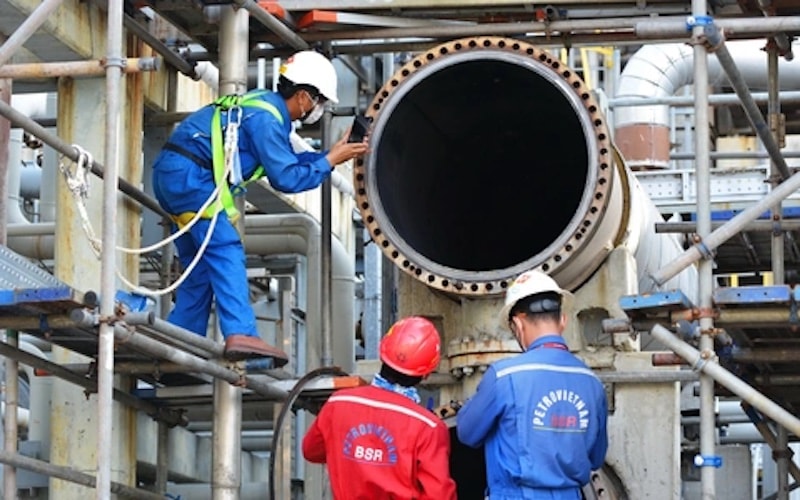
Alongside optimizing crude oil supply and increasing refining capacity, another approach being promoted is expanding the production and use of E10 biofuel.
According to data from major energy organizations such as OPEC and IEA, global oil supply was abruptly tightened by around 8–9 million barrels per day in March 2026 alone. As a direct consequence, the forecast for global oil production growth in 2026 has been sharply revised downward, from 2.4 million barrels per day to just 1.2 million barrels per day. Notably, most of the additional supply now depends on non-OPEC countries, while production capacity in the Middle East—traditionally a cornerstone—has been disrupted by conflict and security risks.
VPBankS Research notes that the shock has not been confined to crude oil but has quickly spread to downstream segments, particularly refining and petrochemicals. In the first quarter of 2026, refining margins surged to record levels, becoming the focal point of the entire industry. The main driver has been disruptions in refined product supply, as the Middle East—accounting for about 20% of global refined product supply and up to 50% of Europe’s diesel and jet fuel demand—has been severely affected. As a result, prices of these products have spiked with unprecedented spreads: diesel recorded a premium of up to USD 120 per barrel over Brent, while jet fuel (Jet A1) peaked at USD 230 per barrel, more than USD 100 above crude prices.
Mr. Chu The Huynh, an analyst at VPBankS Research, noted that for Viet Nam, in addition to rising fuel prices, there has been a surge in oil and gas shipping rates. Charter rates for crude oil tankers have increased from USD 60,000 to USD 128,000 per day, reflecting rising transport demand amid escalating maritime security risks. This has indirectly generated “secondary profits” for oil and gas transport companies, particularly those capable of maintaining stable operations in a highly volatile environment, despite higher insurance costs and geopolitical risks.
In response to external shocks, Viet Nam has implemented a range of regulatory measures to create a “buffer” for the economy and ensure national energy security. In the first quarter of 2026 alone, 14 fuel price adjustments were carried out to closely track global market developments. At the same time, policy tools have been deployed in a coordinated and forceful manner.
The price stabilization fund has been used at levels of VND 4,000–5,000 per liter to ease pressure on retail prices, while import tariffs, special consumption tax, and environmental tax have been reduced to zero. The Government has also advanced VND 8 trillion to support price stabilization efforts and implemented restrictions on crude oil exports to retain supply for domestic refineries. As a result, domestic output increased by 12% year-on-year in the first quarter of 2026.
Alongside short-term measures, Viet Nam has accelerated its long-term strategy by diversifying supply sources. Fuel imports rose by 61% to 3.7 million tons, while liquefied gas imports increased by 50%. Notably, the successful import of 130,000 tons of LNG in early April marked a significant milestone, demonstrating the effective implementation of a strategy to shift toward more flexible energy sources less dependent on geopolitical hotspots.
Corporate Profit Landscape
Against this backdrop, profit performance across oil and gas companies has diverged significantly. Mr. Chu The Huynh highlighted that downstream firms, particularly in refining and petrochemicals, have benefited greatly from rising refining margins. For instance, BSR reported a first-quarter profit of VND 3.35 trillion in 2026, up 740%—an exceptional surge. However, this should be viewed as cyclical, dependent on unusual market conditions and unlikely to be sustained over the long term.

For midstream and upstream companies, growth has been more stable. PVS has maintained core growth of 6–10% while reversing provisions of VND 400–500 billion from the Sao Vang–Dai Nguyet project, significantly improving cash flow and financial capacity for new investments. GAS continues to play a central role in the gas sector with its transition strategy toward LNG, targeting output of 1.2 billion cubic meters. Meanwhile, POW recorded profits of over VND 900 billion thanks to efficient operations of new power plants and optimized capacity at existing facilities.
Similarly, Mr. Nguyen Hoang Nam, Director of Energy and Utilities Research at HSC, noted that geopolitical conflicts impact companies unevenly across the sector. In upstream, firms such as PVD and PVS, which provide drilling and oilfield services, benefit from increased exploration and production activity.
In midstream, companies like GAS may benefit from rising gas demand, driven largely by gas-fired power plants—especially as Viet Nam accelerates investment in LNG and gas power projects over the next five years.
For downstream, the impact is mixed. On the positive side, refining companies like BSR benefit from expanded capacity. However, fuel distributors such as PLX and PVI face greater pressure, as they must prioritize ensuring national energy security and domestic supply rather than maximizing profits.
In the context of a volatile market this year, investors should closely monitor developments in US–Iran negotiations, the situation in the Strait of Hormuz, and US energy policy. Many countries are currently accelerating investment in LNG and renewable energy as a way to reduce dependency risks.
From an investment strategy perspective, the trend is clearly shifting toward companies with strong fundamentals and long-term positioning in clean energy. Stocks such as PVS and GAS are viewed positively over the long term due to their central role in the energy transition. Meanwhile, BSR is more suitable for medium-term strategies to capitalize on high-profit cycles, though investors should actively take profits given the lack of sustainability.
Experts agree that in 2026, the shift toward clean energy is no longer optional but an inevitable requirement. In the long term, companies leading in LNG and offshore wind are likely to emerge as winners, as they can both navigate short-term volatility in fossil energy markets and capture the sustainable growth trajectory of the global economy.
Author: DIEM NGOC - TRUONG DANG
RELATED TOPICS
RECOMMENDED TOPICS