VN
VN
 EN
EN
11/07/2026, 02:00
Business economics
Overseas Vietnamese community and dedication to the homeland
Every time he lands at Noi Bai International Airport during his working visits to Viet Nam, Dr Nguyen Hong Son can clearly feel his heartbeat blending with the renewed rhythm of his homeland. The changes across the country — whether in the thousand-year-old capital of Ha Noi, the gentle land of Hue, or the dynamic Ho Chi Minh City — are reflected in every road, every new structure, and every youthful face filled with energy.
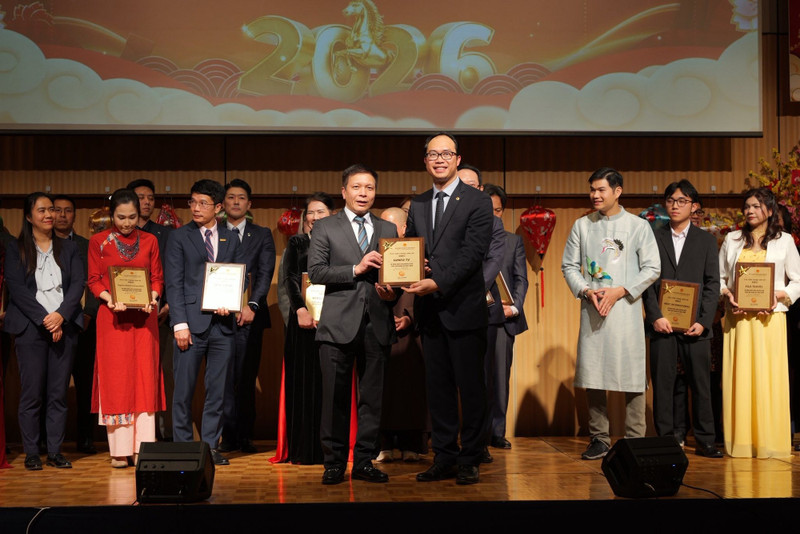
Although he has lived and worked in Japan for many years, Son always carries a deep sense of pride and emotion when witnessing Viet Nam’s steady development and deeper global integration. It is not only the joy of a person living far from home, but also a strong urge and aspiration to “return” and contribute, even in a small way, to the country’s journey of renewal and nation-building.
He believes that Vietnamese intellectuals abroad, equipped with knowledge, international experience, and a spirit of innovation, can serve as important bridges, bringing global knowledge back to support the homeland’s development. That aspiration goes beyond contributions to science and technology — it is also about spreading the image of a dynamic, creative, and ambitious Viet Nam to the world.
Reflections before “returning”
In many conversations with friends and colleagues — leading scientists and experts in Japan — Son has heard their desire to return and contribute to their homeland. Yet accompanying that aspiration are concerns: Are domestic mechanisms and policies open and supportive enough for them to devote themselves wholeheartedly? From these reflections, he has come to realise that attracting talent requires not only calls for contribution, but also practical and accessible policies.
First and foremost, in his view, is appropriate recognition and incentives. Talent does not merely require a liveable income; more importantly, it needs respect and social acknowledgement. When scientists feel their efforts are properly valued, they gain stronger motivation to commit long-term. Innovation flourishes in environments where new ideas are encouraged and protected. A modern laboratory, sound intellectual property protection policies, or simply trust in a researcher’s capability — these are fundamental conditions enabling overseas Vietnamese intellectuals to dedicate themselves fully.
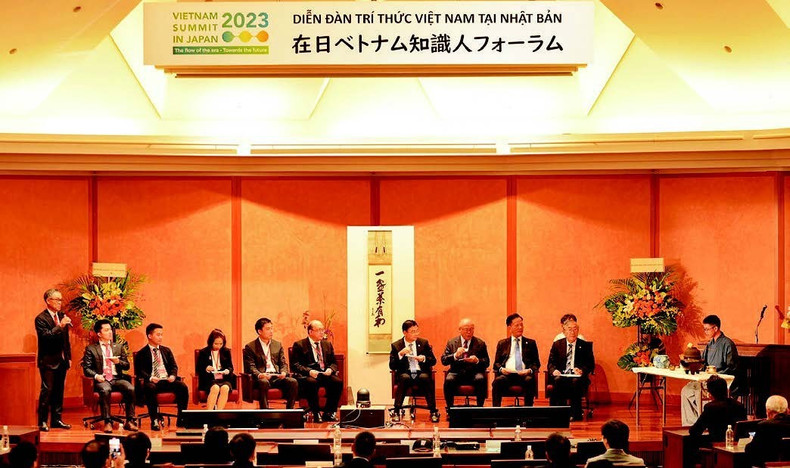
In addition, there must be flexible cooperation mechanisms. Not everyone can return immediately or permanently. Many overseas Vietnamese intellectuals wish to contribute on a short-term basis or through remote collaboration. If we open diverse channels of cooperation, they will more easily find suitable ways to contribute, wherever they are.
Finally, he believes in promoting the image of the country. When overseas Vietnamese intellectuals become “knowledge ambassadors,” they bring home not only technology but also culture and the Vietnamese spirit. Every success story abroad affirms that Viet Nam can rise through its own intellect and resilience.
When talents feel respected and see real opportunities, they will return — not only physically, but with all their heart and intellect. From such returns, the nation’s aspiration for development will be illuminated by concrete and meaningful actions.
Inspiring journeys of return
There are stories of overseas Vietnamese intellectuals returning home that always move him deeply. These are not merely personal journeys, but powerful testimonies of patriotism, dedication, and faith that Viet Nam can advance through its own intellectual strength.
Such returns often carry deep emotions: attachment to one’s roots, national pride, and a sacred sense of responsibility. When a scientist, expert, or entrepreneur chooses to return, they bring with them knowledge, international experience, and a spirit of innovation to help build the homeland.
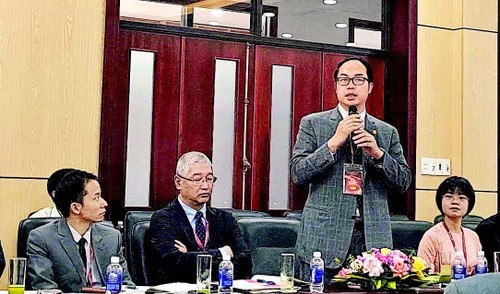
Dr Son thought of Luong Dinh Cua, who once studied and conducted research in modern laboratories in Japan. He could have remained there to pursue a comfortable scientific career, yet his heart was drawn back to Viet Nam. Upon returning, he devoted himself to agriculture — a field closely linked to the lives of millions of Vietnamese farmers. The new rice varieties he developed not only improved productivity but also transformed rural life. His story vividly embodies the spirit of intellectuals committed to the nation, ensuring science goes beyond textbooks to reach the fields and dining tables of the people.
Another exemplary figure is Dang Luong Mo, an overseas Vietnamese intellectual in Japan who laid the foundation for Viet Nam’s microelectronics industry — an advanced technological field considered highly challenging for developing countries. With more than 300 research works and numerous patents, he not only brought knowledge home but also inspired younger generations. He affirmed that Viet Nam can master high technology with determination and proper strategy. Thanks to his contributions, the country’s semiconductor sector has made a solid start, opening opportunities for deeper integration into global value chains.
Son also expressed his pride in young Vietnamese scientists honoured at leading Japanese universities who have returned to work at universities and research institutes in Viet Nam. They represent a new generation — combining Vietnamese intellectual strength with global integration aspirations. Upon returning, they bring not only expertise but also international research networks, connecting Viet Nam to leading global research centres.
A notable example is Dr Pham Huy Hieu, born in 1992 in Ninh Binh Province. After graduating from Ha Noi University of Science and Technology, he earned a PhD in Computer Science from the University of Toulouse (France) in 2019. Despite numerous opportunities abroad, he chose to return and is now a lecturer at VinUni University. He also serves as a principal researcher at the VinUni-Illinois Smart Health Centre, Scientific Director of the Entrepreneurship Lab, and founder of the Computer Vision and Medical AI Lab (CVMAIL). His research in artificial intelligence for healthcare contributes to applying advanced technologies to community health.
Importantly, Dr Hieu’s return and success have been strongly supported by the business sector — particularly Vingroup and VinUni. An advanced academic environment, modern facilities, and a strategy linking research to practice have enabled him to maximise his potential and inspire other young intellectuals. When businesses and young scientists join hands, Viet Nam can build a world-class science and technology workforce.
The stories of Luong Dinh Cua, Dang Luong Mo, and many young scientists tirelessly contributing at domestic institutions demonstrate that Vietnamese intellectuals, wherever they may be, always turn toward their homeland. To effectively attract this valuable resource, it is essential to build transparent, professional working environments where they can innovate and be duly recognised. Flexible cooperation mechanisms are equally important, allowing them to maintain research abroad while contributing through knowledge and technology transfer projects.
When overseas Vietnamese intellectuals feel respected and see genuine opportunities to contribute, they will become bridges bringing global knowledge home. Their return will strengthen the nation’s development path and affirm Viet Nam’s new standing in the process of integration and growth.
For Son, every return of an overseas Vietnamese intellectual is a flame that rekindles faith — proof that with the right policies, genuine respect, and supportive conditions, intellectual resources from around the world can be harnessed to serve the country’s development.
Author: NDO
RECOMMENDED TOPICS