VN
VN
 EN
EN
17/07/2026, 01:00
VCCI
Policy for renewable power: Drivers for green energy
To effectively expand the green power market and apply energy storage technologies in a safe and efficient manner, constraints linked to the Direct Power Purchase Agreement (DPPA) must be eliminated.
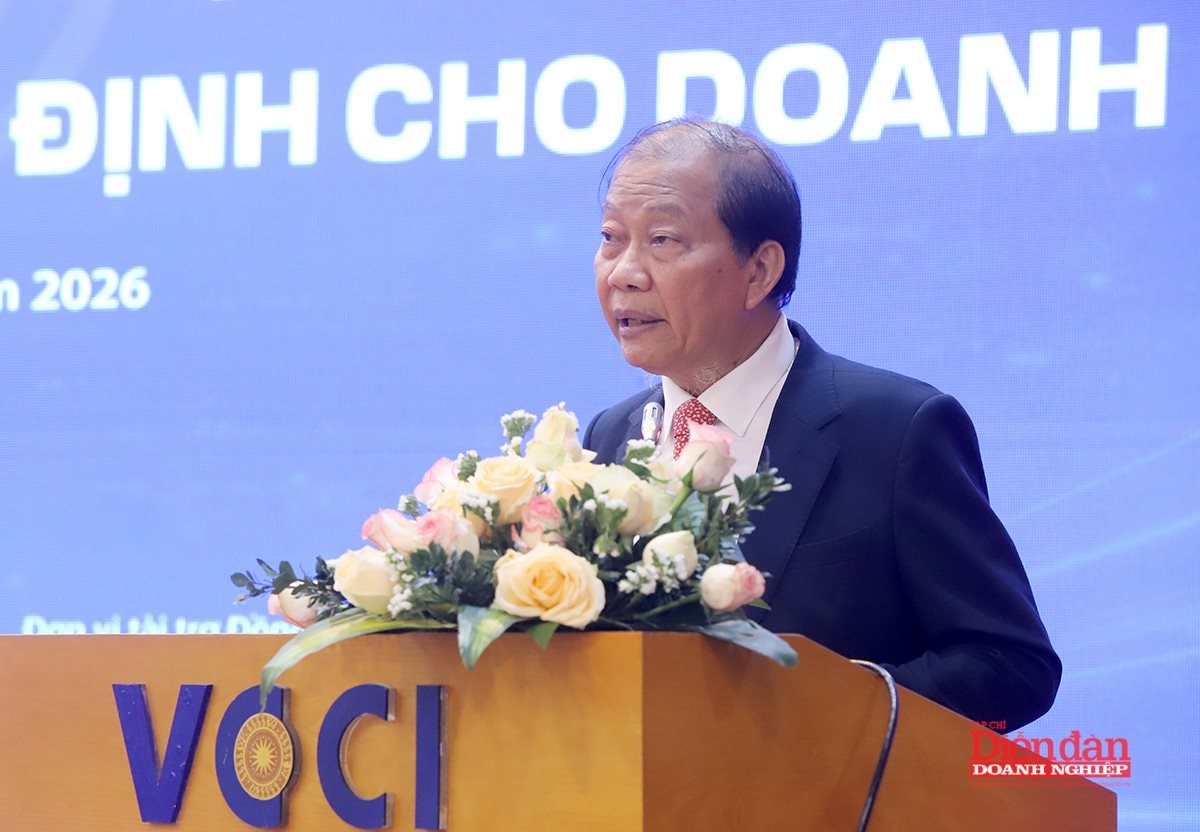
Mr. Hoang Quang Phong, Vice President of the Vietnam Chamber of Commerce and Industry (VCCI), delivered the opening remarks at the forum.
Speaking at the Business Forum Magazine forum "Improving policies for renewable energy and BESS - a stable green energy foundation for businesses", held by the Business Forum Magazine on April 21, 2026, Mr. Hoang Quang Phong, Vice President of the Vietnam Chamber of Commerce and Industry (VCCI), stated that in recent years, Vietnam has demonstrated strong determination in the energy transition to develop clean energy while ensuring sufficient electricity for socioeconomic development.
Many challenges ahead
On December 11, 2025, the National Assembly passed Resolution No. 253/2025/QH15 outlining the policies for national energy development from 2026 to 2030. The Resolution emphasises the importance of extending the DPPA to enable businesses utilise renewable energy sources. At the same time, the Resolution requires the development of BESS to increase the capacity to absorb renewable energy, contributing to the power system's stability, safety, and efficiency. This is a big strategic endeavor that must be implemented through a complete and feasible policy.
Vietnam's GDP growth target for 2026 is more than 10 percent. To reach this target, electricity consumption would rise by around 1.2-1.5 times, or a 12-15% yearly growth, putting enormous strain on the national power infrastructure.
In this context, on March 30, 2026, the Prime Minister issued Directive No. 10/CT-TTg, which clearly outlines the direction for increasing power savings and developing rooftop solar power to relieve pressure on electricity supply and demand while also ensuring energy security in the face of rapidly increasing consumption and continued fluctuations in the global energy market.
These guidelines confirm that green energy is not only a future plan but also a necessary activity, since issues are now present and getting more severe.
Mr. Phong also highlighted three important issues. First, the world is witnessing geopolitical upheavals, which have a significant influence on the global energy supply chain. Coal, liquefied natural gas (LNG), oil, and other commodities are all subject to price volatility, which is impacted by conflicts, supply competition, and trade regulations.
Meanwhile, the Vietnamese economy continues to rely significantly on imported fuel for energy production. This has substantial implications for energy security, production cost stability, and corporate competitiveness.
Second, domestic electricity consumption is increasing quickly. Industrialization, logistics development, digital transformation, the formation of data centers, new industrial parks, smart cities, etc., are causing electricity not only to increase in quantity but also to meet greening requirements.
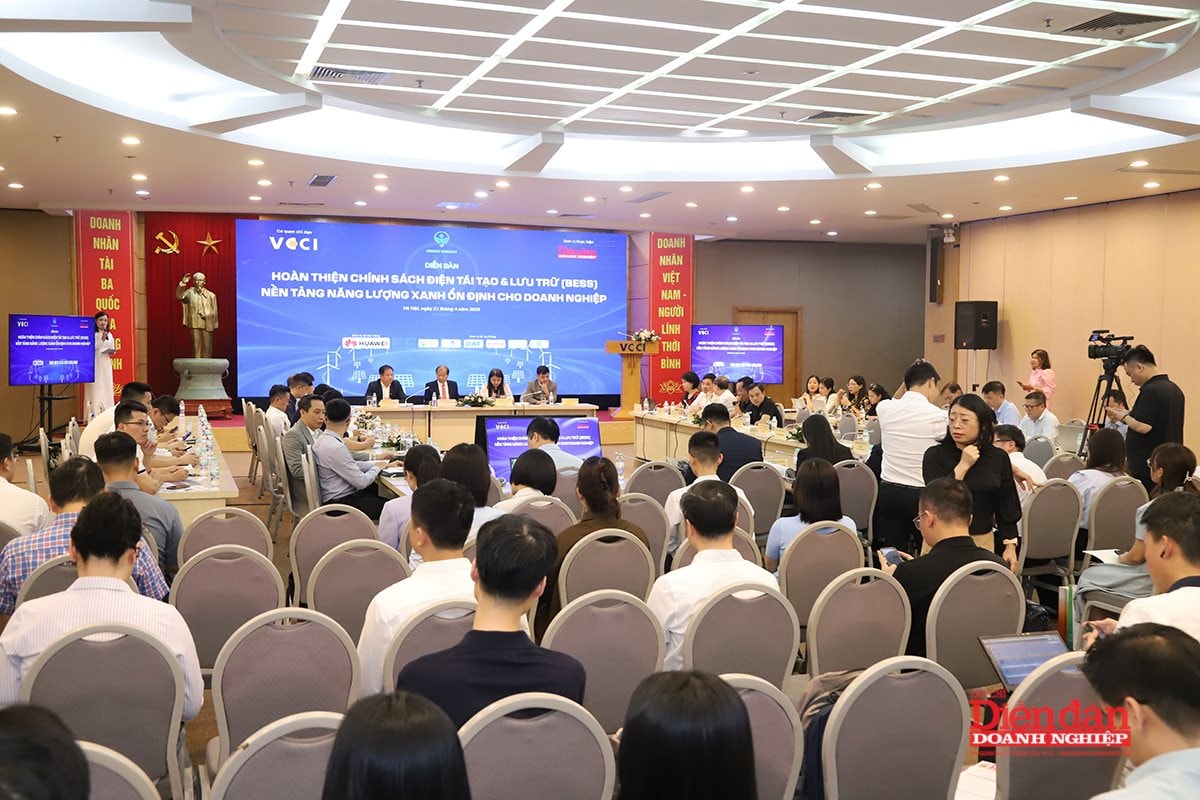
Overview of the Forum
Third, worldwide sustainability norms are becoming required. Businesses have many chances to reach huge markets as a result of Vietnam's extensive participation in new-generation free trade agreements, but these prospects are not without problems.
Mechanisms such as the European Union's CBAM, along with ESG standards, carbon standards, and green supply chain standards, are gradually becoming mandatory trade conditions. These can be considered the "passport" for businesses to maintain orders, market share, and position in the global supply chain.
Addressing challenges through legal framework
The VCCI Vice President stated that, while Vietnam has significant potential for generating renewable energy and energy storage, the implementation process remains fraught with challenges.
Despite the adoption of the DPPA, many firms continue to experience challenges due to varying legislative frameworks and a lack of right direction. Businesses are still unsure how to select the best contract model, as well as how to determine transmission and distribution costs, payment methods, duties, and rights of the parties. This is a critical problem that must be solved so that the DPPA can genuinely be a driver in the development of a green power market.
In terms of the BESS, legislation governing investment, grid connection, pricing mechanisms, business models, technical standards, auxiliary service markets, and mechanisms for raising funds and green finance have not kept up with the rate of growth and current demands.
The Party and Government's policies are extremely clear. To go from policy to reality, we need a more detailed, coordinated, and achievable set of policies.
"Based on that need, VCCI will completely synthesise the business community's and experts' opinions, as well as suggest solutions to encourage the successful implementation of the DPPA and the safe and efficient use of energy storage technology. This will help improve operating efficiency, stabilise the power system, and better serve production and commercial needs. Based on that, we will report and make recommendations to the Government, the Ministry of Industry and Trade, and relevant agencies to aid in the process of perfecting policies, promoting the more effective deployment of rooftop solar power, DPPA, and energy storage, and creating conditions for businesses to proactively secure green power sources, reduce costs, and increase competitiveness," Mr. Hoang Quang Phong emphasised.
Author: NGOC ANH
RECOMMENDED TOPICS