VN
VN
 EN
EN
06/07/2026, 02:38
Investment
State-owned bank stocks ride divestment wave
Over the past week, shares of State-owned banks—led by major lenders in the VN30 index—have continued to attract strong investor inflows following the issuance of a new resolution on the development of the state-owned economy.
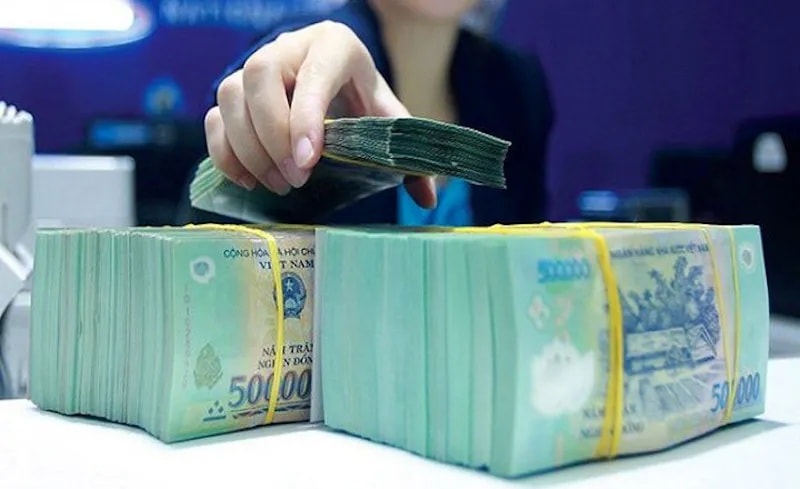
Specifically, Vietcombank (VCB) climbed close to its ceiling price at VND 68,000 per share, with trading volume exceeding 31 million shares. BIDV (BID) hit the daily limit at VND 46,000 per share, recording matched volume of 22.7 million shares. VietinBank (CTG) rose to VND 40,500 per share, with liquidity surging to 37 million shares traded. These price levels mark the highest point for the “Big 3” state-owned banks over the past year.
Policy Catalyst Behind the Rally
Commenting on the state-owned banking sector, economic experts noted that these stocks had previously been trading near cyclical lows before staging a strong rebound in the final month of the year. The rally has been driven by fresh policy momentum and expectations stemming from Resolution No. 79-NQ/TW, issued by the Politburo on January 6, 2026, on the development of the state-owned economy.
The resolution reiterates that the state-owned economy plays a leading and pioneering role, holding major national resources such as land, natural resources, and infrastructure.
In particular, state-owned enterprises (SOEs), including state-owned commercial banks, are encouraged to expand through capital increases. The resolution allows SOEs to retain 100% of proceeds from equitization and state divestment, increases the proportion of retained post-tax profits, and promotes mergers, acquisitions, and corporate transfers to enhance overall sectoral efficiency in different development phases.
According to MBS Securities, the banking sector continues to maintain strong growth momentum amid a prolonged monetary easing cycle that began in the third quarter of 2023. As Vietnam enters what policymakers describe as a “new era of national advancement,” the banking system is reaffirming its central role as the primary capital transmission channel to help realize the government’s 8% growth target, despite heightened global economic uncertainties.
Since the beginning of 2025, credit growth has accelerated sharply, repeatedly setting new highs and reaching more than VND 18.2 quadrillion—equivalent to a 16.56% increase from the start of the year as of November 27, 2025. While lending rates have been kept at relatively low levels to support economic activity, deposit growth has lagged significantly, exerting pressure on liquidity and prompting banks to raise deposit rates toward the end of the year.
In this context, MBS expects monetary policy to remain flexible and supportive, enabling system-wide credit growth in 2026 to reach approximately 20%. However, the imbalance between credit expansion and deposit mobilization is forecast to sustain upward pressure on deposit rates in the near term.
Asset Quality and Profitability Outlook
Asset quality across the banking sector is expected to remain broadly stable. The sector’s non-performing loan (NPL) coverage ratio is projected to stay above 80%, although a return to levels above 100%—seen in previous periods—is considered unlikely. MBS forecasts that banks’ net profit after tax will grow by approximately 20.5% in 2026.
From a valuation perspective, MBS noted that banking stocks are currently trading at around 1.5 times price-to-book (P/B), roughly 11% below the five-year average. Given expectations of profit growth exceeding 20% alongside relatively attractive valuations, MBS has upgraded its outlook for the sector to “positive.”
In terms of investment strategy, MBS favors large-cap banking stocks, particularly CTG, Asia Commercial Bank, BID, VCB and Military Commercial Bank. These banks are expected to continue benefiting from credit growth linked to accelerated public investment disbursement.
Moreover, improvements in asset quality over the past three years have helped ease provisioning pressures, creating buffers for profit growth. Additional upside is also seen from non-core business segments such as gold trading, consumer finance, and securities services.
Author: HA PHUONG - TRUONG DANG
RELATED TOPICS
RECOMMENDED TOPICS