What happens to the key currencies?
The US dollar might be the most important currency in most people’s books but, right now, the yen is the dominant one. Hence, what happens to the yen could easily...
The weaknesses in the US dollar could be revealed again this week if Congress misses the November 17th deadline to extend funding for the US government.
US treasury bonds are deemed by many to be the safest of safe assets. But this seems to be open to question at the moment.
Weak growth, high inflation, restrictive monetary policy, dollar strength and asset-price weakness have dogged G10 economies throughout much of the past two years. 2024...
In the past week or so we’ve seen the US dollar slide, bond yields quickly reverse a portion of recent losses, and stocks rise sharply.
There will always be some in the market eager to front-run what they feel will be a significant fall in the US dollar as the Fed gets into an easing cycle.
The US authorities have created a position where fiscal policy is loose relative to peers and monetary policy is tight compared to others.
What does the inability of US dollar/yen to move too far from 150 tell us about the state of the currency market?
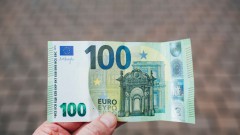
Euro/US dollar has rarely strayed from a 1.05-1.10 range all year while, more recently, US dollar/yen has become stuck at a single level – which is 150.
The global investors may continue to be drawn to US assets, partly because of US dynamism and partly because investment opportunities outside the US may be harmed by US...
With geopolitical risk very elevated in the Middle East right now, we might wonder whether the tensions will spillover to create volatility in the FX market.
The issue of high and rising government indebtedness, particularly in the US, has been in the news recently.
Fixation with the performance of the US dollar is understandable given the dominance of the greenback in areas such as currency trading, reserve holding, trade invoicing...
The US dollar increased by almost 50% throughout the middle and late 1970s and 1980s. Will the past resurface?
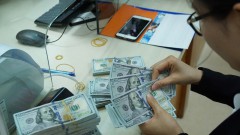
The State Bank of Vietnam (SBV) on Wednesday set the daily reference exchange rate for the US dollar against the đồng at VNĐ24,059 per dollar, up VNĐ6 from the previous...
G10 FX volatility remains low with implied one-month euro/dollar volatility below 7% right now, or around a half of the level that we were seeing a year ago.
The question now is whether the landing for the US economy remains smooth, or whether it’s one of those landings where the plane bounces up again and veers off the...
The US dollar has been very stable so far this year—much more than we’ve seen in prior years, with a less than 4% trading range on the Federal Reserve’s broad...
It seems that there are other factors that usurp interest rates and start to dominate currency trends.
There seems to be growing interest in the outperformance of the US economy compared to many of its G10 peers; something that could potentially lift the dollar further....
The prospect of easier monetary policy next year could help limit the US dollar’s upside and start to deliver a significantly weaker greenback in the coming years.
The US dollar has fallen by close to 10% in trade-weighted terms from the 20-year peak that we saw last October.