VN
VN
 EN
EN
15/07/2026, 10:39
Investment
Viet Nhat Group and the investment story in Hung Yen
When many firms have migrated in quest of favourable investment conditions, a business's decision to expand its industrial operations speaks much more than advertising activities targeted at luring investment.
Industrial growth reports, multibillion-dollar FDI figures, and new industrial parks opening along northern highways are becoming more regular. However, underlying such figures comes a more pressing concern for every community: "Do businesses truly want to stay for the long term?"
In an increasingly competitive investment environment, ongoing investing by businesses is sometimes regarded as a greater "vote of confidence" than many legislative undertakings.
In Hung Yen province, the story of Viet Nhat Technology Nutrition JSC (Viet Nhat Group) demonstrates this development.
An important link in the agricultural sector
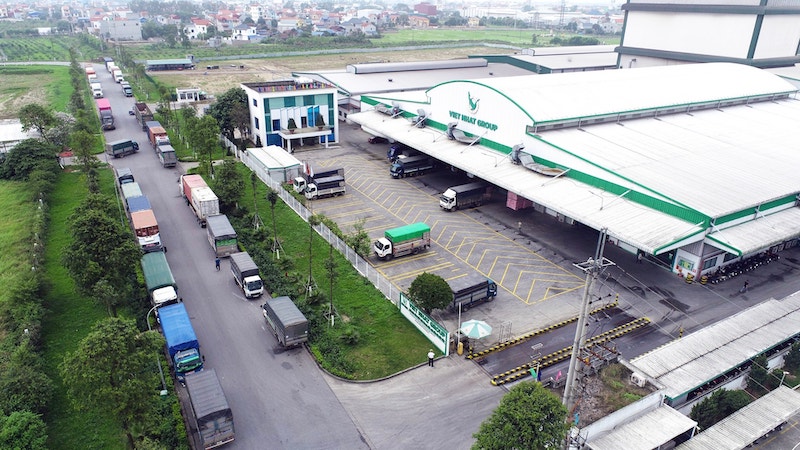
Rather than maintaining a high public profile, Viet Nhat Technology Nutrition JSC has quietly pursued growth in the animal feed sector, serving Vietnam’s livestock industry.
Behind that low-profile approach, however, is a notable long-term strategy: investing deeply in technology, raw materials and product quality control at a time when Vietnam’s livestock sector faces mounting pressure from volatile input prices, disease outbreaks and international competition.
Over the years, the company has gradually modernised its production system. Industry experts note that this has become an inevitable direction for agricultural enterprises seeking to enhance competitiveness in a market that increasingly demands higher standards for product quality and safety.
From an economic perspective, the development of enterprises in animal nutrition is also closely tied to Vietnam’s broader goals of improving input self-sufficiency, lowering production costs and enhancing agricultural productivity.
While many businesses have opted for short-term solutions to ease market pressures, Viet Nhat’s continued long-term investment strategy indicates a focus on sustainable development rather than growth at all costs.
A “vote of confidence” in Hung Yen’s investment climate
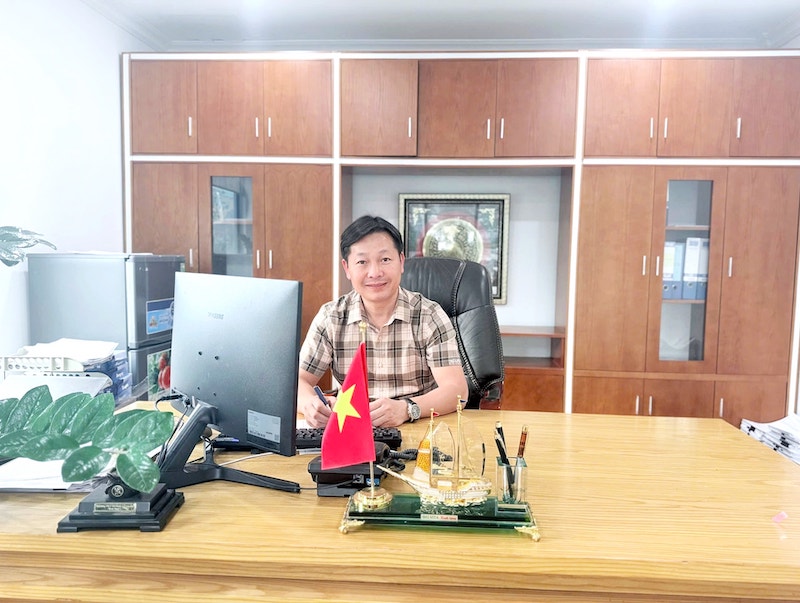
Speaking with Business Forum Magazine, Mr. Dinh Quoc Nhan, Director of Viet Nhat Technology Nutrition JSC, said that following the success of its first factory located along the new Road 39A in Yen My commune, Hung Yen province, the company continued to invest in a second factory at Yen My II Industrial Park in 2020. In 2024, Viet Nhat further expanded this second facility within the same industrial park.
The factory has now entered stable operation and become an important part of the company’s strategy to expand production capacity.
Beyond scale expansion, Viet Nhat has also invested heavily in foundational components of its production chain, including an independent raw material pre-processing system, a modern premix blending system serving both production and trading activities, as well as expanded warehouse infrastructure to strengthen logistics and delivery capabilities.
According to industry observers, the company’s strong investment in blending technology and raw material control reflects a broader shift from simple manufacturing toward value chain management, an increasingly important trend in modern agriculture.
If the first two development phases demonstrated Viet Nhat’s strategy of deepening investment in animal nutrition, the company’s next move signals broader ambitions within the agricultural value chain.
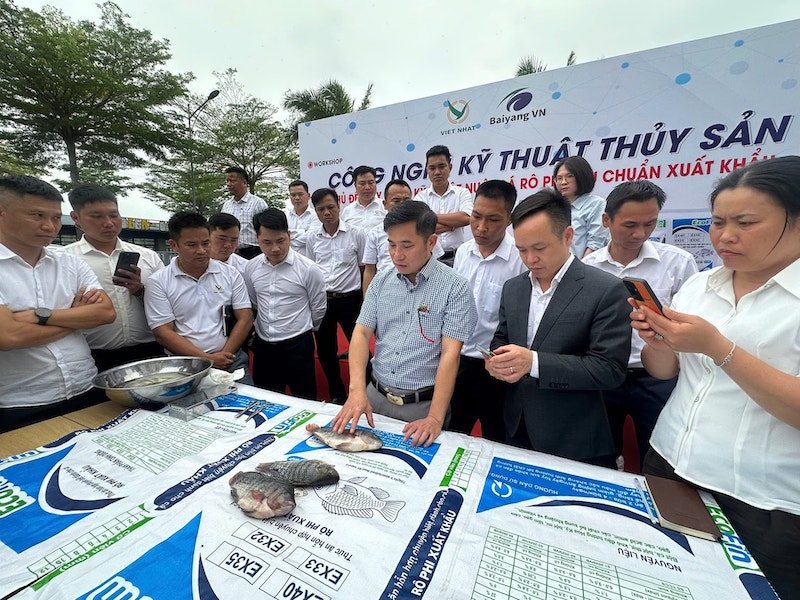
In 2025, Viet Nhat Group and BaiYang Group, China’s largest exporter of tilapia fillets, established a joint venture named BaiYang VN Food Co., Ltd. to develop an export-oriented tilapia processing project alongside linked aquaculture farming zones. The project carries a total investment of approximately US$30 million and includes the construction of a processing plant in Dong Chau commune, Hung Yen province.
Under the plan, the company will provide farmers with essential inputs, including standardised fingerlings, optimised feed products and aquaculture technical services, with the aim of building an integrated production chain instead of the fragmented farming model that has traditionally characterised the sector.
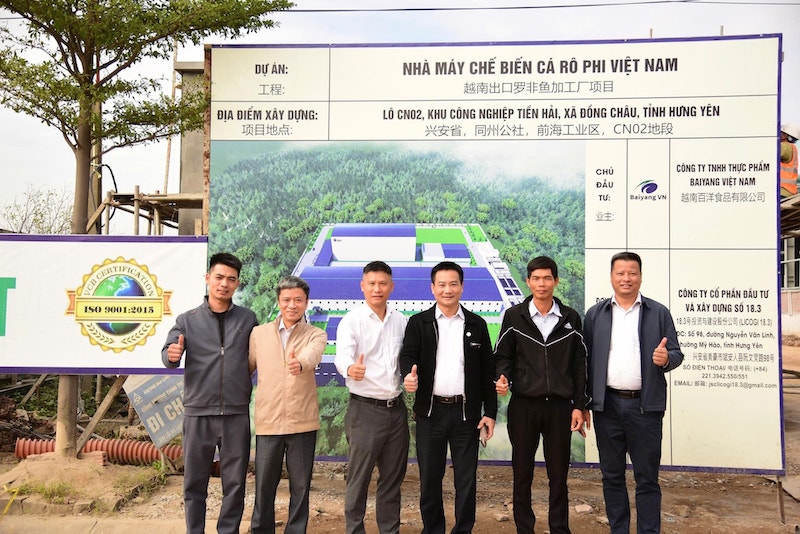
On June 11, 2025, Viet Nhat Group and BaiYang Group officially broke ground on the tilapia processing plant, which is expected to export products to European and US markets. The factory is scheduled to begin operations in mid-2026 and reach a processing capacity of around 120-150 tonnes per day by the end of 2026.
Products from the facility will include whole frozen fish, skin-on fillets, skinless fillets and fish cakes, targeting high-standard markets such as Europe and the United States.
Industry experts believe that establishing an integrated chain covering breeding stock, feed, farming techniques and export processing will not only create new opportunities for Vietnam’s tilapia industry, but also reflects a broader trend of Vietnamese enterprises participating more deeply in global agricultural value chains.
Viet Nhat’s repeated decision to select Hung Yen as the location for expansion projects and international joint ventures also highlights the company’s confidence in the province’s investment environment.
According to Mr. Dinh Quoc Nhan, the company highly appreciates Hung Yen’s business and investment climate, citing streamlined administrative procedures, transparent and efficient access to land and information, as well as public and non-overlapping inspection processes that help enterprises operate with greater confidence and legal certainty.
In reality, competition among localities to attract investment is no longer driven primarily by tax incentives or geographic advantages, but increasingly by governance quality and the ability to support businesses over the long term.
When enterprises feel sufficiently confident in an investment environment to continue committing capital to new projects, that is when a locality begins to build a foundation for sustainable growth.
“And for Hung Yen, companies like Viet Nhat not only contribute to expanding industrial production, but also reflect the province’s transition from an ‘investment attraction’ mindset toward building a more substantive and long-term business environment,” Mr. Nhan said.
Author: Kim Dung - Vu Phuong (Cam Anh translates)
RECOMMENDED TOPICS