VN
VN
 EN
EN
15/07/2026, 10:39
Investment
How central banks respond to the surge in energy prices
There is quite a contrast between the response of the Federal Reserve to the surge in energy prices and that of most other central banks.
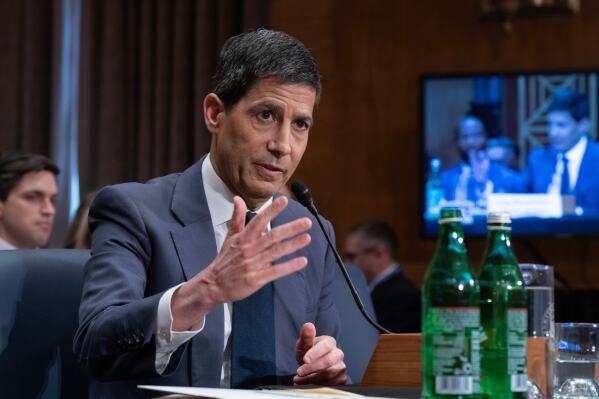
All the signs are that new Fed Chair Warsh’s first FOMC meeting later this month will leave rates unchanged.
All the signs are that new Fed Chair Warsh’s first FOMC meeting later this month will leave rates unchanged. That’s likely to be in contrast to the ECB and BoJ while a rate hike from the BoE is a tougher call. In some senses, we can understand the disparity given that the US is a net oil exporter while the euro zone and Japan are dependent on imports, especially via the Strait of Hormuz in Japan’s case.
However, we feel there are numerous reasons why the Fed should not just be hiking rates now but should actually be at the forefront of the tightening process. One reason for this is that the demand-lift from AI-driven datacentre construction is not just boosting growth relative to others, but also contributing to extra price pressure in key areas such as electricity costs for households and firms.
While this surge started with the Ukraine war in 2022, US deregulation has contributed to much of the rise recently as it has helped turbocharge data center buildout. But this is not the only White House policy that has added to price pressure. Others include the war in Iran, US tariffs and tough immigration policies.
Steven Barrow, head strategist of the Standard Bank, said these imply a notable inflation risk in the US relative to other G10 nations, suggesting that the Fed should be at the forefront of rate hikes, not taking a backseat. Quite clearly Warsh will argue that inflation will fall over the long haul as AI adoption lifts productivity and lowers firms’ costs, even if those costs are rising at the moment due to the electricity price rise resulting from the AI buildout. That could prove correct, but the Fed’s taking quite a chance on this if it insists on holding policy stable.
“We think the cost of this will be higher treasury yields, at least relative to peers, if not in absolute terms. For the moment, our view is that the Fed will keep rates steady for as long as the eye can see, but if we adjust these forecasts, it will be to forecast rate hikes, not cuts. As for US yields, we don’t doubt that there will be a temporary fall should a peace deal be agreed between the US and Iran that results in a fall in oil prices. However, we would sell treasuries into any such rally as we still target 10-year yields to rise to 5%," said Steven Barrow.
In contrast to the Fed, a 25-bps rate hike from the ECB on June 11th seems as close to a done deal as can be envisaged. The Bank has a long and mostly uninterrupted history of delivering predictable policy rate changes. Only unexpected shocks seem to have the capacity to make the ECB veer from its pre-ordained script. There has admittedly been a shock in the case of the conflict in Iran and consequent surge in energy prices, but in this case, the ECB has afforded itself time to prepare the market – and the population—for a rate hike next week. But is this the start of a long and determined rate-hike cycle, like that which followed Russia’s invasion of Ukraine.
While that seems unlikely, it is conditional on the idea that a peace deal will be agreed between the US and Iran soon and that energy prices will fall back down as the futures market suggests. If that’s the case, Steven Barrow expects two 25-bps rate hikes in total and for the ECB to start unwinding the rate hikes in the second half of next year.
The alternative scenario, of prolonged military action in Iran and still elevated oil prices, would put around four 25-bps rate hikes in the frame with little prospect of an unwind next year. The idea that rate hikes will be unwound rests on the nature of the supply shock that the world has faced from the conflict in Iran. This lifts inflation and lowers growth. There could also be elements of a demand shock as well as firms and households might alter their longer-term behaviour because of the rise in energy prices.
In this sense, central banks will be cognizant of the fact that, if they do hike now, they are largely doing so to retain anti-inflation credibility, by heading off what’s likely to be a temporary rise in inflation. The ECB is prepared to make such a commitment, but others might not. The Bank of England, for instance, is one bank that seems to be weighing the two risks of higher inflation and lower growth a bit more evenly. Nonetheless, Steven Barrow still believes that at least one rate hike from the BoE is more likely than not.
Author: NGOC ANH
RECOMMENDED TOPICS