VN
VN
 EN
EN
10/07/2026, 02:38
Business economics
Why patients are staying local at Yen Phong General Hospital?
From the long-standing mindset of “serious illness means going to Hanoi,” many residents of Bac Ninh now choose to receive treatment at Yen Phong General Hospital. What is driving a district-level hospital to attract an increasing number of patients?
On weekday mornings, the outpatient department of Yen Phong General Hospital is almost always full. Lines of people stretch from the reception desk into the corridors. Some come from nearby communes, others are workers from industrial zones, and there are also chronic patients who have been treated at the hospital for many years.
Nearly 1,000 patient visits per day not only reflect mounting pressure but also raise a notable question: why has a primary-level hospital (formerly district-level – Ed.) become the choice of so many people?

Nine-storey building of Yen Phong General Hospital officially put into operation in July 2025, with a synchronized and modern technical system, meeting a capacity of 300 hospital bed.
When Patients No Longer Want To “Travel Far”
The first answer lies in a shift in people’s choices. According to Nguyen Thi Thuy Duong, Director of Yen Phong General Hospital, whereas in the past, serious illness often meant seeking treatment at provincial or central hospitals, many patients now decide to stay in Yen Phong.
This is not by chance. Many techniques once considered “beyond district-level capacity” have become routine here. Laparoscopic gallbladder removal, treatment of gastric perforation, emergency care for stroke and respiratory failure are now regularly performed. Even more advanced procedures such as laparoscopic inguinal hernia repair, endoscopic lithotripsy, laparoscopic hepatic cyst resection, surgical fixation of intertrochanteric femur fractures, femoral shaft fractures using plates and screws, and tibial fracture fixation are now implemented.
For patients, this is critical: they no longer need to travel far, wait too long, and most importantly, they can receive timely intervention during the “golden hour.”
A dialysis patient shared that in the past, weekly travel to higher-level hospitals was both costly and exhausting. Now, with the hospital operating a hemodialysis system, his life has changed completely. He is not alone—dozens of other patients are now receiving stable, long-term treatment locally.
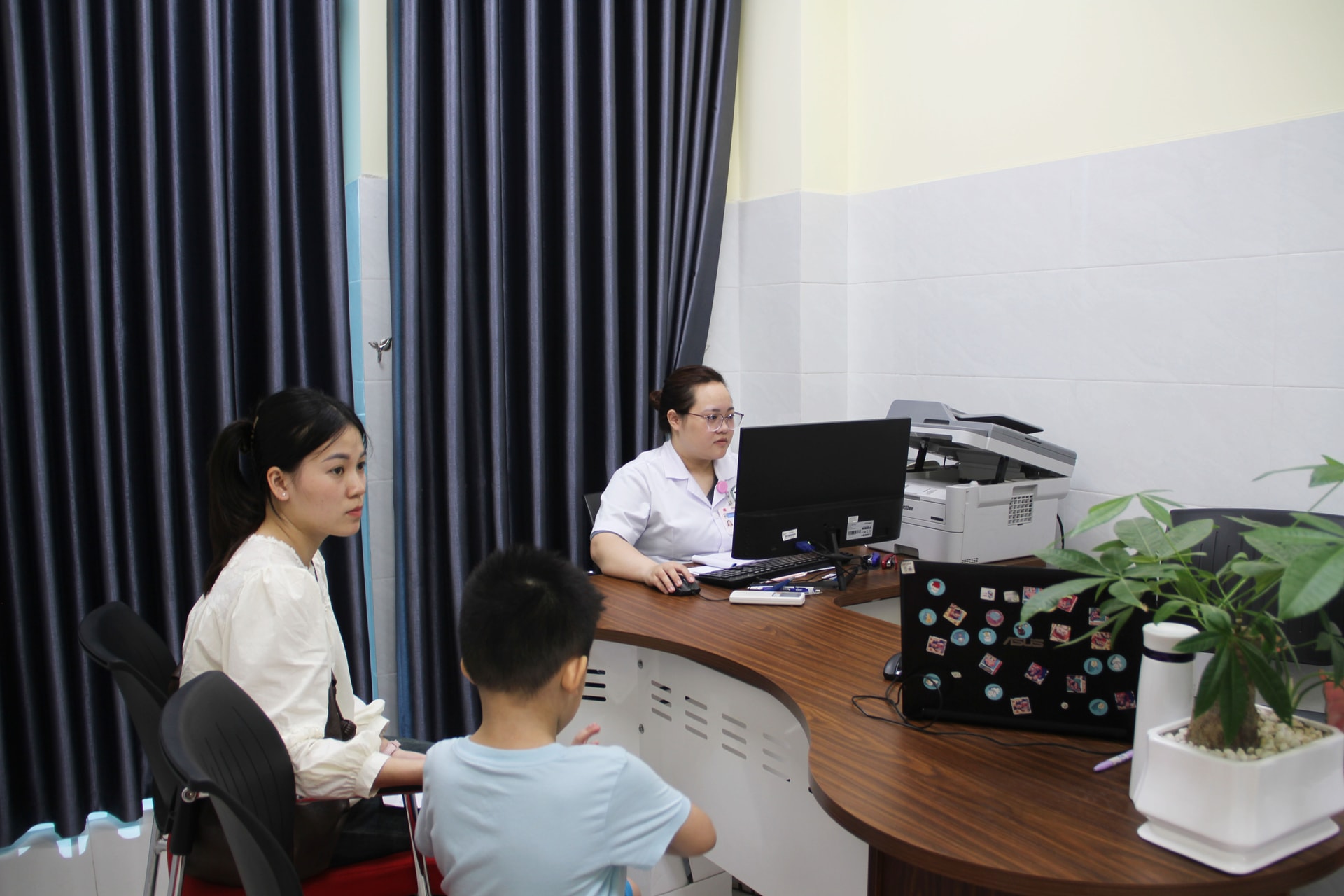
Outpatient department applying a “paperless hospital” model effectively at Yen Phong General Hospital
To understand how a primary-level hospital can perform complex procedures, one must look at internal transformation.
According to Director Nguyen Thi Thuy Duong, the hospital currently has more than 240 staff, including 65 doctors, 27 of whom have postgraduate qualifications. Its departments and units are relatively well-organized, capable of handling a wide range of medical conditions.
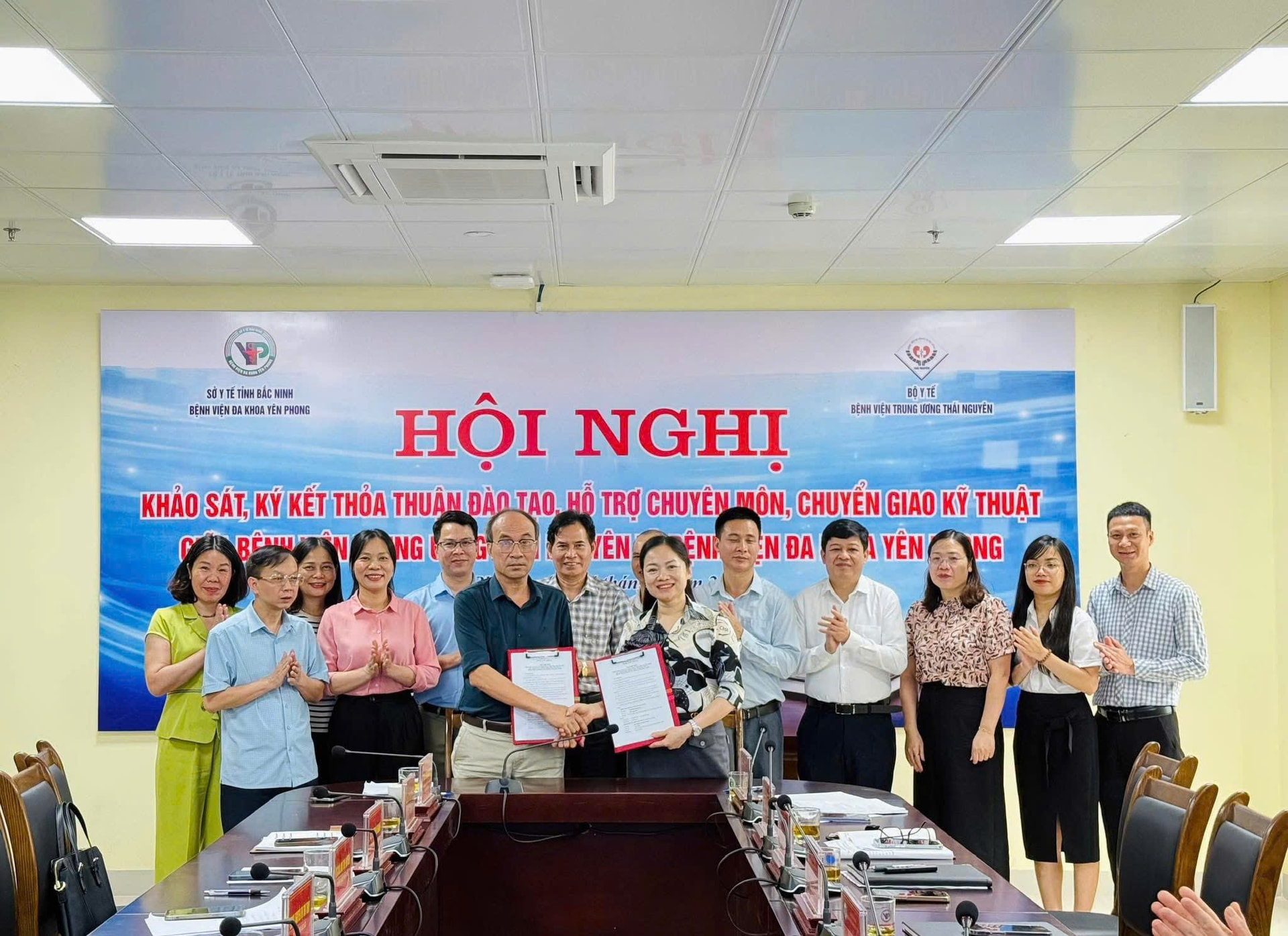
More importantly, the hospital continuously improves professional capacity through technical cooperation with major hospitals such as Bach Mai, E Hospital, Hanoi Medical University, and the National Hospital for Tropical Diseases; it has signed professional contracts with leading associate professors; and many new techniques have been transferred and mastered on-site. This is a key factor in narrowing the gap between levels of care.
At the same time, the hospital has invested in equipment—from laparoscopic surgery systems, laser lithotripsy machines, and modern ventilators to diagnostic imaging such as CT scanners, ultrasound, and biochemical testing systems. These “extended arms” of modern medicine have strengthened the confidence of local doctors in handling complex cases.
Another notable step is the implementation of electronic medical records since 2023, making Yen Phong one of the pioneering district-level units in Bac Ninh Province and the 46th nationwide. This not only reduces administrative burdens but also improves management, monitoring, and treatment efficiency.
Yen Phong General Hospital continues to improve service quality and technical expertise (cap)
“If we do not change, people will not choose us”
Yen Phong today is no longer a purely agricultural district. Rapid industrial zone development has driven an influx of migrant workers, leading to fast population growth. This also means significantly increased demand for healthcare.
Each day, the hospital receives between 900 and 1,000 outpatient visits and treats around 320 inpatients. These are substantial figures for a primary-level hospital. Yet instead of becoming a burden, this pressure has driven change.
Beyond acute treatment, the hospital also manages thousands of patients with chronic conditions such as hypertension, diabetes, and cardiovascular diseases. These conditions require long-term, continuous monitoring, and primary healthcare facilities are best suited for this role.
In this context, the role of district-level hospitals is becoming clearer: not only as the initial point of access, but as institutions that retain and accompany patients throughout their treatment journey.
Faced with rapid changes, hospital leadership has identified a clear priority: alongside improving service quality, renewing working style and service attitudes is decisive.
“The consistent view of Yen Phong General Hospital is to continuously enhance capacity to meet the growing needs of the population. If we become complacent and fail to keep up, we will fall behind, and people will not choose us,” said Nguyen Thi Thuy Duong.
Modern 32-slice CT scanner system at Yen Phong General Hospital (cap)
In particular, in a rapidly urbanizing area like Yen Phong, with a high concentration of workers and laborers, expectations for healthcare services are rising. Patients not only want to be cured, but also to receive better and more convenient care.
Therefore, the goal of achieving satisfaction among residents in Yen Phong and surrounding areas is not just a slogan but a clearly defined development direction.
Returning to the initial question: why is a primary-level hospital attracting more patients?
The answer does not lie in a single factor. It is the result of a long-term process involving multiple simultaneous changes: improving professional capacity, investing in equipment, reforming procedures, and most importantly, changing the service mindset.
When a hospital is strong enough to handle complex cases, when patients feel confident and find it convenient, they will stay. And that “staying” is the clearest measure of trust.
Author: KIM DUNG - VU PHUONG (Dang Truong translates)
RELATED TOPICS
RECOMMENDED TOPICS