VN
VN
 EN
EN
26/07/2026, 02:00
Investment
Catching the wave of public investment stocks
As policy bottlenecks are eased and growth expectations rise, public investment-related stocks are forecast to enter a new upward cycle, attracting strong capital inflows after a prolonged period of accumulation.
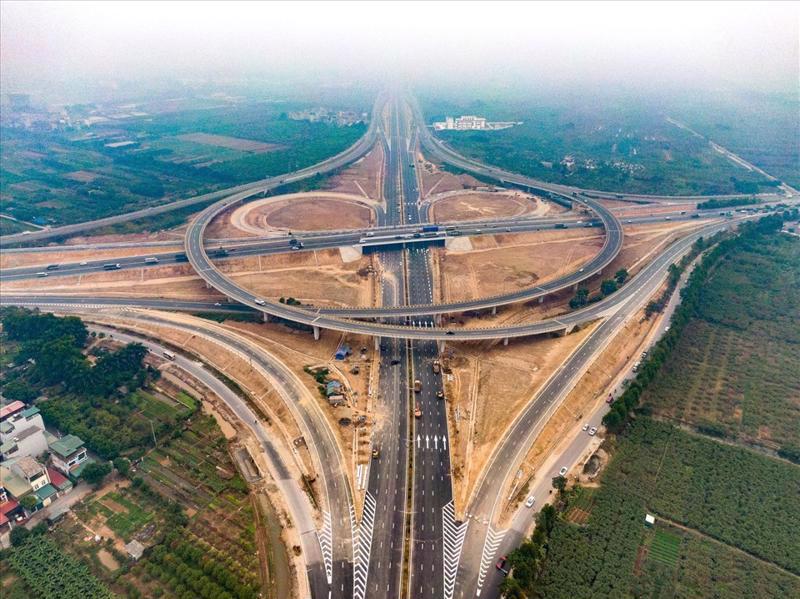
The 2026–2030 medium-term public investment cycle, with an estimated total capital of approximately VND 8.22 quadrillion, has officially begun, playing a particularly important role in Vietnam’s economic development strategy.
Policy Momentum Builds
During the second session of the first meeting of the 16th National Assembly, many delegates pointed out long-standing issues in public investment, particularly slow disbursement. Although capital has been allocated and plans are in place, implementation on the ground continues to face significant bottlenecks.
Delegate Nguyen Khanh Vu (Quang Tri Province) proposed that the Government review and redesign the legal framework toward greater simplicity and clearer accountability, creating a more transparent and efficient regulatory corridor. He also suggested allowing land clearance to be separated into an independent project, implemented prior to the approval of the main project, thereby shortening preparation and execution timelines.
From a governance perspective, the Government emphasized that public investment must be focused and targeted, avoiding fragmentation. Programs and projects will be carefully assessed for socio-economic efficiency before capital allocation, aiming to reduce the ICOR (Incremental Capital Output Ratio) while strengthening coordination between public and private investment.
In the stock market, public investment-related shares have shown recovery since early 2026. Notably, the issuance of Resolution 16/2026/NQ-CP on April 7 marked a turning point, unlocking the BT (Build-Transfer) model and reshaping the infrastructure investment cycle. Shortly after, the market recorded positive movements in this group, with stocks such as HHV, C4G, LCG, FCN, and VCG rising by around 3–5%. Analysts believe this segment still has room for further acceleration.
HSC notes that Resolution 16/2026/NQ-CP reconstructs the BT model framework around four key pillars.
First, process transparency: from project preparation to handover, procedures are standardized, eliminating legal “grey areas” that previously hindered appraisal and disbursement.
Second, strong decentralization: greater authority is delegated to local governments, significantly reducing approval timelines that previously could take years. The “ask–grant” mechanism is replaced by proactive authority, lowering time-related risks in project valuation.
Third, improved land valuation mechanisms: reciprocal land funds are priced based on market principles, reducing disputes and increasing transparency in asset accounting.
Fourth, settlement mechanisms: enterprises are enabled to finalize financial documentation, recognize revenue, and reinvest, thereby accelerating capital turnover.
The impact of Resolution 16 extends beyond BT projects to multiple sectors. Shorter land handover timelines improve project internal rates of return. More importantly, the ability to recycle capital from infrastructure into urban development becomes a long-term growth driver.
In construction and materials, project restarts generate large backlogs, ensuring stable workloads. The focus shifts from asset ownership to execution capability and cash flow realization.
Land Bank Advantage
In the new context, competitive advantage no longer lies purely in scale but in land bank quality and execution capability.
HSC highlights that companies with clean land banks, particularly in strategic areas such as Thu Thiem, Thu Duc, and Hai Phong, hold a distinct edge. With standardized valuation mechanisms and reduced legal risks, the market has a basis to re-rate stocks based on net asset value (NAV), rather than applying steep discounts as before. This is especially relevant as institutional capital increasingly seeks transparent, long-term yield-generating assets.
For large-scale projects, such as high-speed rail, capital requirements of tens of billions of dollars necessitate effective coordination between state budgets and private sector resources through PPP models.
More notably, this lays the foundation for Transit-Oriented Development (TOD). In this model, land around transit hubs is not merely ancillary but becomes the financial engine of the entire project. With transparent land valuation mechanisms, the State can recover capital efficiently, while investors secure sustainable profit margins.
This is a key factor in elevating Vietnam’s standing among international financial institutions, transforming it from a potential market into a predictable and investable infrastructure destination.
HSC experts recommend a strategic and selective approach for investors. Portfolio reallocation should prioritize high-beta infrastructure stocks and companies that have completed legal procedures for BT land funds, such as CII and TCH. At the same time, execution capability should be carefully assessed, favoring firms with integrated value chains—from construction material producers like HPG to infrastructure contractors like VCG—to fully capitalize on the large backlog generated by upcoming mega-projects.
Author: DIEM NGOC - TRUONG DANG
RELATED TOPICS
RECOMMENDED TOPICS