VN
VN
 EN
EN
26/07/2026, 02:38
Business economics
Drivers for credit growth by year-end
The demand for loans rises as the year comes to an end. Many analysts predict that credit growth will frequently double or triple in comparison to the preceding quarter. In comparison to regular months, credit can even rise by two to four times in the final month of the year.
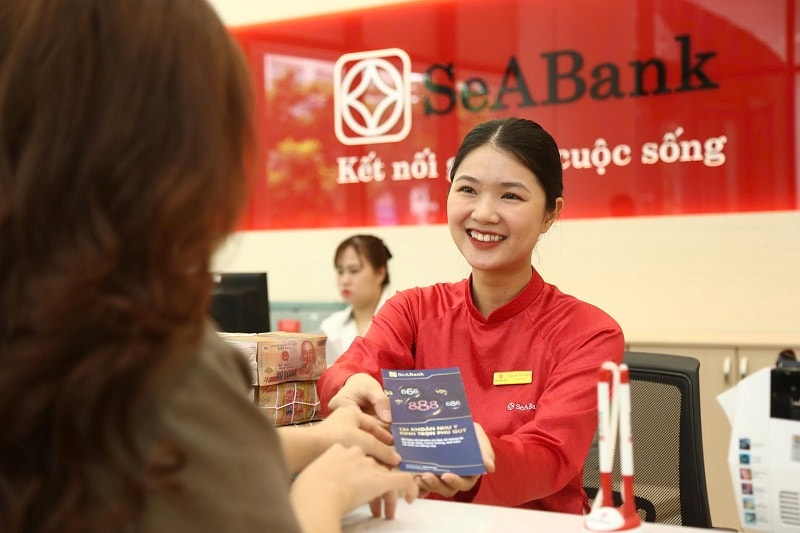
Transaction at SeaBank
Commercial banks have increased capital mobilization and obtained liquidity support to satisfy loan demand and adhere to new capital norms.
Liquidity support measures
By the end of November, credit growth had almost reached 17%, according to data from the State Bank of Vietnam (SBV). As a result, in accordance with normal seasonal trends, credit growth in the last month of the year might rise by 1-3%, bringing the total to 18–20%. At the third-quarter meeting, SBV leaders likewise projected this level, given stable macroeconomic circumstances, a stable currency rate, and controlled inflation.
According to VIS Rating, certain secondary market-based smaller banks raise concerns about their capacity to address the financing issue if they do not boost interest rates given the high loan growth objectives and rising interest rates—interbank rates are even set at around 7% annually.
Recent developments, however, show that the net injection of liquidity for commercial banks is doing quite well. In particular, the State Treasury published a notification on December 8th about the need for buying foreign currency from commercial banks, with a maximum anticipated volume of USD 150 million.
On December 9th, this sum of foreign money was bought on the spot market. The State Treasury would need to pay around VND 3,592 billion on this transaction, based on the USD ask price of the State Bank of Vietnam's reference exchange rate (23,948 VND/USD on December 9).
The State Treasury has made 17 foreign exchange bid proposals since the start of the year. From March 2025 until the present, the State Treasury has made bid bids totaling between USD 100 and USD 300 million in foreign currency.
A foreign exchange swap (FX swap) with a USD 500 million size was previously offered by the SBV as a "test" of the market. The SBV continued to conduct a 14-day foreign exchange swap with credit institutions on December 9, 2025, with a 14-day term, value date T1, spot bid price of 23,948 VND/USD, and forward exchange rate of 23,958 VND/USD, as predicted by financial expert Huynh Hoang Phuong. During this session, a maximum of USD 500 million in foreign exchange was exchanged.
As a result, the SBV completed two foreign exchange swaps totaling $1 billion in less than a week, from December 5 to 9, 2025, which is comparable to adding around VND 26 trillion to the banking system.
In addition to the money supply through OMO operations, this operation helps stabilize the monetary market and satisfy the market's liquidity demands, particularly toward the end of the year, according to Mr. Pham Chi Quang, Director of the SBV's Monetary Policy Department.
Many factors support liquidity.
Additionally, according to HDS Securities Company, the SBV's flexible management and plentiful liquidity kept deposit rates low while capital mobilization throughout the banking industry continued to increase steadily.
The large ratio of CASA deposits sustains several banks in addition to mobilizing deposits from the general public. As of the end of Q3/2025, Vietcombank maintained a high CASA advantage (nearly 33%) and the lowest cost of capital in the banking system, while BIDV and Vietinbank increased non-term deposits (22–27%). These Big 4 banks continue to play a leading role in deposit mobilization, accounting for 50%.
With the exception of Vietinbank, which offers somewhat higher deposit rates for short-term maturities of three, five, six, and eleven months, these banks now maintain interest rates for long-term maturities. As private banks, including MBB, TCB, HDB, LPB, and VPB, which experienced deposit growth surpassing 20% at the end of Q3 due to growing their SME and individual client base, have also changed deposit rates for several maturities, this group also offers promotional incentives to boost competition. In the meanwhile, the ACB continues to pursue a conservative approach, controlling net interest margins and capital expenses well while allowing for moderate expansion.
"In general, funding costs are kept low and the banking sector's liquidity is stable, encouraging faster loan expansion at the end of the year. However, banks must strike a balance between expansion and profitability given the significant loan growth at the end of the year and the slightly rising interest rates, according to HDS.
In addition to net injections from the SBV, experts think that the end of the year, which is also a time for wages, bonuses, and deposits for good fortune at the beginning of the year, helps idle cash come into banks, balancing lending demands, given the present trend of rising interest rates. Thus, it is anticipated that liquidity would continue to be beneficial in the final month of 2025.
Specifically, the Fed's rate cut at its December meeting will help "cool down" the exchange rate, even though the signal for additional rate cuts is not yet sustainable. This will also help to "cool down" interbank interest rates and provide opportunities to repeat and expand the foreign exchange swap more successfully.
According to Associate Prof. Dr. Nguyen Huu Huan, a lecturer at the University of Economics Ho Chi Minh City, regulating the flow of money into investment channels can avoid detrimental macroeconomic effects when excessive amounts of money are poured into the economy, generating inflation. Banks will diversify their loans, restricting priority disbursements to speculative channels, while the SBV continues to flexibly employ the tools of Open Market Operations (OMO) and FX intervention, concentrating on preserving domestic growth while regulating macroeconomic stability and market confidence.
Author: THANH LIEM
RECOMMENDED TOPICS