VN
VN
 EN
EN
09/07/2026, 11:15
Investment
Exchange rate outlook for 2026: Pressures remain, volatility eases
MBS forecasts the exchange rate to rise by about 2.5%–3% in 2026, with pressures remaining relatively high in the first half of the year.
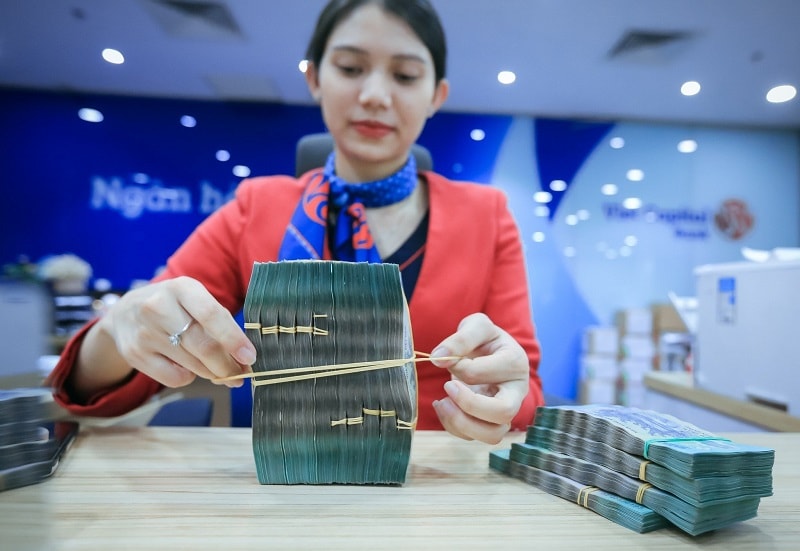
In the first days of 2026, the central exchange rate announced by the State Bank of Vietnam (SBV) has remained unchanged. The USD exchange rate at banks as well as on the informal market has shown little movement.
At the start of the new year, global investors appear to be focusing closely on developments surrounding reports of US forces attacking Venezuela. Global financial markets—including gold, silver, oil, and the US dollar—are moving, and may continue to move, in response to these developments.
Accordingly, the US dollar—measured against a basket of six major currencies (EUR, JPY, GBP, CAD, SEK, and CHF) via the US Dollar Index—stood at 98.42 points on the morning of January 4, up about 0.4 points from the previous week’s close. This mild rebound reflects investors’ cautious sentiment amid mixed global economic signals.
Developments in the relationship between oil and the US dollar—anchored in the important “petrodollar” framework—may continue to shape the dollar’s power and value in international markets, with unpredictable variables beyond expectations.
Another key focal point, with clearer implications for the dollar’s value, is the US Federal Reserve’s interest-rate policy this year. Although the minutes of the Fed’s December meeting—released ahead of the holiday period—revealed significant differences of opinion regarding recent rate cuts, there was still a shared view that “most participants judged that a further reduction in the target range for the federal funds rate could be appropriate if inflation continues to decline over time as expected.”
Under current plans, the Fed may implement one additional rate cut in 2026. This is considered a supportive factor for the USD/VND exchange rate, though less significant than expectations had been in 2025.
Domestically, the exchange rate remains at relatively high levels after ending the year with controlled fluctuations (below 4%), staying within the SBV’s target management band. This outcome reflects efforts to maintain monetary and exchange-rate stability amid net foreign selling of more than VND 150 trillion on the stock market over the past year, alongside other influencing factors.
In addition, Vietnam’s trade surplus in 2026 is expected to widen to around USD 24 billion, up from USD 21 billion in 2025, according to MBS Securities.
However, experts caution that exchange-rate pressures are unlikely to ease substantially due to persistent internal factors.
First, Vietnam’s foreign-exchange reserves, estimated by the World Bank to have fallen below USD 80 billion, suggest that room for exchange-rate intervention has narrowed.
Second, most of the trade surplus is generated by the FDI sector, while domestic enterprises recorded a deficit of around USD 26 billion, indicating strong domestic demand for US dollars during the production expansion cycle.
Third, global gold prices are forecast to rise by about 15%, potentially reaching USD 5,000 per ounce in 2026. Although the government abolished monopoly regulations in mid-2025 and allowed qualified enterprises and banks to export and import gold bullion and import gold materials—measures expected to increase market supply—these steps are likely to show more tangible effects over the medium to long term. In the short term, during 2026, the gap between domestic and global gold prices is unlikely to narrow immediately.
Accordingly, MBS forecasts the exchange rate to rise by about 2.5%–3% in 2026, with pressures remaining relatively high in the first half of the year.
Commenting on the macroeconomic outlook, SBV Deputy Governor Pham Thanh Ha noted that in 2026, the global and regional economies are expected to continue facing multiple risks, including low growth, geopolitical volatility, unpredictable monetary policies among major economies, increasing fragmentation of global trade, climate change, and rapid digital transformation. Vietnam’s highly open economy will be directly affected, while it must simultaneously pursue high growth and maintain macroeconomic stability.
In this context, according to the Deputy Governor, the SBV will remain steadfast in prioritizing inflation control and macroeconomic stability while supporting sustainable economic growth. It will also draw on lessons learned from the 2021–2025 period to implement a coordinated mix of tools and measures with appropriate timing and intensity, aligned with real-world conditions. Monetary policy will continue to be closely coordinated with fiscal policy and other macroeconomic policies to preserve macroeconomic stability, control inflation, and strengthen key economic balances—especially during a period when innovation and digital transformation have yet to significantly boost labor productivity, the main driver of growth.
At the same time, the SBV will continue directing credit institutions to pursue safe and effective credit growth, channeling credit toward production and business activities, priority sectors, and key growth drivers as guided by the Government; strictly controlling credit to potentially risky sectors; enhancing reviews and simplifying credit procedures; and applying digital transformation to credit processes to facilitate access to bank credit for households and businesses while ensuring prudence and safety.
In parallel, the monetary authority will implement a comprehensive set of measures to build a stable foundation for effective monetary policy management, maintain liquidity, stabilize the exchange rate, and ensure confidence among households, businesses, and investors, the Deputy Governor said.
Author: Dang Truong
RELATED TOPICS
RECOMMENDED TOPICS