VN
VN
 EN
EN
09/07/2026, 11:15
Investment
Housing prices are hard to bring down
In 2025, Viet Nam’s real estate market recorded a clear recovery, with transaction volumes rising by more than 7%. However, apartment prices surged by 20–30%, and in some areas exceeded 40%.
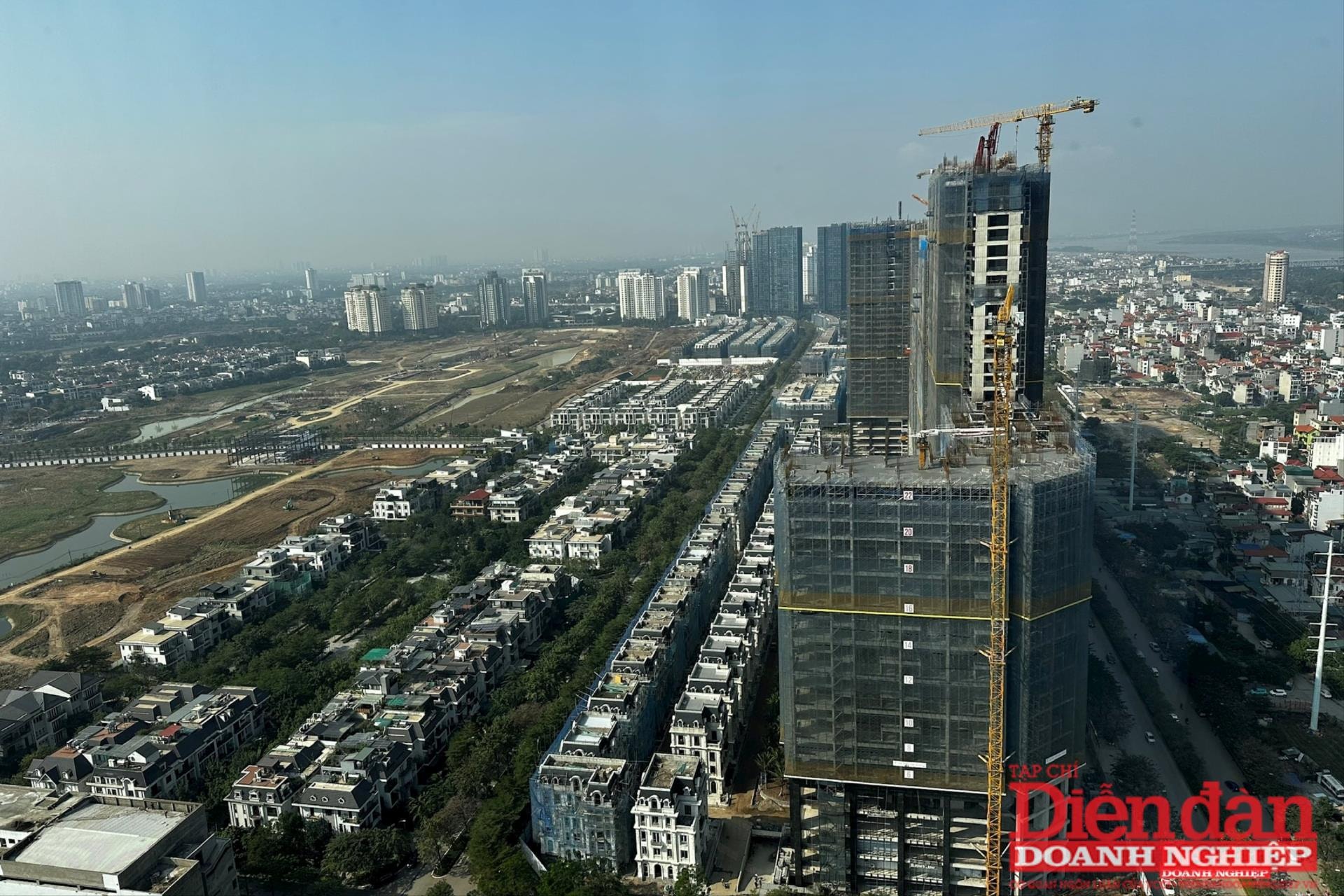
Apartment prices remained a hot spot in the real estate market in 2025. Photo: DH
Supply Improves, but Prices Keep Rising
Speaking at the fifth online meeting of the Central Steering Committee on Housing Policy and Real Estate Market Development, Deputy Minister of Construction Nguyen Van Sinh said transaction prices for apartments commonly increased by 20–30% compared with 2024, with some areas seeing rises of over 40%, mainly concentrated in the mid-range and high-end segments.
According to a report by the Ministry of Construction, in 2025 nationwide authorities approved investment policies for 428 commercial housing projects, with total registered investment of about VND 3.8 quadrillion. Of these, 93 projects were newly granted construction permits, with a scale of around 37,686 units—equivalent to 117% of the 2024 level.
During the same period, 88 projects were completed, providing about 29,901 units, or 127% compared with the previous year. Notably, 300 projects met the conditions for selling off-plan housing, supplying around 108,787 apartments, up 47% year-on-year.
Despite signs of improving supply, apartment prices continued to trend upward. The Ministry of Construction attributed the sharp price increases primarily to rising input costs, limited land availability in central areas, and the concentration of new supply in the mid-range and high-end segments.
In the social housing segment, implementation results in 2025 were assessed as positive. Nationwide, 102,633 social housing units were completed, exceeding the assigned target of 100,275 units by 2%. Among localities, 19 met or exceeded their targets, 12 fell short, and three did not assign targets during the year.
As of December 31, 2025, Viet Nam had 193 completed social housing projects providing 169,143 units; 200 projects under construction with a scale of 134,111 units; and 305 projects approved in principle, totaling 354,187 units. Overall, the number of completed, commenced, and approved projects has so far reached only about 62% of the target set under the national social housing development program.
Liquidity Improves, Prices Rise Across Segments
In terms of liquidity, around 579,718 real estate transactions were successfully recorded nationwide in 2025, up 7.7% from 2024. Of these, apartment and individual house transactions accounted for 138,025, while land plots dominated with 441,693 transactions.
Beyond apartments, other segments also saw price increases. Villas and townhouses within projects rose by 10–20%, mainly in central areas and locations with well-developed infrastructure. Land plot prices increased by 20–25% compared with 2024. In the tourism and resort real estate segment, primary prices for high-rise properties rose by 11%, while low-rise products increased by 5%.
Policy Intervention Needed
The data highlight the growing urgency of stabilizing and reducing housing prices. However, from the perspective of developers, housing prices remain closely tied to mounting input cost pressures.
Looking ahead, the real estate market in 2026 is expected to operate in a state of strong segmentation.
Speaking recently, Pham Trung Quan, Director of R&D at Nam Long Investment Corporation, said that while lower housing prices are an urgent demand of the market, they are almost impossible to achieve under current conditions. The reason, he noted, is that all input costs have risen sharply, from construction materials to land-related expenses.
According to Quan, prices of sand, steel and cement have all increased, with filling sand alone jumping from just over VND 100,000 per cubic meter to VND 400,000–500,000 per cubic meter. In addition, compensation and site clearance costs, project acquisition costs, and land-use fees are now much higher than in previous years.
“When costs cannot be reduced, it is very difficult to bring selling prices down. Developers genuinely want to deliver products priced at VND 20–30 million per square meter, but there is no longer suitable land, and material costs are no longer at old price levels to make affordable products,” a Nam Long representative said.
According to forecasts by CBRE, 2026 will mark a clearer phase of market recovery as many key infrastructure projects are completed, creating strong momentum for housing demand. In the five southern provinces alone, more than 50,000 new units are expected to be launched, up nearly 30% from 2025, with around 65% being apartments and 35% landed housing.
However, selling prices are expected to diverge sharply between the core areas of Ho Chi Minh City and surrounding provinces, reflecting differences in land costs, infrastructure quality and urban amenities. Central Ho Chi Minh City could see annual price increases of around 14%, while the former Binh Duong province is forecast to rise by about 11% per year.
With high-end supply still dominating and buyers’ affordability constrained, the market is expected to continue requiring caution from developers and investors, and particularly stronger policy intervention, to limit the risk of excessively high price levels and the formation of a real estate bubble.
Author: DIEU HOA - TRUONG DANG
RELATED TOPICS
RECOMMENDED TOPICS