
 VN
VN
 EN
EN
15/04/2026, 04:12
How does the US dollar respond to the Middle East conflict?
The US dollar has risen following the failure of US/Iran peace talks last Friday and the US Administration’s decision to block the Straits of Hormuz. But many analysts said that the dollar’s response to the conflict is very underwhelming and this leaves us bearish for the long haul.
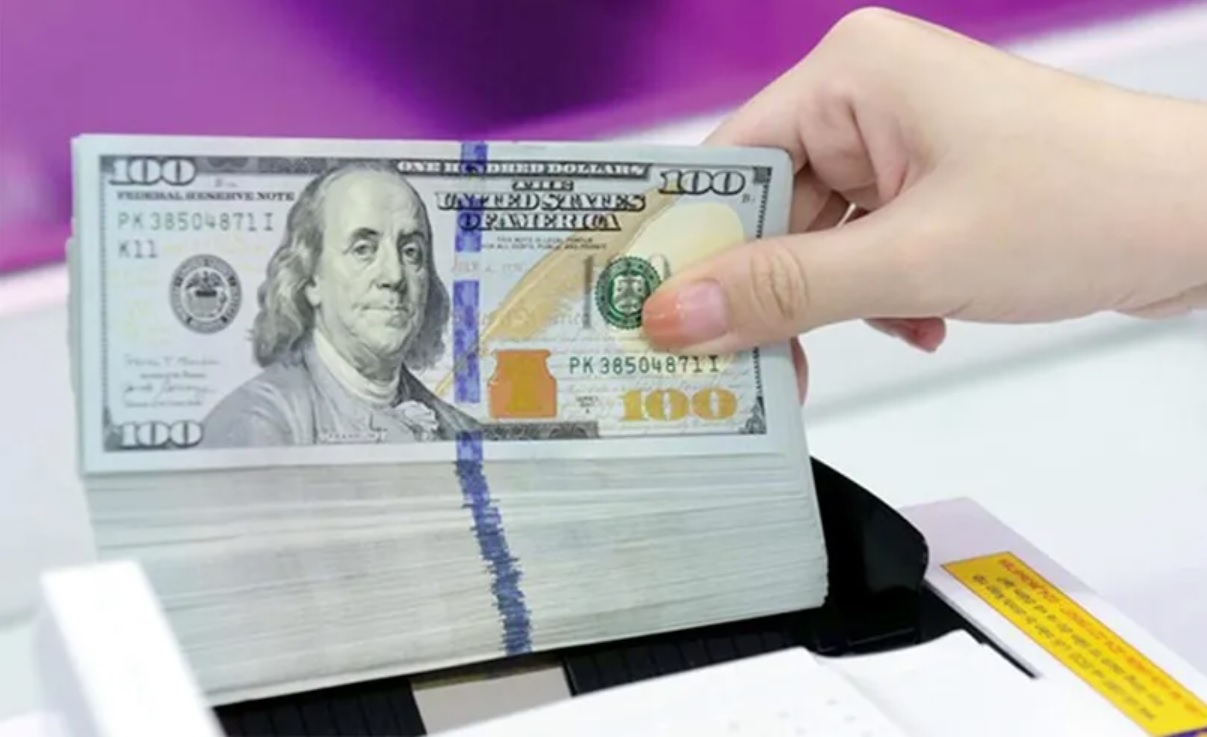
The US dollar has risen following the failure of US/Iran peace talks last Friday and the US Administration’s decision to block the Straits of Hormuz.
Unsurprisingly, the US dollar has been lifted by the failure of US/Iran peace talks, the US threat to blockade the Straits of Hormuz, and the subsequent surge in oil prices and slide in riskier assets. However, its rally is underwhelming, much as it has been throughout the six weeks of this conflict. Periods of geopolitical tension are supposed to highlight the dollar’s safe-asset allure.
But that’s not really happened. It follows last year’s response to US tariffs. For tariffs have historically supported currencies, and there are good theoretical reasons for such a response. The dollar slumped last year even as the tariff chaos roiled riskier assets.
Two particular currencies seem to lie behind the US dollar’s weak response: the euro and the yen. The former because it simply seems impervious to any sort of directionality at the moment, while the threat of BoJ intervention is preventing significant yen weakness against the US dollar. Why is the euro not budging? It could be because the adverse terms of trade effect from the US-Iran conflict is actually quite modest, at least relative to the huge hit the euro zone took when Russia invaded Ukraine in 2022.
The huge slump in 2022 for the euro zone prompted a massive decline in the euro, but the scale of the rise in European gas prices during the current US-Iran conflict has been far smaller, and the hit to the euro zone’s terms of trade has been modest. Once again the euro has tracked lower against the US dollar to reflect the relative terms of trade impact, but the outcome has been far less detrimental to the euro than the one seen four years ago.
Steven Barrow, Head Strategist of the Standard Bank, said there would also be other factors to bear in mind. For a start, the approach of the US administration during this conflict may well have further undermined the status of the US—and hence the US dollar—much as tariffs did a year ago. In addition, the market still holds on to the probability that the Federal Reserve will not lift policy rates despite the imminent surge in inflation.
The same cannot be said for market expectations towards the ECB, as the market has gone from pricing in no rate hikes this year before the conflict to anticipating two, if not three, 25-bps hikes in 2026. Of course, those increases may not come about, but the mere fact that the market is pricing the ECB to be more responsible in the face of surging inflation likely holds the euro in good stead. Nonetheless, the scope for the euro to rally seems limited as long as the conflict drags on. That’s why Steven Barrow has a 1-month euro/dollar forecast of just 1.15. “We do sense that when the conflict does finally reach some sort of conclusion and oil prices slip back, the euro will bounce higher, and that’s why we still target a rise to the 1.25- 1.30 region over the next year or so”, Steven Barrow said.
The yen’s role in capping the dollar is somewhat different. Of course, here too Japan has suffered the same adverse terms of trade effect as the euro from the conflict in Iran.
In fact, it is worse because Japan gets far more of its energy needs through the Straits of Hormuz than the euro zone. But rather than the terms of trade, it is the threat of FX intervention by the Bank of Japan that seems to be preventing dollar/yen from responding ‘appropriately’ to the conflict and this adverse terms of trade effect.
“We have to say that we are surprised that the conflict has not emboldened the dollar bulls to push through the psychologically important 160 level in dollar/yen. While we would certainly not rule out a push to 160, and just above, given that the currency is very close already, we sense that the next big move in dollar/yen will be to the downside; either as a ‘natural’ response to a future easing of the conflict in Iran and lowering of oil prices, or because the BoJ intervenes aggressively. At the moment we believe that the former is more likely, but could still take some time to come about. And just as we target euro/dollar to rally to the 1.25-1.30 region in time, we believe that dollar/yen will fall to the 140 level given time”, Steven Barrow emphasized.
RECOMMENDED TOPICS