VN
VN
 EN
EN
09/07/2026, 11:15
Investment
Luc Nam Commune (Bac Ninh) unveils vision for sustainable development
With a long-term vision, Luc Nam is shaping a development path that balances urban areas, industry, public spaces, and the riverine economy.
Following its merger, Luc Nam Commune (Bac Ninh Province) faces a major opportunity to expand its development space. Based on the leadership guidelines of the Party Committee and the management of the Commune People's Committee, the local authority is opting for a cautious, methodical, and long-term approach, laying a solid foundation for future development space.
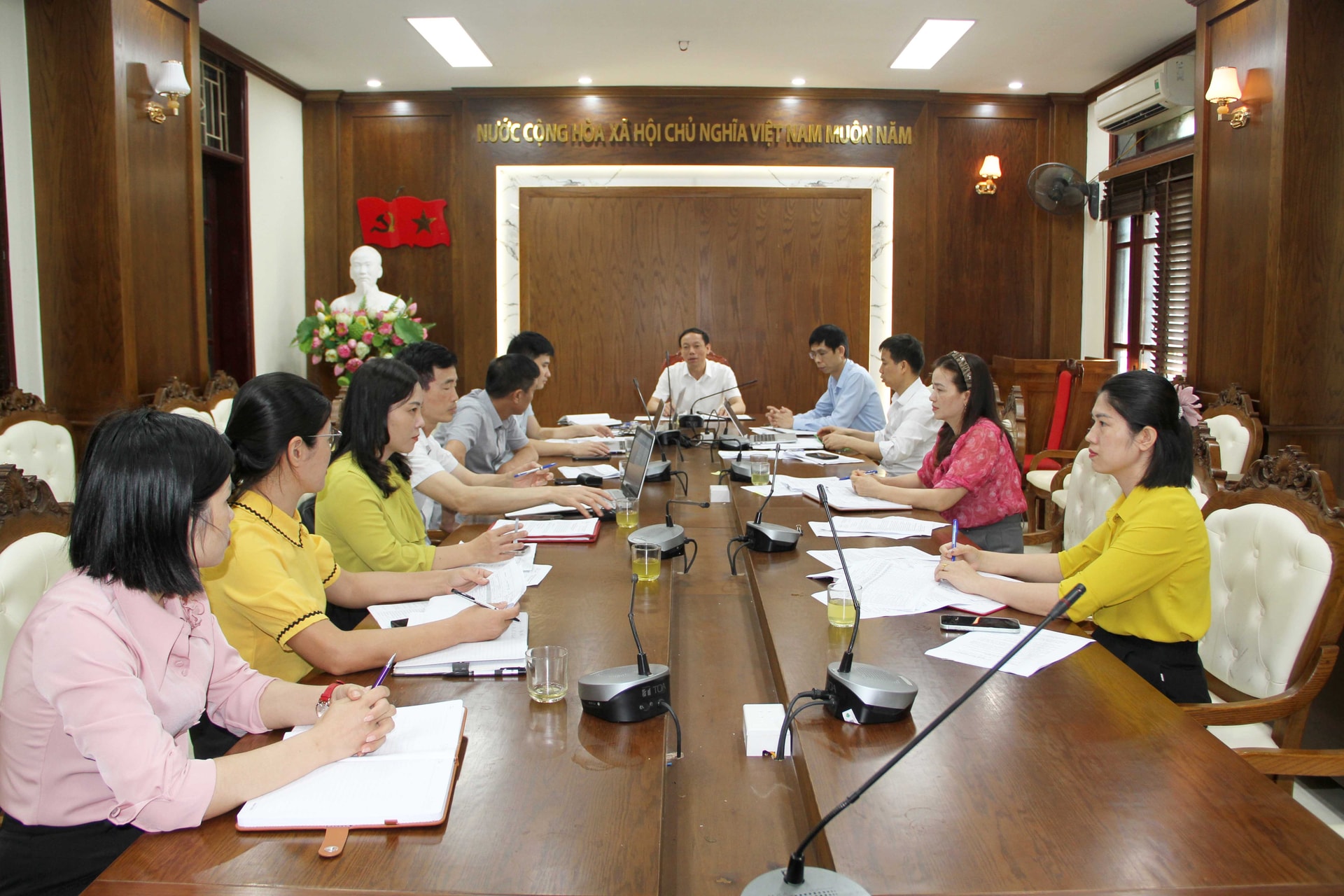
Chairman of Luc Nam Commune People's Committee – Hoang Van Toan chairs a meeting reviewing public investment activities within the commune.
Rejecting "Short-sightedness": Preserving Land for Long-term Development Space
In Luc Nam's socio-economic development orientation, growth is not just about attracting more projects, expanding production areas, or accelerating urbanization. More importantly, it requires building a rational and sustainable development structure that meets immediate needs while preserving long-term space for civil life, social infrastructure, and future generations.
Discussing this issue, Mr. Hoang Van Toan, Chairman of Luc Nam Commune People's Committee, stated that the local leadership's general perspective is to reject "short-sighted" industrial projects located too close to the commune's administrative center. The administrative center must serve as the core space to establish urban institutions, services, culture, education, healthcare, and community life.
Following this direction, Luc Nam focuses on allocating appropriate land funds for public spaces and facilities such as parks, cultural houses, schools, medical stations, and social housing. Although these institutions do not generate immediate financial value like manufacturing projects, they dictate the quality of life, urban attractiveness, and the local area's capacity for sustainable development.

Perspective rendering of the Duy Anh New City urban area project in Luc Nam commune, Bac Ninh province.
This approach demonstrates that Luc Nam does not view planning through the lens of short-term benefits. If crucial land plots are used hastily and without careful consideration, the locality might gain immediate resources but will lose the space needed to build community facilities in the long run. Therefore, preserving land for parks, schools, medical stations, cultural houses, and social housing means safeguarding the development foundation for an urban area with a better quality of life.
Mr. Hoang Van Toan believes that a truly developed urban area cannot consist solely of factories, roads, and residential zones. It needs green spaces for residents to rest and play, schools where children can study under better conditions, medical stations capable of providing primary healthcare, cultural houses for community activities, and social housing so workers can settle down with peace of mind. This is also the direction of harmonious development between economic growth and social welfare that Luc Nam is pursuing.
A notable point in the commune's planning vision is studying the upgrade of urban development standards towards high-rise designs to save land and maximize usable space. If previously, construction planning in Luc Nam mainly considered residential structures from 9 to 18 floors, the locality is now raising the planning benchmark to 25 or 28 floors in suitable areas.
This reflects a more efficient mindset for land use amid increasingly scarce land resources. Controlled high-rise development will help save land, creating more space for greenery, social infrastructure, traffic, parking lots, public services, and urban amenities. This represents development in depth rather than fragmented, sprawling growth, ensuring that urbanization does not turn into a burden on infrastructure and residents' lives.
Remarkably, Luc Nam is also focusing its land fund on planning a centralized commune cemetery. This issue is rarely mentioned in urban development discussions, yet it holds immense significance for land management, community culture, and long-term site clearance. Without an early vision, small and scattered cemeteries could waste land resources, cause management difficulties, and become "bottlenecks" when implementing future development projects.
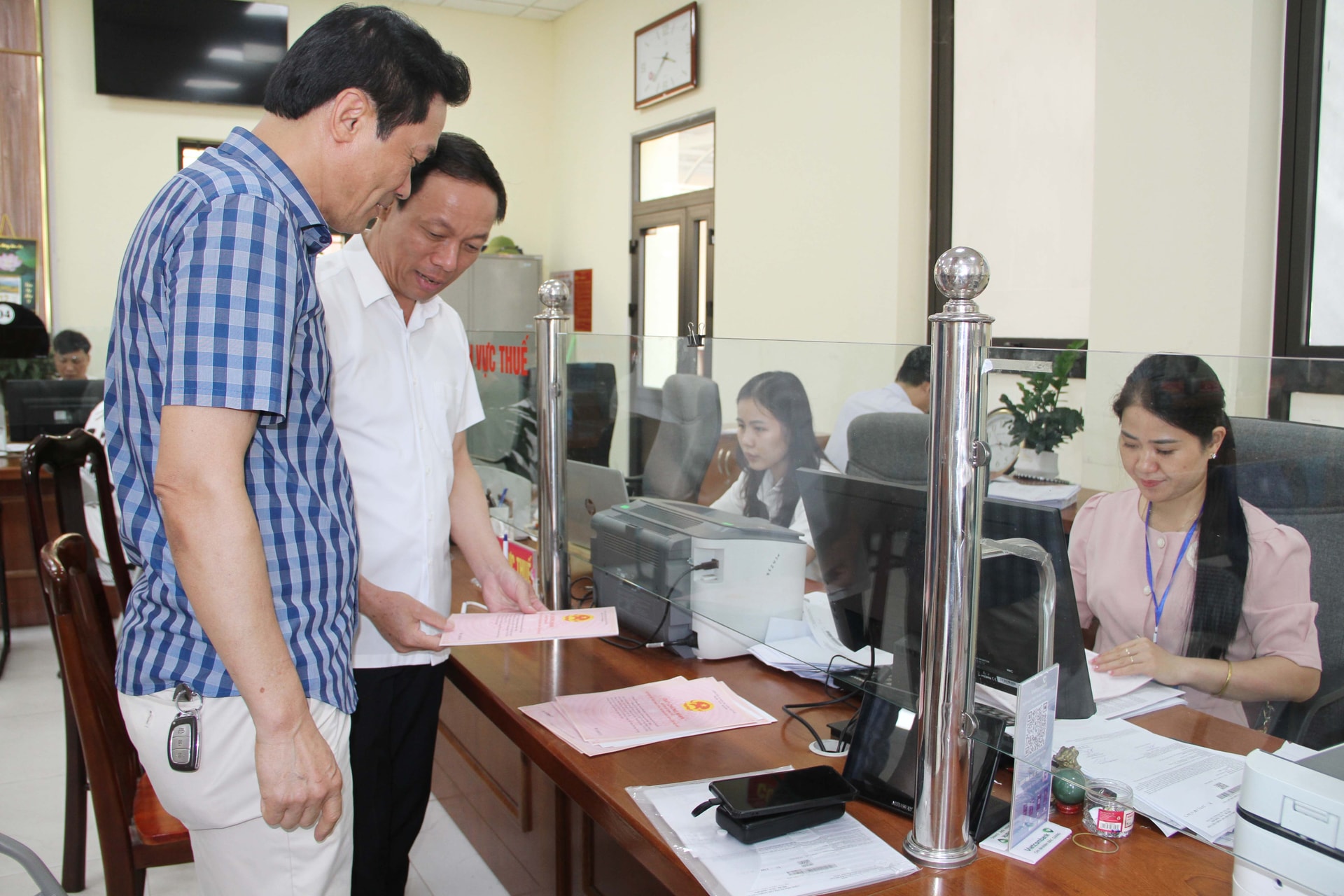
Mr. Hoang Van Toan, Chairman of Luc Nam Commune People's Committee (in white shirt), guiding a business through administrative procedures at the Commune Public Administration Service Center.
Solving the "Puzzle" of Unlocking the Riverine Economy
Alongside urban planning, Luc Nam also recognizes significant potential for development in river transport. This is an advantage that needs to be leveraged more effectively, especially given the growing demand for transporting construction materials, goods, and connecting economic sectors.
According to the Luc Nam Commune People's Committee, one of the issues the locality is seeking to address is resolving bottlenecks regarding gathering yards and ports for materials along the river. Currently, defining and applying the terms "port" (bến) and "yard" (bãi) still trigger varying interpretations. In cases where a yard lacks a designated port, it cannot connect to waterways, failing to optimize river transport efficiency. Meanwhile, the licensing procedures for inland waterway ports involve multiple agencies and sectors, and certain regulations overlap, making it difficult for grassroots levels and businesses to comply.
If competent authorities clear this bottleneck, it will open up significant development avenues for Luc Nam. Once procedures for establishing and licensing inland waterway ports become clearer, the locality will be better positioned to exploit river transport. Consequently, the transportation of goods and materials—especially soil, sand, stone, and construction supplies—can partially shift to waterways, reducing pressure on road infrastructure, lowering transport costs, and unlocking various supporting economic sectors.
This is considered a restructuring of economic space. If riverways are properly utilized, Luc Nam can foster new advantages in transport, construction materials, logistics, and related services. Once a "bottleneck" is cleared, it can open up an entire new economic "flow" for the locality.
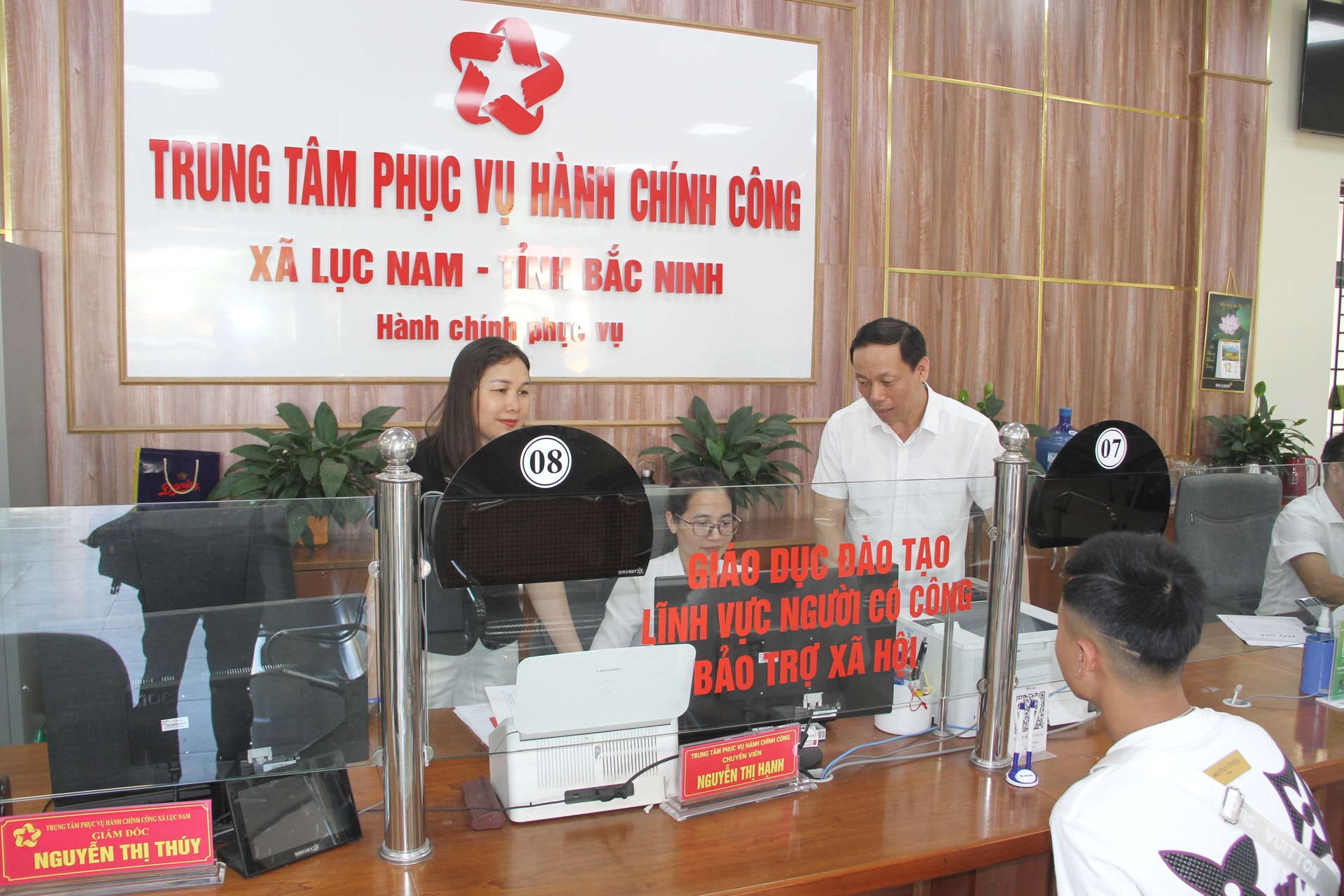
The 2-tier local government model is creating a "highlight" in serving citizens and businesses faster and more conveniently.
In tandem with economic development orientations, the 2-tier local government model is also yielding positive signals in Luc Nam. The new model eliminates several intermediary steps, allowing guidelines, policies, laws, and directives from the Provincial Party Committee and the People's Committee of Bac Ninh Province to reach citizens faster and more directly. Consequently, the commune government must innovate more strongly in its management, administration, and public service delivery.
Under these new conditions, the measure of government effectiveness lies in whether citizens are served more conveniently, whether businesses receive timely guidance, and whether grassroots issues are handled more rapidly. A friendly government that stays close to the people and businesses manifests its commitment not just through a welcoming attitude, but through its actual capacity to solve practical problems.
Chairman of Luc Nam Commune People's Committee - Hoang Van Toan emphasized: "For Luc Nam, being close to the people means understanding what they need in urban planning, living space, social infrastructure, schools, healthcare, and cultural houses. Being close to businesses means identifying their bottlenecks to propose solutions to higher authorities. A government that does not chase short-term benefits will know how to balance attracting investment with preserving long-term development space for the community."
Mr. Nguyen Quang Chiến from Duy Anh Construction and Trade Joint Stock Company, who was completing administrative procedures for land use rights transfer at the Commune Public Administration Service Center, shared: "I highly appreciate the sense of responsibility and service attitude of the staff at the Center. The paperwork was clearly guided and processed according to the correct regulations without causing hassles for citizens or businesses. More importantly, the procedures were resolved on schedule, offering peace of mind and trust, which helps businesses take initiative in their production and business plans."
Author: KIM DUNG - VU PHUONG
RELATED TOPICS
RECOMMENDED TOPICS