Many countries implement measures to stabilise energy market
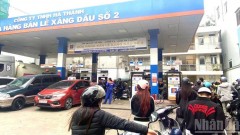
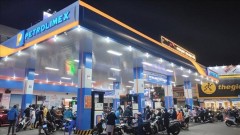
Disruptions to energy transportation activities in the Strait of Hormuz are forcing many countries to implement measures to stabilise supply and reduce impacts on their...
Improving energy efficiency has become an urgent priority for Vietnam to mitigate energy volatility risks, stabilize growth, and maintain macroeconomic balance.
The forum, themed “Vietnam operationalising the pathway to Net Zero,” is designed as a policy dialogue platform to support the implementation of emission reduction...
In the roadmap to achieve net-zero emissions by 2050, the power sector is considered a key sector of the energy transition in Viet Nam. As electricity demand continues...
As Viet Nam aims for the net-zero emission target by 2050 and to reduce sources of urban air pollution, controlling engine emissions from road vehicles is considered one...
Tensions in the Middle East in early March 2026 have sent global energy markets into a price storm, with crude oil and petroleum products surging sharply. This...
Unsurprisingly, the surge in energy prices last week has led to a sharp reassessment of the G10 monetary policy outlook. Inflation will undoubtedly rise, if only...
Rising tensions in the Middle East have heightened concerns about potential disruptions to global energy supplies. Vietnam’s Ministry of Finance has proposed cutting...
The transition towards green energy use is a critical solution to ensure national energy security as traditional power sources face gradual depletion. Furthermore,...
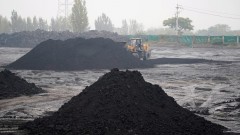
More than 100 coal-fired power generation units are expected to come online globally in 2026, underscoring a stubborn reliance on coal even as renewable energy expands...
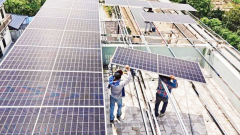
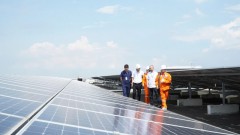
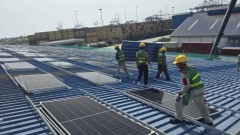
With the goal of fulfilling the commitment to achieve net-zero emissions by 2050 and the strong shift towards green energy, self-produced and self-consumed rooftop solar...
After a prolonged period focused on mastering technology, Viet Nam is now facing a new development imperative: not only to achieve self-reliance, but to move towards...
The national power grid has extended to many sea and island areas of An Giang Province thanks to the attention of the Party, the State and the power sector. These...
The Ministry of Finance, in coordination with the United Nations Office for Project Services (UNOPS), organised a workshop on strategies for clean energy development and...
The Vietnam Chamber of Commerce and Industry (VCCI) and the Korea Chamber of Commerce and Industry (KCCI) have identified human resources, energy, and high technology as...
It is essential to accelerate the restructuring of the Vietnam energy sector to gradually establish a healthy competitive energy market while ensuring political and...
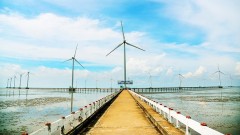
According to Power Development Plan VIII, renewable energy will account for between 30.9 and 39.2% of the country’s total power capacity by 2030. Viet Nam has...
Rooftop solar in industrial zones has the foundations to become a new driver of Hanoi’s energy transition.
In an interview with Vietnam Business Forum, Andy Lei, Vice Chairman in charge of the China Market at the Vietnam ASEAN Hydrogen Club, shared insights on the global...
From the Conference of the Parties to the United Nations Framework Convention on Climate Change (COP 21) in Paris to COP28 in Dubai, the world has experienced a...
When Decision 165/QD-TTg was issued in early 2024, hydrogen (H2) officially became a key component of Vietnam’s national energy roadmap. This marked a milestone in the...
During the 2021–2025 period, under the National Programme on Economical and Efficient Use of Energy, Ha Noi saved 705.7 kTOE (kilotonnes of oil equivalent), surpassing...