VN
VN
 EN
EN
09/07/2026, 11:15
Investment
The Fed leaves door open to hike rate later this year
The Federal Reserve (FED) left its benchmark interest rate unchanged amid rising inflation, but nearly half of its policymakers said they would support a rate hike later this year.
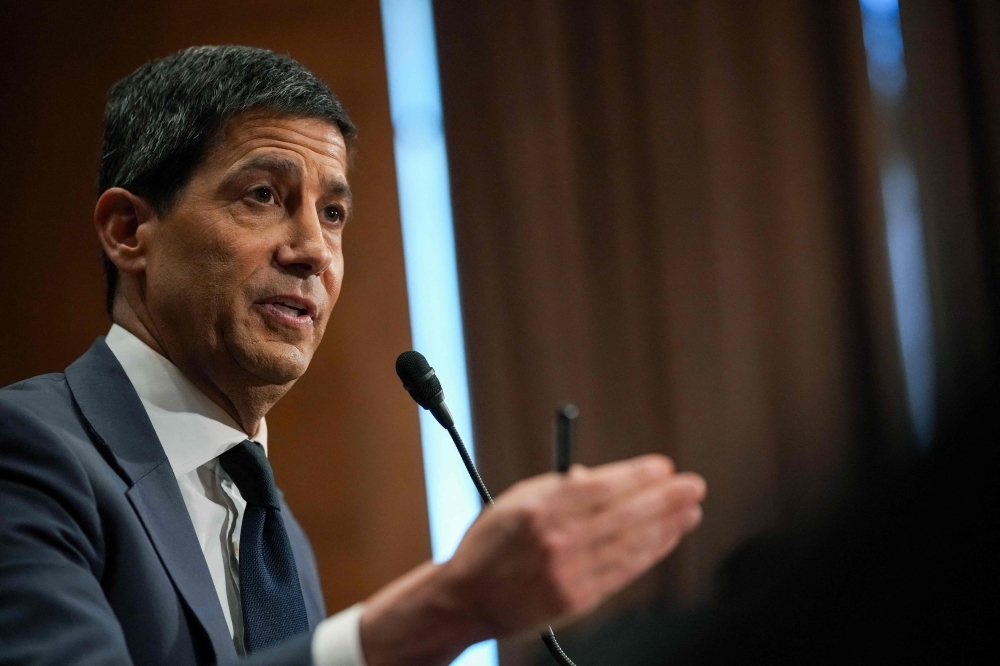
FED Chairman Kevin Warsh
The Federal Open Market Committee (FOMC) approved the following statement for release by a 12–0 vote: The FOMC decided to maintain its target range for the federal funds rate at 3.5 to 3.75% in support of the Federal Reserve's dual mandate. The Committee reaffirmed its policy of maintaining ample reserves in the banking system.
Economic activity is expanding at a solid pace despite elevated uncertainty that owes, in part, to the conflict in the Middle East. Productivity growth and capital investment are strong. Job gains have kept pace with the workforce, and the unemployment rate has changed little.
Inflation remains elevated relative to the Committee's 2 percent goal, in part reflecting supply shocks that have driven price increases in certain sectors, including energy. The Committee will deliver price stability.
The so-called easing bias—a sentence in recent FOMC policy statements signaling the FED was leaning toward cutting interest rates—was removed from the June guidance, which was significantly slimmer than the typical statement.
"You might have already noticed something, a difference in today's policy statement," FED Chairman Kevin Warsh said in a press conference to discuss the Fed's latest interest rate decision. "It's a bit shorter and a bit simpler, and it dispenses with some older language. That statement just gives you the facts as best we can judge them."
The Fed also released its Summary of Economic Projections (SEP) on Wednesday, which shows that nearly half of FOMC members said they could support a rate hike later this year. The vote to keep rates steady was unanimous, with all FOMC voting members in favor of maintaining the current range.
During the press conference, Warsh highlighted what economists expect to be a major shift in the Fed's communication practices, including more circumspect policy statements and less forward guidance. He also said the central bank is creating five task forces to review how it handles or assesses issues ranging from communications to inflation data.
Warsh pledged to drive inflation down to the Fed's 2% annual target, something the U.S. economy hasn't seen in more than five years.
"If I saw somebody in the grocery store, what I would say to them is that we cannot have a very significant effect on particular prices, the price of oil in the markets today, or even the price of a dozen eggs," Warsh said. "But it's to make sure that those changes in oil or beef or eggs or milk don't broaden in the economy and don't have second and third effects."
Mr. Nguyen Xuan Thanh, senior lecturer at the Fulbright School of Public Policy and Management, said if the global interest rates remain high for the long term, the impact will be immediately reflected in global asset prices. For Vietnam, the biggest concern is not economic growth, but the pressure on international investment flows, especially those in the stock market.
Since the beginning of this year, several economies in Asia, such as South Korea and Indonesia, have been significantly affected by the high global interest rate environment. Domestic currencies have depreciated, while foreign capital has continuously withdrawn from financial markets.
However, Vietnam, Malaysia, and Thailand have shown relatively different trends. From the beginning of this year until the outbreak of the Middle East conflict, the currencies of these three countries tended to appreciate. After the geopolitical and energy shocks, their previous gains were almost erased, but overall, these currencies maintained relative stability. Among them, the Vietnamese dong is considered one of the stable currencies.
Author: NGOC ANH
RECOMMENDED TOPICS