VN
VN
 EN
EN
22/07/2026, 02:00
Business economics
Vietnamese businesses race to comply with China’s new regulations
With only a few days left before China’s Decree 280 takes effect, Vietnamese agricultural exporters are entering a race to update documentation, standardize production processes, and strengthen traceability systems.
China Customs’ Decree 280 will officially come into force on 1 June 2026, significantly tightening controls on imported agricultural and seafood products. Authorities have warned that businesses and cooperatives could face rejected applications, suspension of export codes, or customs bottlenecks due to even minor inconsistencies in documentation, packaging, or system declarations.
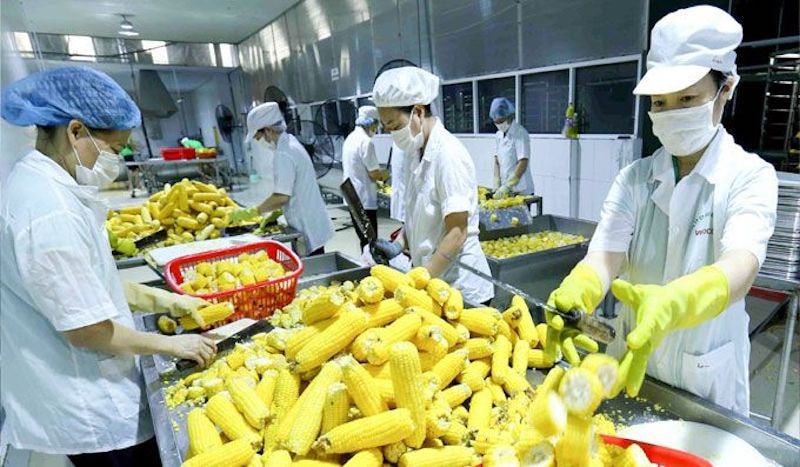
Facing stricter requirements on food safety, traceability, and production facility registration, Vietnamese agricultural exporters are being forced to rapidly upgrade their standards.
Deputy Minister of Agriculture and Environment Võ Văn Hưng stated that sanitary and phytosanitary (SPS) measures under the RCEP Agreement, together with China’s Decree 280, directly affect Viet Nam’s agricultural exports. He stressed that local authorities, industry associations, businesses, and cooperatives must continuously update themselves on the latest requirements to avoid export disruptions.
“We need to focus on updating all regulations, especially China’s new Decree 280, in order to quickly improve production standards and implementation mechanisms in line with import requirements,” the Deputy Minister emphasized.
Providing further analysis, Ngô Xuân Nam, Deputy Director of the Viet Nam SPS Office, explained that Decree 280 issued by the General Administration of Customs of China will officially take effect on 1 June 2026 and is essentially an upgraded and revised version of the former Order 248.
Although Vietnamese companies already have years of experience implementing Order 248, with around 4,000 product codes approved for export to China, many provisions under Decree 280 inherit elements from the previous regulation. However, China is now shifting more strongly toward a risk-based management model and stricter post-clearance inspections, forcing businesses to review their entire production processes and legal documentation.
In the first four months of 2026, Viet Nam’s total agricultural, forestry, and fishery exports reached US$23.04 billion, up more than 5% year-on-year compared to the same period in 2025.
According to Mr. Nam, the most critical issue for businesses is correctly determining whether their products must be registered through Vietnamese competent authorities or whether companies can directly self-register on China Customs’ CIFER system. Under the new regulation, 2,589 product groups are subject to registration through Vietnamese authorities, while many others may be self-registered by businesses at their own responsibility.
“Low-risk products currently account for around 50% of the product codes approved by China Customs for Viet Nam, and businesses can self-register these for export. This is a major advantage if companies know how to leverage it,” he noted.
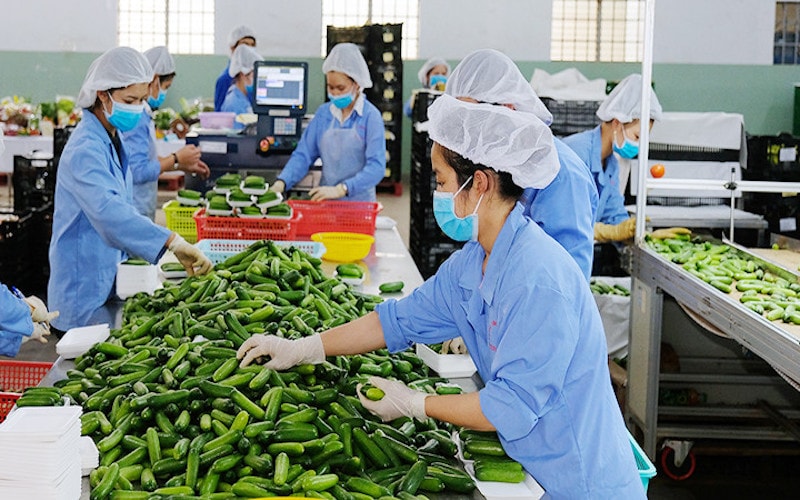
Businesses need to pay particular attention to the accuracy of registration dossiers and declared information on the system.
According to the SPS Office representative, one notable change under Decree 280 is the mechanism for automatic renewal of registration codes for most products, replacing the previous requirement for businesses to manually apply for renewal. Except for certain high-risk categories such as bird’s nest products and meat products, most registration codes will now be automatically renewed if still valid.
Mr. Nam also affirmed that products already governed by separate bilateral protocols with China, such as durian, dragon fruit, sweet potato, and bird’s nest, are not currently affected by Decree 280 and will continue to follow existing agreements.
However, he warned that businesses must pay close attention to the accuracy of registration dossiers and information declared on the system. According to him, many export disruptions occur simply because of minor discrepancies between registration files, packaging, labels, and customs declarations.
“China Customs’ management system is now almost fully automated. Just one incorrect character or inconsistency between documentation and packaging can result in temporary import suspension,” Mr. Nam cautioned.
He compared the process to bank transfers: “It’s like wiring money through a bank — if one digit in a birthdate is wrong, the transfer fails. Even a small spelling mistake can prevent the automated system from recognizing the information, and the business may face import suspension.” He added that after Viet Nam’s recent restructuring of local government systems, many companies continued using old addresses on packaging while updating new addresses on CIFER, leading to mismatches that caused Chinese customs to reject clearance.
Nguyễn Tử Hải from the Department of Crop Production and Plant Protection noted that the scope of regulated plant-based products is extensive, covering cereals, dried vegetables, dried fruits, nuts, fresh fruits, fresh vegetables, plant-based spices, tea, and many traditional products. Exporters must obtain approval and supervision from Vietnamese competent authorities while also building food safety management systems that meet Chinese requirements.
The tightening of SPS regulations and technical barriers is not limited to China. Experts noted that such measures across the RCEP region are becoming increasingly stringent. Businesses are therefore encouraged to continuously update regulations related to product labeling, technical standards, and trade alerts in markets such as South Korea, Australia, and Japan.
According to experts, the broader trend in global agricultural trade today is toward full supply chain transparency and stricter quality control based on traceability. This means exporters can no longer rely on fragmented production models or loosely organized procurement systems as before.
The Ministry of Agriculture and Environment has identified strengthening SPS implementation capacity as a key priority in the coming period, aiming to shift from a mindset of merely “meeting market requirements” to “building competitiveness through standards, quality, and transparency.”
As China remains a major export market for many of Viet Nam’s key products, including fruits and vegetables, coffee, pepper, seafood, and livestock products, proactively adapting to the new regulations will not only help sustain exports but also create opportunities to improve the quality of Vietnamese agricultural products in a more sustainable direction.
Author: THY HANG - TRUONG DANG
RELATED TOPICS
RECOMMENDED TOPICS