VN
VN
 EN
EN
26/07/2026, 02:38
Business economics
When could interest rates ease?
Lê Quang Trung, Head of Treasury and FX at Vietnam International Bank, expects that while pressures will persist through the second and third quarters, both interest rates and the exchange rate may begin to cool toward the end of the year.
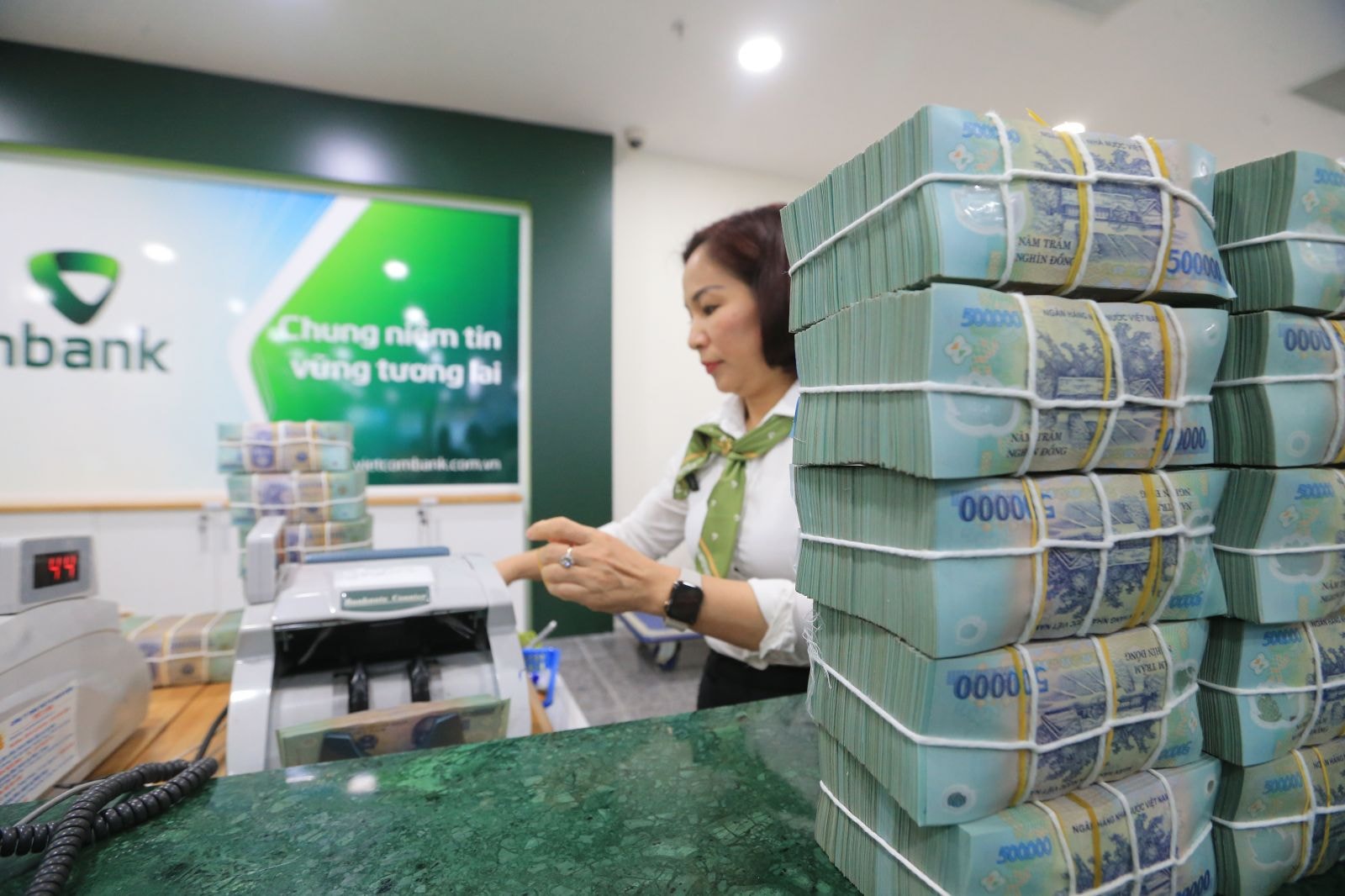
Deposit–Credit Gap Widens
Expectations for lower and more stable interest and exchange rates have been challenged from the outset of 2026 by unfavorable global conditions. Speaking to shareholders at VIB’s annual general meeting, Trung noted that the Federal Reserve maintaining elevated rates is exerting significant pressure.
Earlier this year, markets had anticipated that the Fed would deliver two rate cuts in 2026, bringing rates down to around 3.5%. However, the US–Iran conflict pushed oil prices above $100 per barrel, sharply reducing the likelihood of rate cuts this year.
High US interest rates continue to attract global capital flows back into the US, placing direct pressure on exchange rates. VIB forecasts that the Vietnamese dong could depreciate by 3–5% this year.
According to Trung, banks are compelled to maintain sufficiently attractive deposit rates to secure funding. While some smaller banks have raised deposit rates to as high as 9% per annum, VIB has opted not to engage in aggressive rate competition.
“We focus on mobilizing funds from primary markets—retail and corporate customers—which account for 70–80% of our funding base,” he said. “Instead of relying entirely on domestic deposits, we diversify 10–15% of funding from international markets through syndicated loans.”
For 2026, VIB plans to raise $1 billion from overseas with tenors of three to five years as a buffer against liquidity risks.
The bank also warned that rising funding costs could add approximately VND 16 trillion to the system’s total funding expenses. Interest rates are expected to remain under pressure in the second and third quarters before stabilizing in the fourth quarter of 2026.
On the sidelines of the AGM, VIB executives highlighted a historically large gap between deposits and lending across the banking system—estimated at around VND 1.1 quadrillion that needs to be filled.
“The strength of credit institutions lies in their flexibility to adjust rates quickly to address this gap,” Trung said. “The sooner the gap is closed, the faster system liquidity will stabilize and establish a new equilibrium.”
He added that in the short term, as long as the gap remains wide, interest rates are unlikely to decline.
Policy Support Expected to Stabilize Liquidity
Amid rising rates, the State Bank of Vietnam has instructed credit institutions to balance funding and lending activities to ensure liquidity and payment capacity, while avoiding disruptions to market interest rate levels. Credit is also being directed toward production, priority sectors, and key growth drivers, in line with government directives.
According to market sources, on April 9, newly appointed SBV Governor Phạm Đức Ấn is scheduled to meet with leaders of 49 commercial banks.
Many banks are now expecting clearer policy guidance and stronger intervention from regulators, particularly in two areas: expanding credit disbursement from the second quarter, and continuing liquidity support so banks can meet funding demand alongside their own capital-raising efforts.
These measures are seen as critical to helping banks both meet their 2026 business targets and fulfill their broader role in maintaining macroeconomic stability, containing inflation, and supporting growth.
Author: LE MY - TRUONG DANG
RELATED TOPICS
RECOMMENDED TOPICS