VN
VN
 EN
EN
15/07/2026, 10:39
Investment
Will many central banks avoid rushing to hike rates?
It seems clear that most G10 central banks will avoid rushing to hike rates even as inflation surges on account of higher energy prices. But just because they stall now does not imply that they can hold off from rate hikes for long.
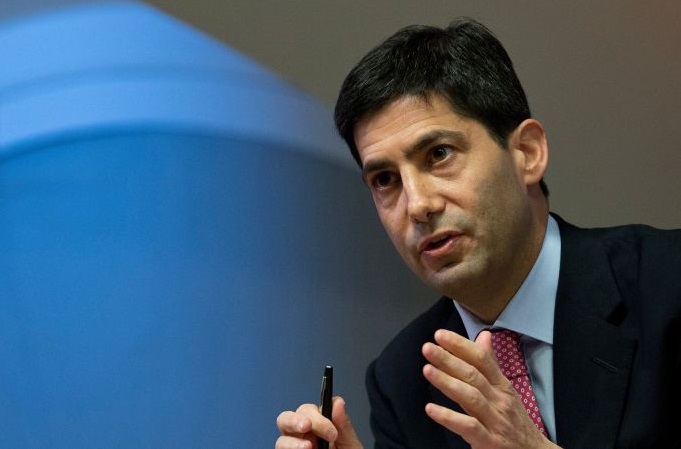
Kevin Warsh delivered his testimony before the Senate Banking Committee yesterday.
There’s a plethora of G10 central banks down to meet next week, including the Fed, ECB, BoE and BoJ, but none are likely to change policy at this early stage. Many policymakers from the UK and euro zone do admit that the market may be broadly correct to price in one or two rate hikes from the BoE and ECB this year, but whether these are delivered depends heavily on the duration of the Middle East conflict.
Steven Barrow, Head Strategist of the Standard Bank, said both would at least make a gesture of one rate hike each, possibly more. The Bank of Japan is expected to hike, probably in June, but its bias even before the conflict was to hike rates. In fact, many people might have expected the BoJ to hike at next week’s meeting were it not for the fact that the war has created a huge amount of uncertainty. BoJ Governor Ueda said last week that the bank still has some way to go to get rates back to ‘neutral’. “We believe that neutral is somewhere around the 1.5% level, which means a doubling of the current rate," said Steven Barrow.
Of all the G10 central banks, the one that may try the hardest to resist any pressure for higher policy rates is the Fed. That’s not just because the Fed has an explicit employment goal, unlike most other G10 nations that just have an inflation mandate. It is also because politics is a more predominant issue in the US thanks to the role of the president in picking Fed officials.
His pick for the new Fed chair, Kevin Warsh, delivered his testimony before the Senate Banking Committee yesterday. There are a number of questions surrounding Warsh’s appointment and what impact it will have on Fed policy.
The first, of course, is whether he will be able to take over when Powell leaves his role as chair on May 15th. That’s because Republican Senator Thom Tillis is threatening to block the appointment as long as the Department of Justice is still investigating Chair Powell for alleged fraud.
The second, and more important, question is whether Warsh will try to force the Fed to pivot in a more dovish direction. President Trump said before he appointed Warsh that he wanted someone who would cut rates, and Warsh has not been shy to express a dovish bias. The other Trump appointee to the Fed during his second term, Stephen Miran, only wants three rate cuts this year, not the four he predicted before the war. But while we can expect Warsh to hold a generally dovish bias, it is also clear that there’s little that can be done to effect such a bias in the short term given that inflation is surging. Treasury Secretary Bessent seemed to give Warsh an off-ramp last week by dropping his call for quick cuts and replacing it by the claim that the Fed should wait and see how the Middle East conflict and the data play out.
“We somehow suspect that Trump won’t give Warsh the same off-ramp, but clearly the Fed’s credibility would be shot to pieces if Warsh tries to push through an immediate rate cut at a time when inflation is far above target. And even if he did try to do this, he would likely be blocked by other FOMC members. Instead, we expect Warsh and most other FOMC members to opt to keep rates unchanged, probably through the whole of 2026. There could be a credibility cost to the Fed should it hold rates and others hike, but we believe that the extent of rate hikes from Europe and Asia will not be so big as to question the Fed’s tactics," said Steven Barrow.
While government bonds will clearly watch this central bank rate dance with considerable interest, investors will also have to make up their own minds about the longer-term consequences of the Middle East conflict in terms of things like inflation and budget deficits. “Our sense remains that these issues should keep yields elevated, notwithstanding the fact that there is bound to be a short-term decline in yields once the war ends," emphasized Steven Barrow.
Author: NGOC ANH
RECOMMENDED TOPICS