VN
VN
 EN
EN
26/07/2026, 11:20
Investment
Will the US dollar continue to move gingerly ahead?
Many analysts doubt that this is going to change in the short-term. However, they still remain focussed on a longer-term structural downtrend for the US dollar; something that could accelerate as a result of the conflict in Iran.
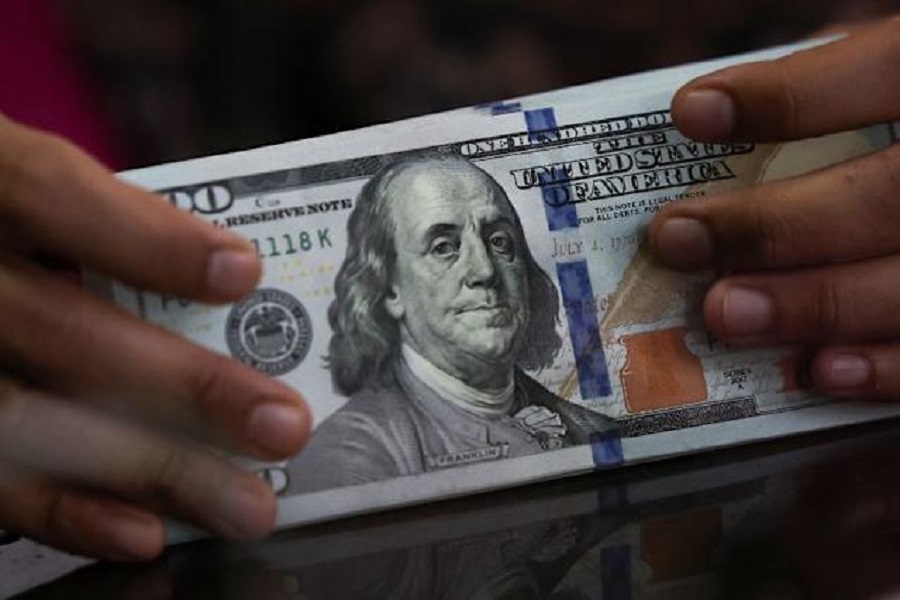
Conflict-induced US dollar strength derives from the currency’s safe-asset qualities and the US’s relative terms of trade benefits.
Middle East conflict-induced US dollar strength derives from the currency’s safe-asset qualities and the US’s relative terms of trade benefits. The latter is attributable to the US’s energy self-sufficiency. In contrast, those countries that rely on imports for their energy needs see their currencies suffer, particularly if they rely on oil transit through the, effectively closed, Straits of Hormuz. But while the dollar has appreciated, its gains have been rather underwhelming at just under 3% on the DXY dollar index.
With respect to the euro, the US dollar still finds itself within the 1.14-1.20 range that has been in existence since last June. Part of the limited reaction so far could be due to the relatively modest terms of trade deterioration in the eurozone compared to the US. The surge in global energy prices has weakened the eurozone's terms of trade compared to the US, but, so far at least, it is a fraction of the hit the euro zone suffered when Russia invaded Ukraine in February 2022. That plunge in the eurozone's terms of trade saw the euro fall against the dollar from around 1.13 to a low of nearly 0.95.
The Russia-Ukraine conflict produced far steeper increases in gas prices than we’ve seen with the war in Iran, and it also presented greater problems for the eurozone when it came to the surety of energy supply than today. All told, many analysts are assuming that the energy price disruption resulting from the conflict in Iran is sufficient to push euro/dollar down to around 1.10 in coming weeks and possibly months, but dollar strength beyond this would likely require much more significant increases in energy prices than we have seen so far, and, at the moment, they are not making the assumption that this will happen. They also find it notable that currencies of countries that have significant energy resources, such as Australia and Canada have not seen undue currency weakness against the US dollar. In fact, the Australian dollar is still the best performing G10 currency this year.
This brings us onto the second issue driving modest US dollar strength right now: its safe-asset status. For while safe-asset demand has often been a source of support for the dollar in the past when geopolitical tensions have risen, it seems rather limited right now. The fact that a, usually vulnerable, currency such as the Australian dollar can hold its own against the US dollar in the midst of such geopolitical tumult is testament to the fact that the greenback has lost some, or even all, of its safe-asset allure. That might be down to the manner in which this geopolitical tension arose, with the US attacking Iran. It might be that other aspects of US policy, such as tariffs and pressure on the Fed to ease policy, are undermining the dollar’s status.
Another consideration is that, perhaps, investors don’t really need a safe asset at all these days. One way to see this is to note that other ‘natural’ safe assets, like US treasuries and gold, have fallen, not risen. Even the strength in other safe-asset currencies, such as the Swiss franc, has been underwhelming compared to the past. But why might investors have no need for a safe asset?
Steven Barrow, Head of Standard Bank G10 Strategy, said part of the reason could be that global liquidity is ample, and major central banks these days, such as the Fed, ECB and PBoC stand ready with FX swap lines to supply ‘safe’ currency to markets where potential shortages of the dollar and other safe currencies can arise. In simple terms, there is no need for investors to flee other assets and seek the sanctuary of the US dollar because there is an abundance of dollar availability.
“Add this to what we see as an inherent scepticism in the market about US policymaking, and hence the US dollar, and it leaves us feeling that as soon as this conflict in Iran starts to ease off, the dollar will slide too. At the start of this year, we argued that the US dollar would fall by around 5% this year on trade-weighted terms and we are not convinced that this forecast should change”, said Steven Barrow.
Author: NGOC ANH
RECOMMENDED TOPICS