VN
VN
 EN
EN
26/07/2026, 02:38
Business economics
Bac Ninh: A golden bridge helping businesses break through amid challenges
In recent years, the Bac Ninh Provincial Business Association has effectively played its role as a “bridge” to authorities at all levels, contributing to improvements in the investment environment and promoting local economic development.
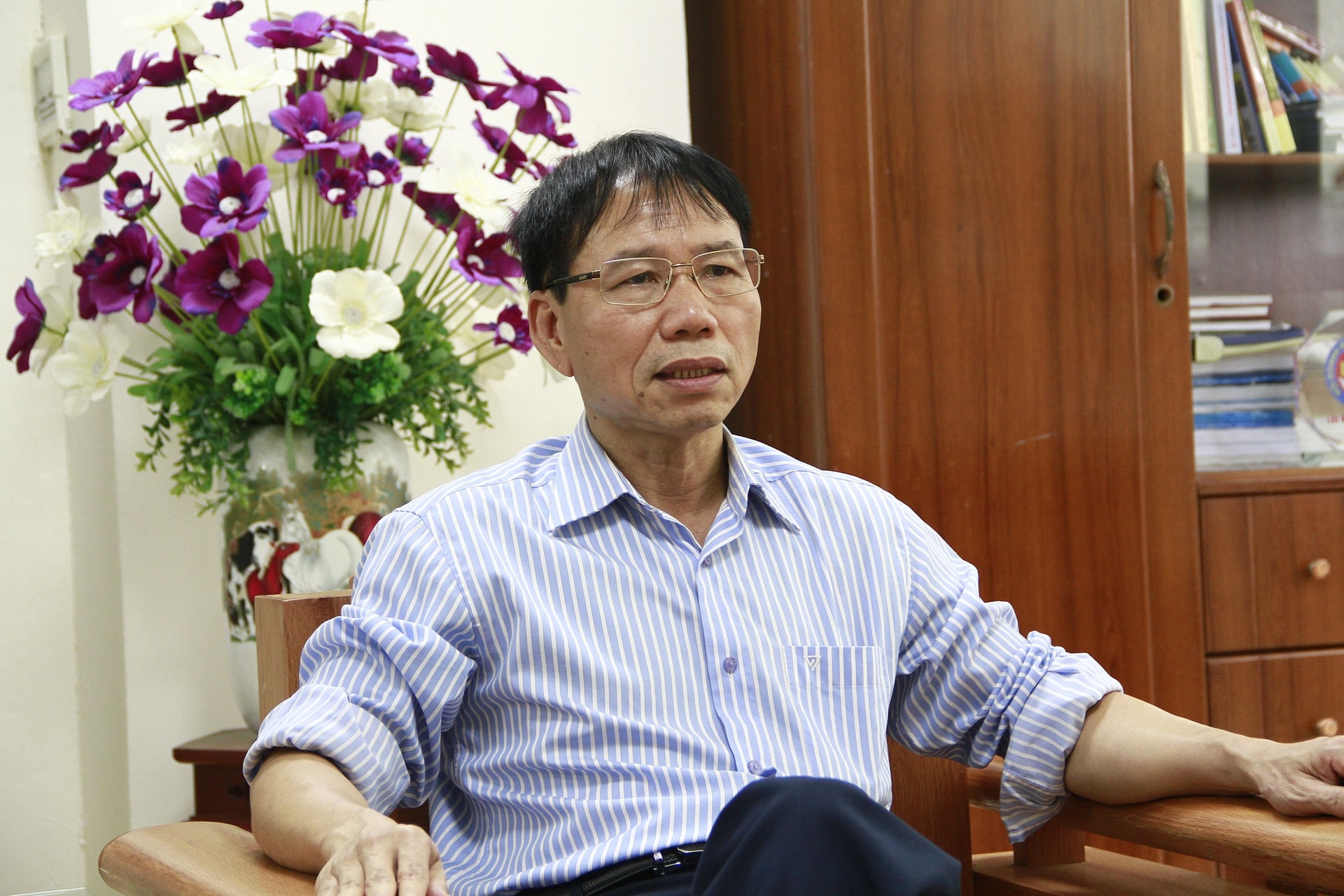
Mr. Nguyen Cuong, Standing Vice Chairman of the Bac Ninh Provincial Business Association
A reporter from Business Forum interviewed Mr. Nguyen Cuong, Standing Vice Chairman of the Bac Ninh Provincial Business Association, about development prospects, the role of new growth poles, and the “keys” for the private business community to move up the global value chain.
– Following the provincial merger, the former Bac Giang area is seen as having strong industrial development potential. How do you assess the opportunities for businesses in this area in the coming period?
It can be affirmed that territorial expansion is not merely an addition of land area but a synergy of internal strengths. The former Bac Giang area is emerging as a highly promising industrial growth pole—a perfect complement to what Bac Ninh needs to maintain its leading position.
The advantages lie in three key factors. First, industrial land availability. While traditional areas are gradually running out of land, this area offers vast space for large-scale projects. Second, its well-connected transport infrastructure—especially the Hanoi–Hai Phong–Quang Ninh economic corridor—turns it into an ideal logistics hub. Third, a large and cost-competitive labor force acts as a magnet for manufacturing and processing industries.
For the business community, this is a golden opportunity to scale up and integrate more deeply into value chains as FDI flows shift. With the right investment policies, this area will not just be a “supporting zone” but will soon become a key industrial center of the province.

The Bac Ninh Provincial Business Association worked with Tuan Mai Company
Currently, the Bac Ninh Provincial Business Association has more than 700 member enterprises across various sectors.
Following organizational restructuring under the two-tier government model, the Association has proactively strengthened its system, expanded local chapters down to commune and ward levels, and maintained a wide network to enhance connectivity and support. Both the quantity and quality of members continue to improve, forming a stronger, more cohesive, and sustainable business community.
Businesses are the core force driving local socio-economic development, contributing significantly to job creation, budget revenue, exports, and investment attraction. In 2025, Bac Ninh maintained GRDP growth above 10% and led the country in FDI attraction, with enterprises playing a central role in driving growth and economic restructuring toward a modern, sustainable model.
– Based on your engagement with investors, what are the key “touchpoints” that make Bac Ninh’s business environment distinctive and attractive?
Bac Ninh’s appeal does not stem from a single factor but from a synchronized ecosystem.
First is its “golden” location adjacent to the capital, with convenient access to seaports and international airports—an advantage for attracting industrial and service investments.
Second is the well-developed industrial park infrastructure, with many parks carefully planned and capable of accommodating large-scale projects, especially in high-tech manufacturing.
Third is a transparent and business-friendly investment environment, with a service-oriented government that actively supports enterprises. Over the years, the province has implemented strong administrative reforms, shortened processing times, and created maximum convenience for investors.
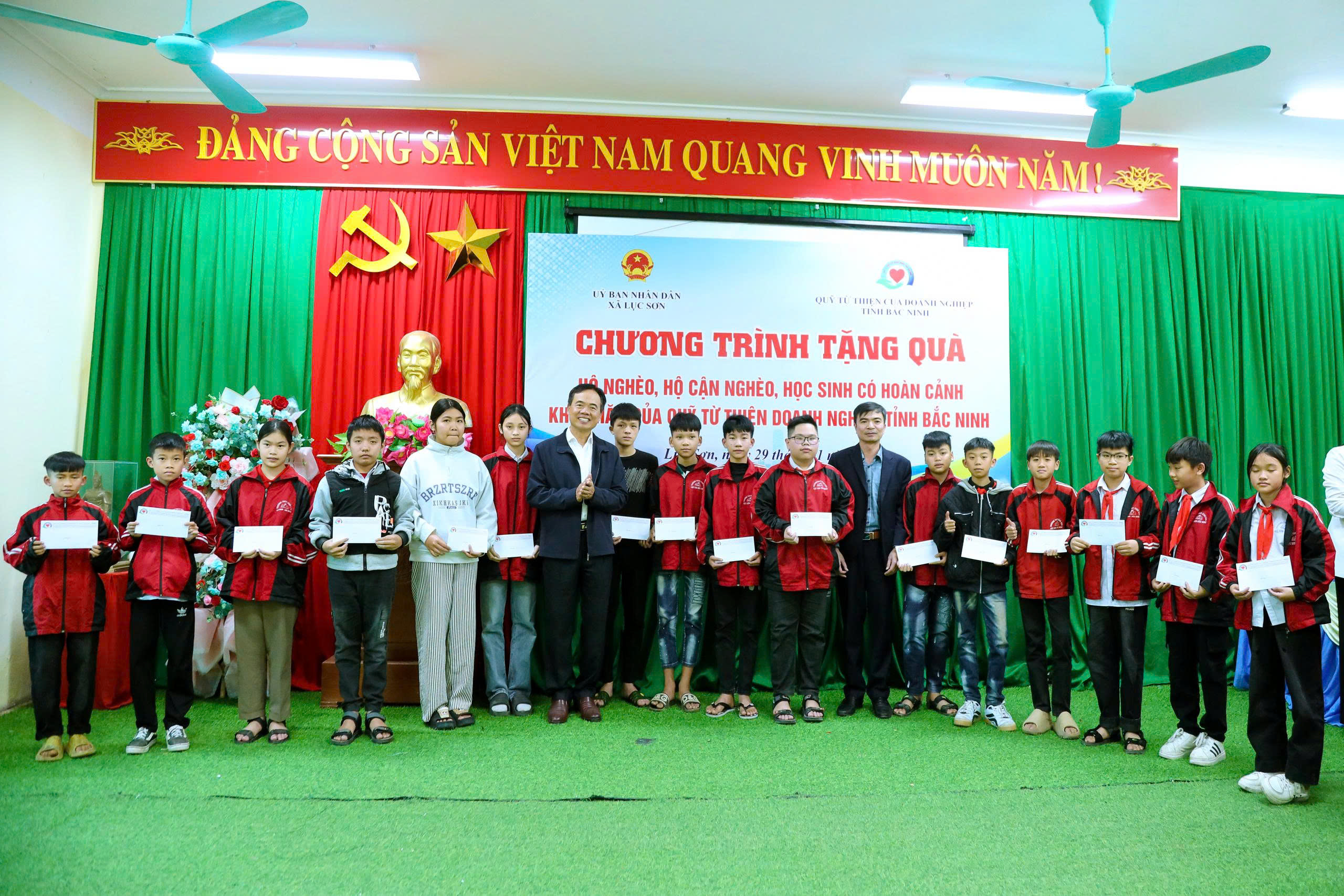
The Bac Ninh Provincial Business Association offered gifts to children
– Resolution 68-NQ/TW positions the private sector as a key economic driver. What policy “levers” are needed to realize this?
Resolution 68 is a “fresh wind,” but for private enterprises to truly take off, practical mechanisms are needed.
First, unlocking capital flows, especially medium- and long-term financing for SMEs.
Second, providing tangible support for digital transformation and technological innovation.
Third, reducing compliance costs and ensuring a predictable business environment. In particular, there is a need for training and advisory programs on standards to help domestic enterprises “bridge into” FDI supply chains. Policies must ensure that private enterprises are no longer “standing on the sidelines” of the technology game.
– As a representative organization, what concrete actions has the Association taken to connect businesses? And how do you see opportunities for local firms to join FDI supply chains?
We see connectivity as our core mission. The Association does not only organize formal conferences but also focuses on practical trade promotion activities. In 2024–2025, we organized dozens of inter-regional and international business matching programs, from Hung Yen to major markets like China.
We also promote sector-based and value-chain-based linkages. More importantly, the Association serves as an information “transit hub” between businesses and government. Direct dialogue conferences have helped resolve many pressing issues, giving businesses confidence to operate.
Opportunities are expanding as FDI corporations increasingly localize supply chains. Domestic firms can participate in supplying materials, components, and supporting services.
However, barriers in standards and governance remain significant. To address this, the Association organizes 10–15 specialized training programs annually on management, finance, and digital transformation. We are also pioneering the application of AI in business operations to enhance productivity. The goal is to equip local enterprises with the confidence and capacity to enter global value chains.
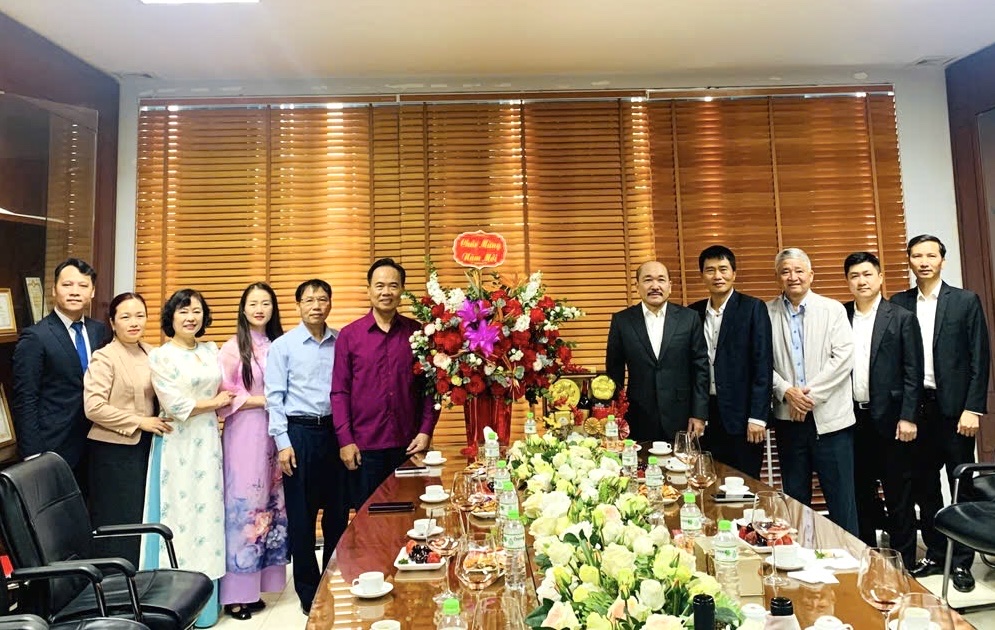
The Bac Ninh Provincial Business Association had a working session with Dai Hoang Son company
- What are the biggest challenges currently facing businesses, and how have these been addressed? What strategic priorities will guide the Association moving forward?
Key challenges include access to capital, rising logistics costs, and bottlenecks in land procedures.
The Association’s “bridge” role is reflected in tangible results: in 2025 alone, we submitted 34 proposals to provincial leaders, 32 of which were fully resolved. We maintain free legal advisory services and regular dialogue sessions to protect members’ legitimate rights. The province’s prompt response has built strong trust within the business community.
On behalf of the business community, we recommend that Bac Ninh authorities continue to accelerate administrative reform, to improve policy implementation, to support access to capital and innovation, to strengthen business-to-market linkages, and to develop a high-quality workforce.
In the coming period, the Association’s strategy will focus on five key priorities:
- Strengthening core capabilities: digital and green transformation, and AI adoption
- Expanding trade frontiers: enhancing regional and international connectivity
- Organizational consolidation: expanding membership down to grassroots levels
- Policy advocacy: becoming a strong voice for business interests
- Sustainable development: promoting green economy and corporate social responsibility
- The ultimate goal is to build a Bac Ninh business community that is connected, dynamic, and highly competitive—serving as a key driver of sustainable provincial development in the new era and contributing to improved PCI rankings.
– Thank you very much.
Author: KIM DUNG - VU PHUONG
RELATED TOPICS
RECOMMENDED TOPICS