VN
VN
 EN
EN
10/07/2026, 02:38
Business economics
Bac Ninh: Developing specialized and green industrial parks
Bac Ninh is asserting its leading position by decisively shifting toward a model of specialized industrial parks (IPs) and green, eco-industrial zones.
The province is focusing on planning dedicated subzones for semiconductors, high-tech industries, and data, helping optimize supply chains and shared infrastructure.
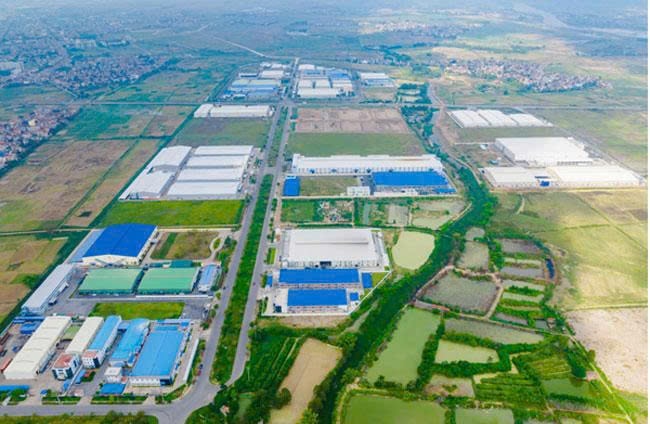
Panoramic view of Quế Võ III Industrial Park in Bắc Ninh – a symbol of green, smart, and sustainable industrial infrastructure developed by ROX iPark.
Bắc Ninh: A New Industrial Landscape – From Specialization to Sustainable Ecology
According to Nguyễn Đức Long, Deputy Head of the Bắc Ninh Industrial Zones Authority, in a context where global investment flows are becoming more stringent regarding environmental and governance standards, Bắc Ninh has proactively chosen its own path: developing specialized industrial parks and green IPs.
This is not only a move to enhance competitiveness but also a commitment from a dynamic economic hub toward a sustainable future, balancing industrialization with environmental protection.
Bắc Ninh has long been known as a base for multinational corporations. However, instead of broad-based attraction, the province is now strongly shifting toward specialized industrial park models.
These parks are planned for specific industries, creating synergies within supply chains.
This model enables businesses within the same ecosystem—such as semiconductors, electronic components, or precision engineering—to leverage shared infrastructure, reduce logistics costs, and facilitate technology transfer.
For instance, the development of semiconductor and high-tech clusters in Quế Võ and Yên Phong has positioned Bắc Ninh as an indispensable node in global value chains. Specialization not only attracts “anchor investors” but also retains a network of high-quality supporting industries.
Green and Eco-Industrial Parks: When “Green” Becomes a Passport
The concept of green and eco-industrial parks in Bắc Ninh is no longer aspirational—it has become a stringent requirement.
This model is built on three pillars: cleaner production, industrial symbiosis, and smart infrastructure.
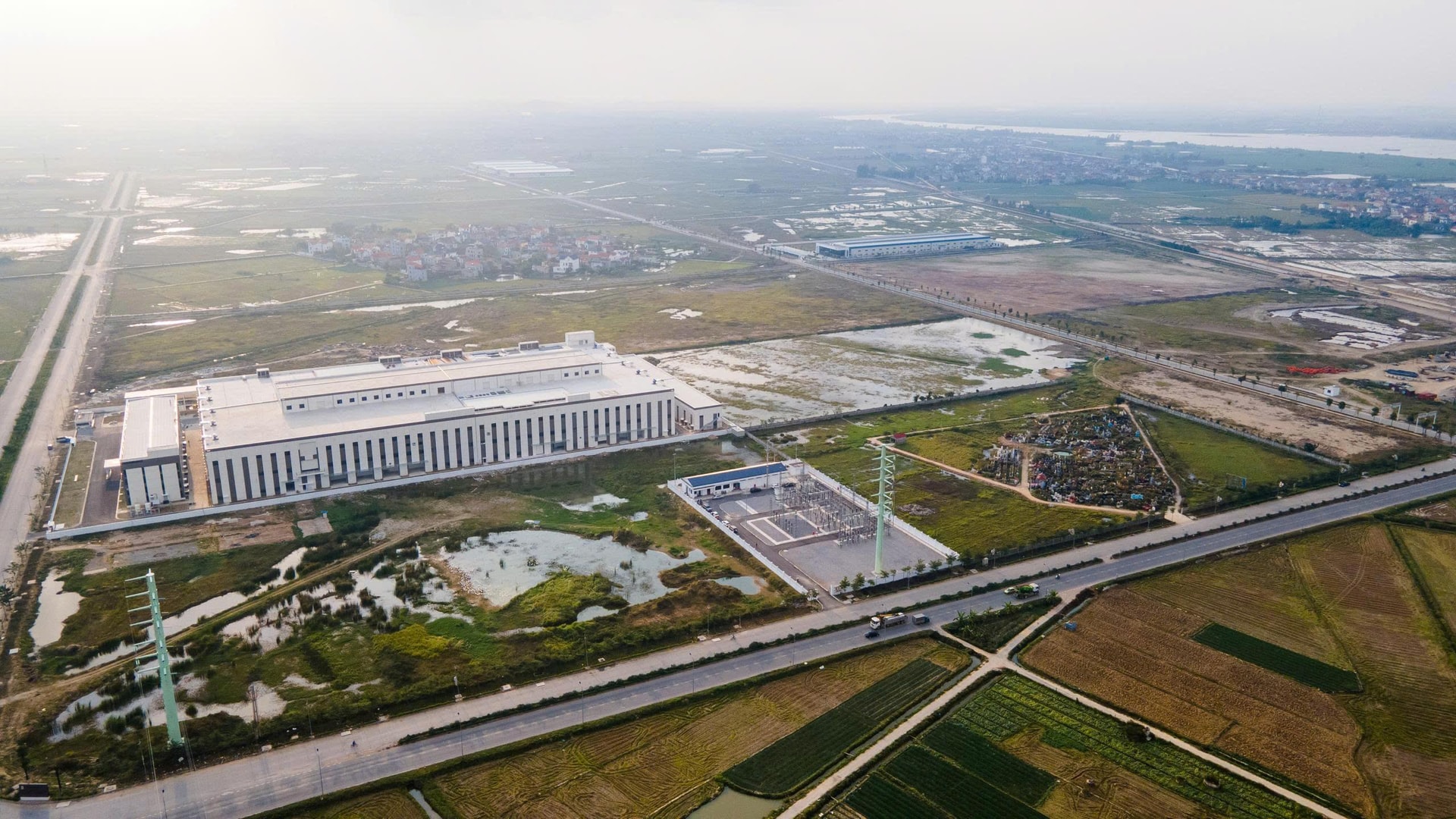
Gia Bình II Industrial Park – the first eco-industrial park in Bắc Ninh developed by Hanaka, applying advanced technologies.
In these parks, wastewater is treated and reused, rooftop solar energy is maximized, and green space exceeds standard requirements.
More importantly, the concept of “industrial symbiosis” allows waste from one enterprise to become input material for another. This minimizes environmental impact while helping businesses obtain green certifications such as LEED or ISO 14001—essential “passports” to access demanding markets like the EU and the United States.
The “Conductor” Role of the Industrial Zones Authority
To realize these modern models, the role of the provincial Industrial Zones Authority is critical.
It not only acts as a state management body but also as a “facilitator” and close partner to investors.
The Authority has proactively reviewed and adjusted existing IP planning while proposing new specialized zones. With sustainability as a core objective, new parks are designed to green standards: prioritizing renewable energy, circular wastewater treatment, and maximizing ecological space.
The Authority also plays a “conductor” role by reducing administrative procedures by 60% and implementing a “24-hour green channel” to support investors. Projects in green IPs benefit from prioritized appraisal processes, enabling faster deployment.
As of April 2026, Bắc Ninh has prepared nearly 4,000 hectares of cleared land ready to attract high-value, low-labor projects—an important step toward building a modern, transparent, and environmentally friendly industrial base.
Post-licensing support is also emphasized, with the Authority acting as a “bridge” to resolve issues related to electricity, water, and workforce. It is particularly active in guiding enterprises transitioning from traditional to eco-industrial models, ensuring sustainability throughout the project lifecycle.
By Q2 2026, Bắc Ninh has seen dozens of green industrial infrastructure projects come into operation, attracting new and expanded investment capital exceeding USD 2.8 billion.
New projects are concentrated mainly in semiconductors and clean energy, reflecting the success of the specialization strategy.
Filling industrial parks with high-value, low-labor projects is helping the province balance economic growth with social welfare.
Developing specialized and green industrial parks is not the final destination but a long-term journey for Bắc Ninh to position itself on the global investment map.
The province envisions building smart industrial parks where AI and big data coordinate all operations—from security to waste management.
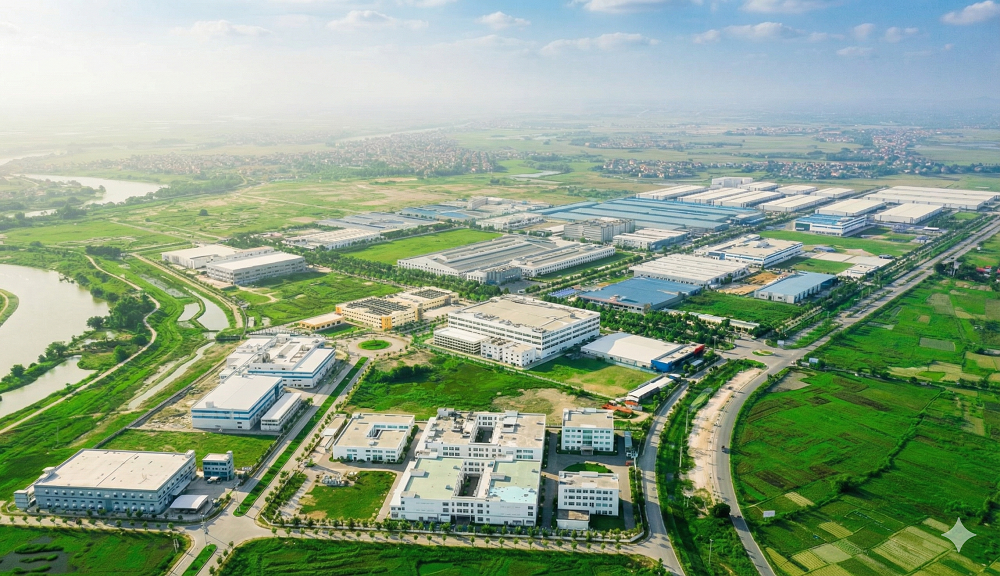
Hòa Phú Industrial Park is planned as a multi-sector, high-tech, environmentally friendly industrial complex.
In coordination with local authorities, the province is updating planning for surrounding communes and wards to ensure social infrastructure—housing, schools, and hospitals—develops in tandem with industrial infrastructure.
This approach aims to form integrated “Industrial–Urban–Service” ecosystems, where workers can live and work sustainably over the long term.
Bắc Ninh stands at the threshold of a comprehensive transformation. Its commitment to specialized and green industrial parks reflects sharp economic thinking and strong responsibility.
With determined leadership and alignment among government agencies and the business community, Bắc Ninh is well-positioned to maintain its status as a “golden destination,” contributing significantly to Vietnam’s sustainable industrialization and modernization.
Author: KIM DUNG - VU PHUONG (Dang Truong translates)
RELATED TOPICS
1. Bac Ninh Business Consultancy and Support Center: When technology becomes the key to unlock reform and investor confidence
2. Bac Ninh: A golden bridge helping businesses break through amid challenges
3. Bac Ninh: Enhancing semiconductor competitiveness, fostering reform and infrastructure innovation
RECOMMENDED TOPICS