VN
VN
 EN
EN
22/07/2026, 02:38
Investment
Gemadept pushes strategic pillars
During the 2026–2030 period, Gemadept Corporation (HoSE: GMD) plans to accelerate growth based on four strategic pillars, including seaports, logistics, inland and maritime transport, and the maritime industry.
Despite this, GMD still faces numerous challenges, including capital mobilization for projects, competitive pressure, and impacts from conflicts in the Middle East.
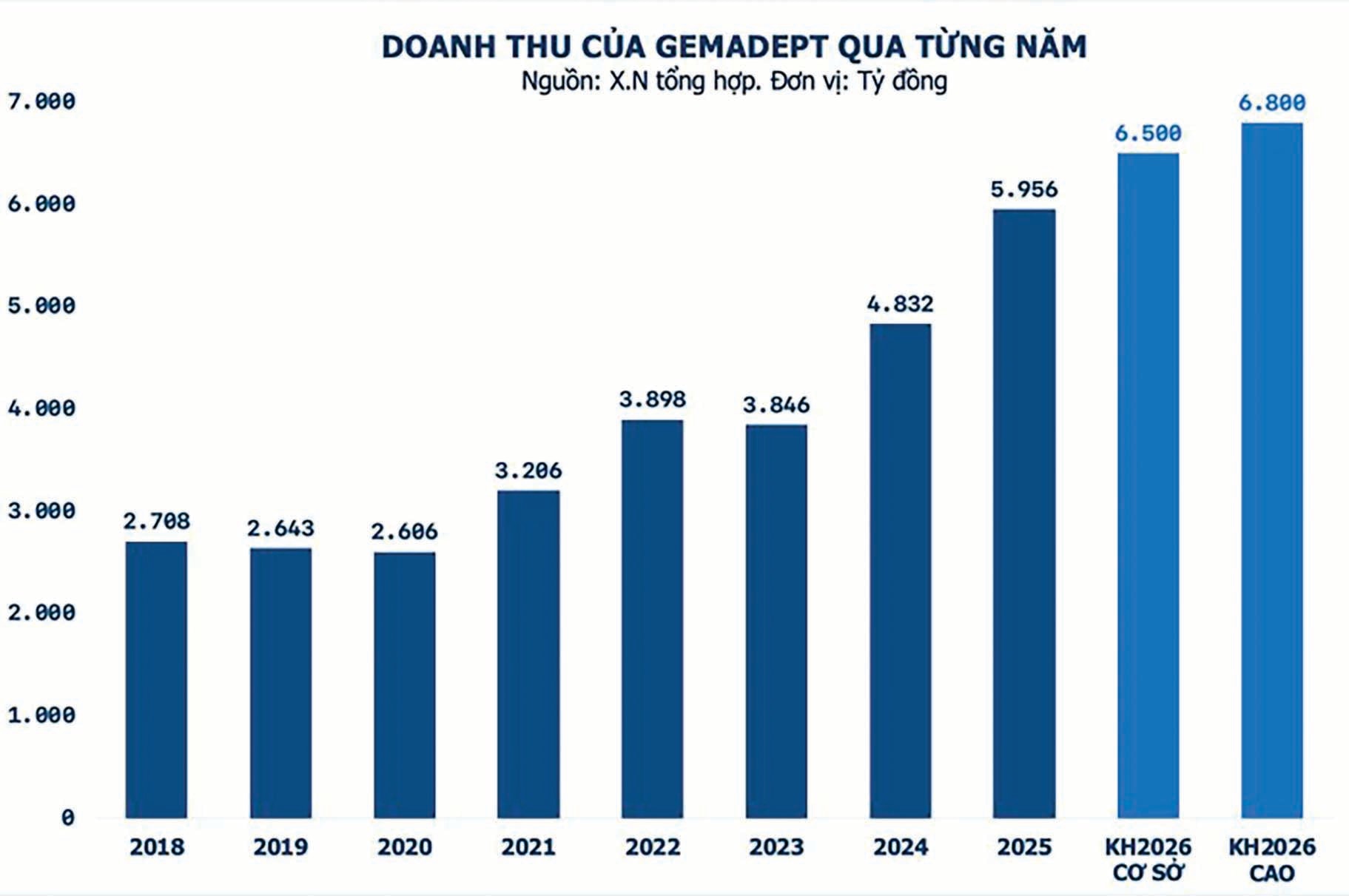
Revenue growth of GMD over the years.
Growth driven by port system
According to its Q1/2026 financial report, GMD recorded revenue of VND1.452 trillion, up 13.7%, and after-tax profit of VND650.2 billion, up 24.2% year-on-year.
Following the strong growth momentum in Q1/2026, GMD’s management proposed two business scenarios for 2026. Under Scenario 1, the company targets revenue of VND6.5 trillion and pre-tax profit of VND2.8 trillion. Under Scenario 2, GMD targets revenue of VND6.8 trillion and pre-tax profit of VND3 trillion, representing increases of 14.2% and 19%, respectively, compared to 2025 results.
At the recent Annual General Meeting of Shareholders, Mr. Đỗ Văn Nhân, Chairman of GMD’s Board of Directors, stated that both business scenarios approved by shareholders are ambitious and highly challenging amid ongoing global economic volatility and rising costs. Nevertheless, GMD remains confident in achieving its targets thanks to its large-scale, modern port system located at strategic positions that few industry peers possess.
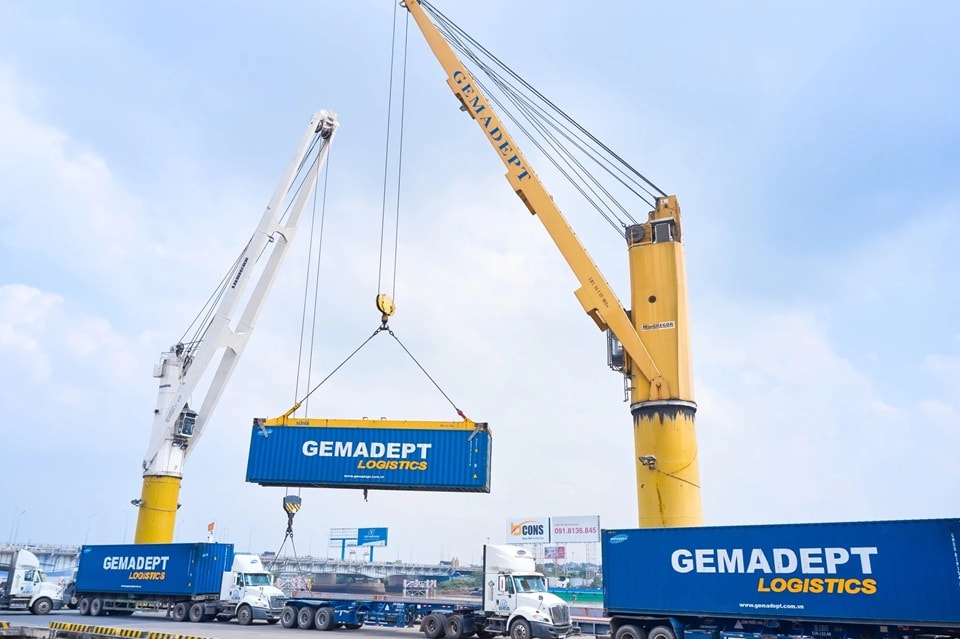
Port operations continue to serve as GMD’s primary growth driver, supported by resilient import-export demand and the commissioning of Nam Đình Vũ Port Phase 3 at the end of 2025, which increased the company’s overall system capacity. Meanwhile, logistics operations play an important supporting role within GMD’s integrated port-logistics ecosystem, delivering clear business efficiency in Q1/2026.
Gemalink continues to play a key role as a major deep-water port at Cái Mép – Thị Vải, operating at full capacity, while many nearby projects developed by competitors face excess capacity. This demonstrates that GMD has effectively leveraged its integrated ecosystem to sustain long-term growth.
Expanding projects within the ecosystem
At the AGM, Mr. Nguyễn Thanh Bình, CEO and Board Member of GMD, added that in 2026 the company will focus on developing a 33-hectare project in Nam Đình Vũ and accelerating Gemalink Phase 2. At the same time, GMD plans to expand new river port developments in southern Vietnam, promote its inland waterway transport strategy, develop shipping operations, Mekong logistics, and strategic infrastructure projects in the Cái Mép area. These are long-term strategic projects designed to complete GMD’s ecosystem and will require substantial capital mobilization.
Currently, Gemalink Phase 2 officially commenced on 17 April 2026. Once completed, the Cái Mép – Thị Vải port complex is expected to achieve total capacity exceeding 3 million TEU per year, meeting growing cargo demand and accommodating larger vessels at the deep-water port cluster.
During the 2026–2030 period, GMD’s leadership plans to develop around four strategic pillars: seaports, logistics, inland and maritime transport, and the maritime industry. In addition to ongoing ecosystem projects, GMD also plans to re-enter the shipping business. This segment is expected to become a key link connecting ports nationwide and serving as a bridge between shipping lines and cargo flows. Accordingly, integrating shipping operations is projected to contribute an additional 20% of revenue for GMD while completing its ecosystem.
At present, GMD and CJ Logistics have agreed to optimize their strategic cooperation in logistics and shipping activities. Under the arrangement, GMD will directly manage operations and investments while holding a 49% stake in Mekong Logistics JSC (MKL), whereas CJ Logistics will invest in and manage 100% of third-party logistics (3PL) service operations.
Significant challenges remain
Under its 2026–2030 plan, maritime and inland waterway transport are expected to become new profit pillars alongside port operations. The company plans to invest further in cargo vessels, barges, river ports, and ICD connectivity systems to retain cargo flows throughout its ecosystem.
However, GMD’s aggressive expansion into large-scale projects is likely to create substantial capital expenditure pressure. Gemalink Phase 2A alone is expected to be completed by 2027 with total investment capital of nearly VND6 trillion, representing a major financing challenge for the company.
As of 31 March 2026, GMD’s total liabilities stood at VND4.162 trillion, including more than VND2.065 trillion in short-term debt. Continued borrowing for project investments could significantly increase leverage and affect the company’s operating cash flow. However, analysts at Saigon - Hanoi Securities (SHS) believe GMD’s debt pressure is being managed effectively through proactive financial strategies such as asset sales, share issuances, and operational efficiency improvements at Gemalink and Nam Đình Vũ ports, which are expected to support profit growth in the coming years.
In addition, rising raw material and construction costs may increase capital expenditures and extend project payback periods. A slowdown in import-export activity or foreign direct investment inflows could result in lower-than-expected cargo throughput growth, affecting GMD’s revenue and profitability. Increasing port supply in Hải Phòng and Cái Mép – Thị Vải may also place pressure on service pricing and market share.
Furthermore, interest rate volatility and geopolitical factors could affect financing costs and GMD’s long-term financial efficiency. In particular, persistently high oil prices could raise transportation and logistics costs, indirectly impacting shipping demand and profit margins.
Author: HA PHUONG - TRUONG DANG
RELATED TOPICS
RECOMMENDED TOPICS