VN
VN
 EN
EN
26/07/2026, 11:20
Investment
How post-holiday stock investment strategy should be done
Amid rising global volatility, the diffusion of capital flows in Vietnam’s stock market is opening up new opportunities for portfolio allocation after the holiday period.
Shifting capital flows
Global financial markets are entering a sensitive phase, as macroeconomic factors, geopolitics, and corporate earnings cycles simultaneously shape investor sentiment. In this context, Vietnam’s stock market has shown relative stability, raising key questions about the direction of capital flows and portfolio allocation strategies in the post-holiday period.
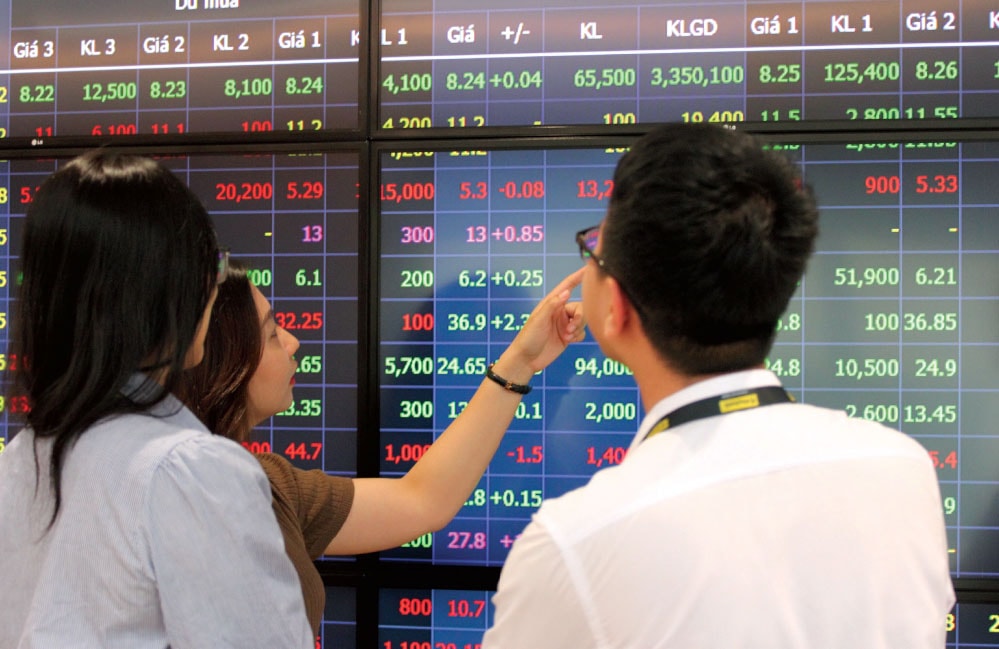
Before the holiday, capital flows had already begun shifting toward sectors with stronger accumulation foundations.
One notable factor is rising geopolitical risk in the Middle East and the possibility of the UAE withdrawing from OPEC. These developments have pushed Brent crude prices above USD 110 per barrel, increasing global inflationary pressure and reinforcing monetary tightening trends among major central banks.
However, according to analysts at AAS Securities, Vietnam’s macroeconomic landscape remains relatively stable. Flexible policy management, particularly in fuel price regulation, has helped domestic energy costs stay significantly lower than in regional peers such as Laos, Cambodia, and Thailand. This creates an important “marginal competitive advantage,” allowing businesses to reduce input cost pressures, maintain profit margins, and strengthen market confidence.
Looking back at the final trading session of April before the long holiday, although the VN-Index fell more than 21 points to 1,209, market breadth remained positive, with advancing stocks outnumbering decliners.
This inverse “green outside, red inside” phenomenon suggests that capital is not exiting the market but being reallocated. Downward pressure mainly came from large-cap stocks that had previously rallied strongly, particularly joint-stock commercial banks and retail names such as TCB, VPB, MWG, MSB, and SAB.
Meanwhile, capital has been flowing into sectors with stronger accumulation bases, including state-owned banks (CTG, LPB), energy and chemicals (GAS, DPM, DCM), and selected real estate stocks (DIG, DXG, TCH, VRE).
This is structurally positive, as the correction in leading sectors helps reset valuations and creates room for other industries to break out, especially as ETF rebalancing pressure eases after the holiday.
A new growth axis from state-owned enterprises
Mr. Hoàng Anh Nhật, Director of High-Net-Worth Clients at AAS, noted that one of the market’s key highlights is the return of state-owned enterprises (SOEs), benefiting from both policy support and commodity cycles.
In state-owned banks such as VCB, CTG, and BID, current trading patterns indicate a “tight base” formation with narrow price ranges, typical of an accumulation phase. Given their role in financing infrastructure and export projects, along with capital increase plans, this group is expected to become a key market pillar in the coming period.
The rubber sector is also emerging as a bright spot. Vietnam Rubber Group (GVR) posted record-high Q1 2026 profits as global rubber prices approach a 10-year peak. Beyond commodity price gains, the company also holds significant potential from land conversion into industrial zones. Compared to peers such as Phuoc Hoa Rubber (PHR) or Dong Phu Rubber (DPR), which have limited liquidity, GVR is a more suitable choice for large capital flows.
The oil and gas sector has also shown positive signals. PetroVietnam Technical Services Corporation (PVS) significantly improved operational efficiency, with gross margins nearing 10% in Q1. Although net profit declined due to over VND 300 billion in provisioning, this reflects prudent accounting and does not alter long-term prospects driven by technical service projects.
The real estate market is showing signs of bottoming out, but recovery is uneven. Capital flows are concentrated only in companies that meet three core criteria: transparent legal status, products addressing real demand, and healthy financial structures.
In this context, developers focused on the southern primary market such as Nam Long (NLG), Khang Dien House (KDH), and Phat Dat (PDR) are viewed favorably. Notably, financial restructuring and project divestment strategies by PDR and Dat Xanh Group (DXG) are considered necessary steps to optimize resources.
Hoang Huy Financial Services Investment (TCH), with a strong balance sheet and clean land bank, maintains a target valuation of VND 24,000–25,000 per share. Price corrections below VND 17,000 are seen as strategic accumulation opportunities.
“Q1 financial results continue to provide important market support. The chemicals and fertilizer sector stands out, with names such as BFC, DCM, and DPM. Binh Dien Fertilizer (BFC) is a typical case of proactive strategy, having accumulated more than VND 2.2 trillion of low-cost inventory since late 2023. As urea prices and export volumes rise sharply in early 2026, profit margins are expected to expand further in Q2.
On the other hand, foreign investors remain net sellers, though selectively. Many international institutions believe this trend could reverse in June, as factors such as FTSE market reclassification and institutional reforms (IPOs, state divestment) become clearer,” Mr. Nhật analyzed.
Portfolio allocation strategy
According to the expert, as the market approaches previous peak levels and exhibits high divergence, investment strategy should prioritize risk management and rational allocation.
The core principle is phased disbursement, focusing on strong support zones rather than chasing prices. In terms of portfolio structure, investors may divide allocations into three groups: 40% in stable blue-chip stocks such as state-owned banks to reduce volatility; 30% in growth drivers including rubber and oil and gas; and 30% in breakout sectors such as real estate and fertilizers.
In addition, investors should closely monitor USD/VND exchange rate movements and oil prices around the Strait of Hormuz, as these variables can directly impact capital flows and market sentiment.
After the holiday, the market is expected to enter a pivotal phase driven by three main factors: capital rotation from large-cap stocks to fundamentally strong names, recovery of SOEs under policy support, and revaluation effects from Q1 2026 earnings results.
Experts recommend that despite ongoing geopolitical risks, stable macroeconomic fundamentals and prospects of market upgrading are creating significant opportunities. In this context, effective strategy lies not in avoiding volatility, but in leveraging it. Turning risks into opportunities, combined with a medium- to long-term perspective and disciplined capital allocation, will be key for investors to capture the next growth cycle of Vietnam’s stock market.
Author: DIEM NGOC - TRUONG DANG
RELATED TOPICS
RECOMMENDED TOPICS