VN
VN
 EN
EN
16/07/2026, 02:38
Investment
IJC faces cost pressure, sets lower profit target for 2026
Despite owning a sizable land bank, Infrastructure Development JSC (HoSE: IJC) continues to face multiple challenges. As a result, the company has set a lower profit target for 2026 compared to the previous year. However, in the long term, IJC is still assessed to have positive prospects.
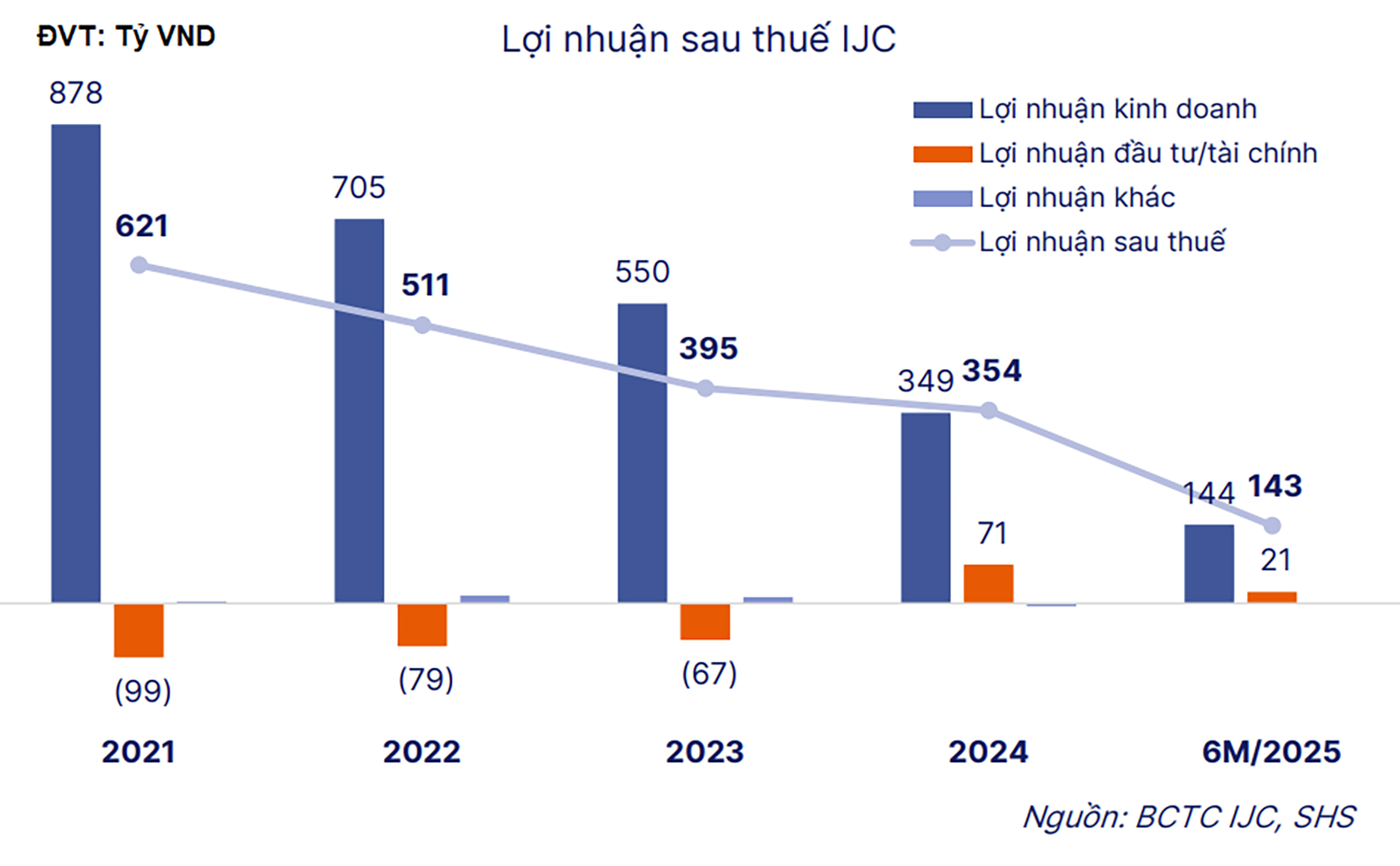
IJC’s profit over the years
Although the company expects total revenue in 2026 to grow year-on-year, its after-tax profit is projected to decline by 9% due to a sharp 65% increase in total costs.
A period of fluctuations
IJC’s revenue during 2021–2024 declined significantly from VND 2,602 billion to VND 1,020 billion, mainly due to weak sales performance in the residential real estate segment. Meanwhile, toll collection activities maintained relatively stable revenue. As a result, the market also witnessed a decline in IJC’s business profits during this period.
In 2025, however, IJC showed more positive momentum as the real estate market began to recover. The company recorded consolidated revenue of VND 1,799 billion, reaching 86% of its plan and increasing by 54% compared to 2024. Consolidated pre-tax and after-tax profits reached VND 708 billion and VND 597 billion, respectively, achieving 137% and 139% of the plan, up 71% and 69% year-on-year.
Revenue from real estate business in 2025 reached VND 974 billion, up 202% compared to 2024. This was mainly driven by projects such as Sunflower I Villas, Sunflower II Villas, IJC Hoa Loi Residential Area, and others.
However, no revenue was recorded from construction activities as planned, due to delays in the acceptance and settlement of the Ho Chi Minh City – Thu Dau Mot – Chon Thanh expressway project. The company expects to recognize this revenue in 2026.
Competitive pressures
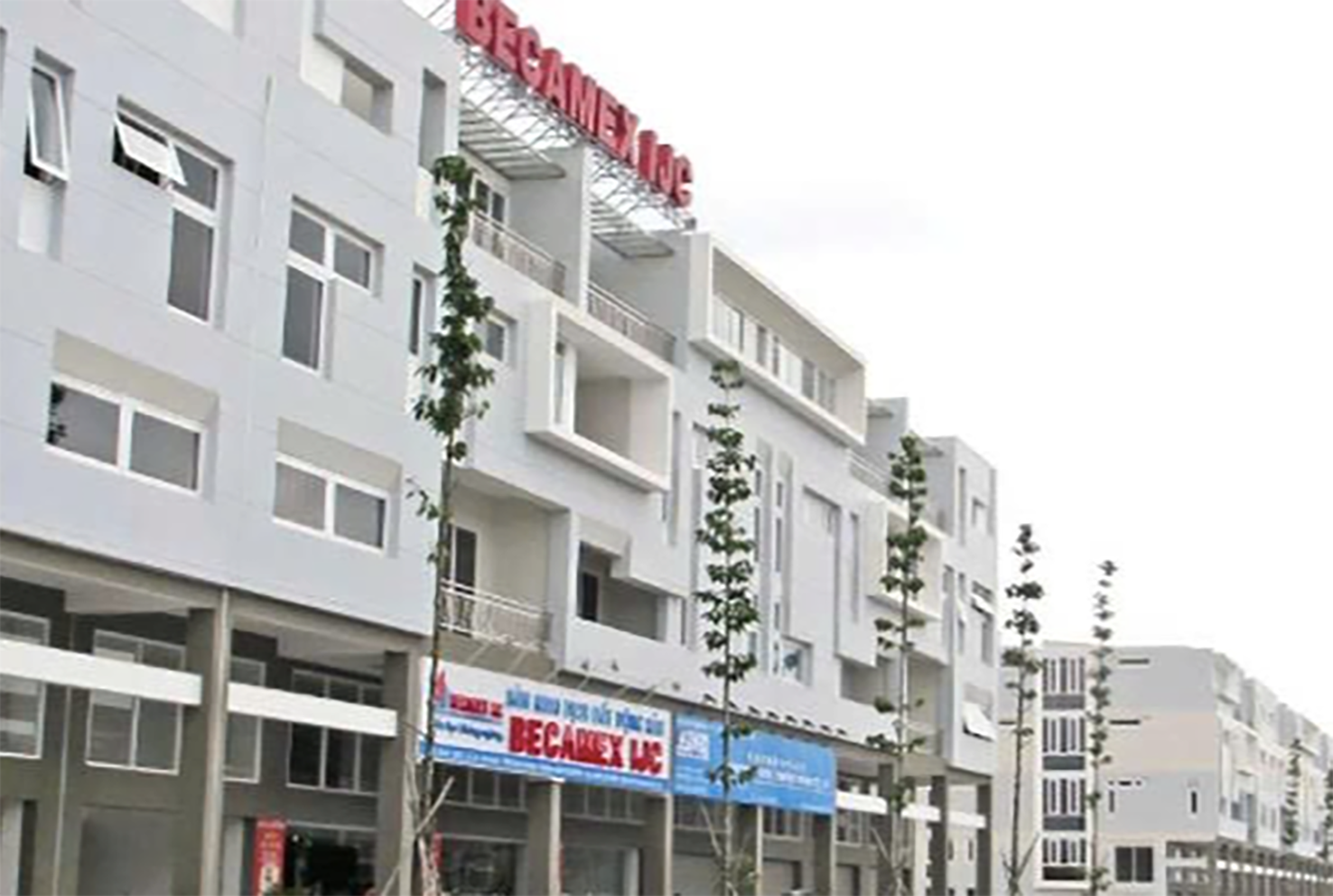
IJC focuses on developing residential real estate (urban areas, residential zones, commercial apartments), with a remaining commercial land bank of approximately 57 hectares. A notable advantage is that most of its land has completed legal procedures, as it was transferred from Becamex. The company’s projects are primarily located around industrial parks and urban areas near Ho Chi Minh City.
Recently, IJC’s Board of Directors approved investment plans for three projects for the 2025–2028 period: Sun Flower II, Prince Town II, and IJC Aroma. Among them, the IJC Aroma project will be implemented in two phases, with total investment of VND 772.8 billion for phase 1 and over VND 807 billion for phase 2, with completion expected by 2027. Funding will come from equity, bank loans, and other legal sources.
To date, IJC has launched 100 villa units in the Sun Flower II project, achieving relatively strong absorption thanks to its prime location and the gradual recovery of the real estate market. The successful launch of Sun Flower II is expected to serve as a foundation for subsequent developments such as Prince Town II and IJC Aroma in 2026–2027.
However, the expansion of these projects will face increasing competitive pressure from other developments, particularly the upcoming Green City project (20 hectares) by BCM, expected to be launched in 2026.
Despite these short-term challenges, IJC still shows several long-term positives.
Long-term outlook
In 2026, the Government aims to maintain macroeconomic stability, control inflation, and ensure major economic balances, laying the groundwork for stronger growth in the coming years. Nevertheless, the real estate market continues to face significant challenges. Credit for real estate remains tightly controlled, while lending interest rates in early 2026 have risen notably, making it more difficult to finance new projects. This poses financial risks for IJC, which needs capital to implement its developments.
At the same time, IJC’s commercial real estate segment continues to face weak liquidity due to the slow market recovery, affecting the company’s revenue. Moreover, its development remains closely tied to local real estate conditions.
Against this backdrop, IJC targets consolidated revenue of VND 2,454 billion in 2026, up 36% compared to 2025. However, after-tax profit is expected to reach only VND 541 billion, down 9%, mainly due to a projected 65% increase in total costs to over VND 1,800 billion.
Despite these short-term challenges, IJC still shows several long-term positives.
First, the Binh Duong area (adjacent to Ho Chi Minh City) has attracted significant foreign investment, with developers such as CapitaLand, Gamuda Land, Tokyu, and VSIP entering the market. Their presence has positively impacted the local real estate sector by attracting a large number of professionals, improving infrastructure and amenities, and establishing higher price benchmarks. IJC’s recent products have also been moving toward higher-end segments (e.g., gated communities, premium finishes), which is expected to attract more buyers and improve profit margins.
Second, IJC’s toll collection operations on National Highway 13 have been performing well. In the coming period, the company will continue to invest in new infrastructure projects, including the Ho Chi Minh City – Thu Dau Mot – Chon Thanh expressway and Ring Road 4. These projects are expected not only to unlock the value of IJC’s land bank but also to provide stable long-term revenue streams.
Author: PHUONG HA - TRUONG DANG
RELATED TOPICS
RECOMMENDED TOPICS