VN
VN
 EN
EN
26/07/2026, 02:00
Investment
Profits plunge, DGC faces pressure for comprehensive restructuring
After years of growth thanks to the advantage of low-cost raw materials, Duc Giang Chemicals Group JSC (HoSE: DGC) is entering its most difficult period as profits plunge, its shares are placed under trading restriction, and its business model is forced to undergo restructuring.
Recently, the Ho Chi Minh City Stock Exchange (HOSE) announced that shares of Duc Giang Chemicals Group JSC (HOSE: DGC) will be subject to trading restriction because the company submitted its audited 2025 financial statements more than 45 days later than the prescribed deadline.
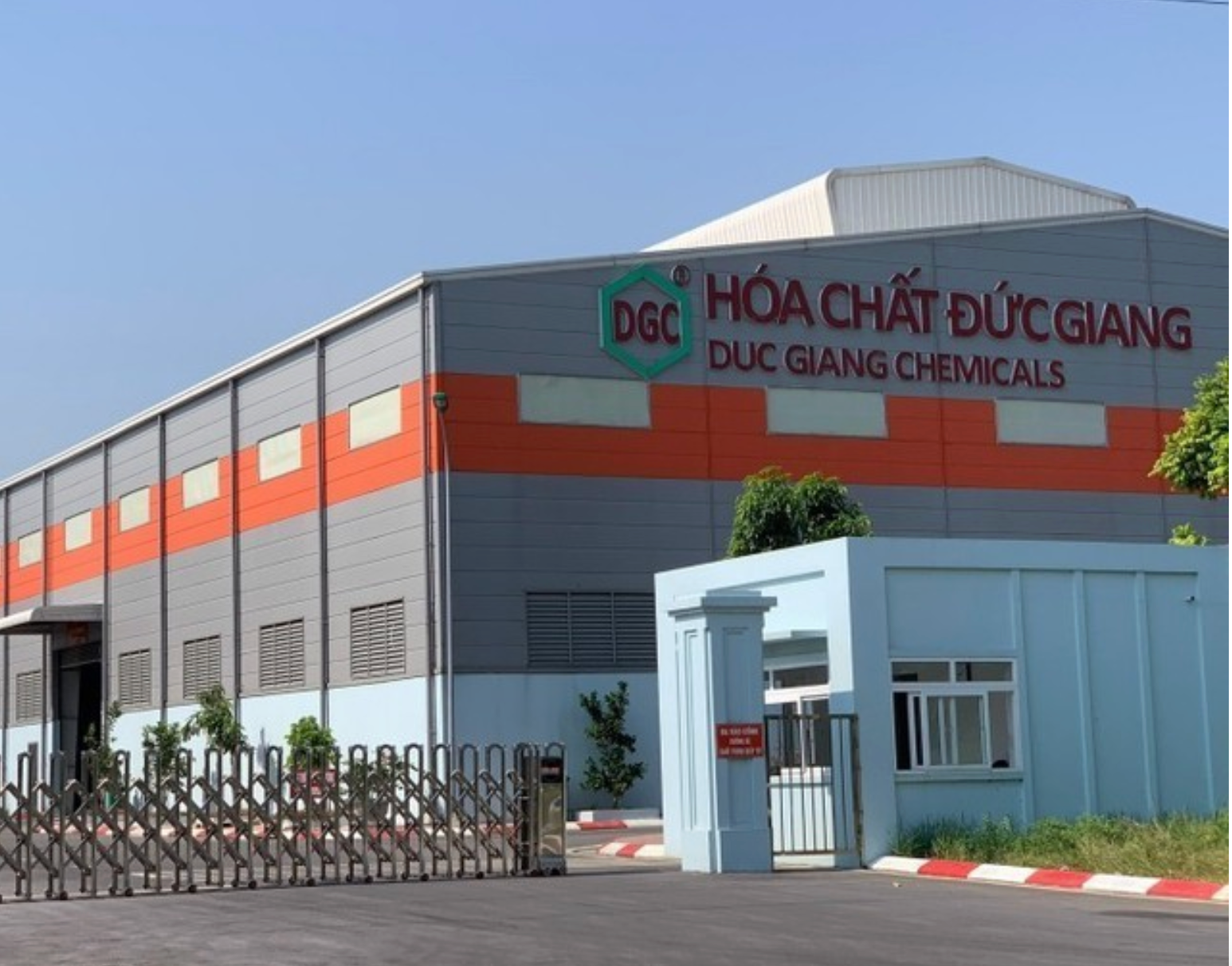
HOSE announced that shares of Duc Giang Chemicals Group Joint Stock Company (HOSE: DGC) will only be traded in the afternoon session from 26 May.
Profits fall sharply
Accordingly, DGC will only be traded in the afternoon session from 26 May. On the stock market, during the trading session on 20 May, DGC’s share price declined slightly, dragging down the group’s market capitalization.
For many years, DGC maintained a strong competitive position thanks to its ability to exploit and use domestic apatite ore at low cost, creating a foundation for profit margins that outperformed the chemical industry. However, the suspension of operations at key mining sites has disrupted the raw material supply chain, forcing the company to rely on imported sources. This is considered a fundamental change to the group’s business model.
An analysis report by MBS shows that DGC’s financial picture in the first quarter of 2026 clearly reflected the negative impacts of the suspension of mining activities at Mining Sites 25 and 19B. DGC’s net revenue reached VND2,125.5 billion, down 24.4% compared with the same period last year. However, the decline in profit was much more severe, with gross profit falling by 50.1% to VND488.7 billion.
The gross profit margin accordingly narrowed sharply from 34.9% to 23%, equivalent to a decline of nearly 12 percentage points. Net profit stood at only VND408.8 billion, down 49.5% compared with the first quarter of 2025.
The main reason came from the sharp decline in yellow phosphorus (P4) and phosphoric acid products, which are the two segments with the highest profit margins in DGC’s chemical ecosystem. The temporary suspension of mining sites serving as input materials for the phosphorus production chain caused revenue from phosphorus-based products to almost disappear during the quarter.
Meanwhile, downstream segments such as detergent powder and cleaning products still maintained growth of around 5.62%, but their scale and profit efficiency were not large enough to offset the decline from core product groups. This shows that DGC’s current difficulties are no longer a short-term cyclical factor but have become a systemic risk directly affecting the company’s cost structure and profitability.
Multi-dimensional pressure
According to Mr Nguyễn Tiến Dũng, Head of Research at MBS, one of the biggest changes for DGC at present is the shift in its operating model from “self-sufficiency in raw materials” to “dependence on foreign supply.” This is the factor that has strongly eroded gross profit margins in recent times.

The combination of high imported raw material prices and sharply rising logistics costs is directly reducing the company’s operational efficiency in the short term.
In the context of no clear roadmap for the restoration of mining operations, the company is forced to accept a new cost base that is significantly higher than before. This creates long-term pressure on operational efficiency, especially in basic chemical segments that depend heavily on input materials.
At present, DGC has to import all Apatite ore from Pakistan and Egypt to maintain fertilizer production and part of its phosphorus chemical chain. This directly exposes the company to fluctuations in global commodity prices.
Besides Apatite ore, many other input materials such as sulfur are also on an upward price trend. As a result, production costs are rising faster than the company’s ability to pass costs on to customers, continuing to put pressure on profit margins in the coming quarters.
Notably, the import of raw materials from South Asia and North Africa makes DGC more sensitive to geopolitical volatility in the Middle East and the Red Sea, a key shipping route for global trade.
Geopolitical tensions in this region create not only the risk of supply disruptions but also a significant increase in ocean freight costs. In fact, the ratio of selling, general and administrative expenses to revenue rose to 6.9%, compared with 5.4% in the same period last year.
Efforts to stabilize market confidence
Amid pressure from investigations and internal volatility, DGC has consolidated its governance structure at the extraordinary General Meeting of Shareholders in 2026 in order to strengthen stability and maintain its long-term strategic direction.
Three new members of the Board of Directors, Mr Đào Hữu Kha, Mr Nguyễn Quốc Trung and Mr Phạm Duy Tùng, were elected with the backing of a shareholder group holding 45.41% of charter capital, including 21% of shares authorized by former Chairman Đào Hữu Huyền.
This development shows that strategic control at DGC remains stable around the founding shareholder group. At the same time, it also signals that the company will continue to pursue the development of a deeper chemical value chain and optimize added value rather than expand in a scattered manner.
In parallel with consolidating senior personnel, DGC is also focusing on resolving legal issues related to its shares being placed under supervision. The company has selected new auditing firms, including A&C or UHY, to complete the audited financial statements for 2025 and 2026.
The issuance of audited reports is considered a key condition for the shares to be removed from supervision, thereby helping stabilize investor sentiment and improve liquidity on the HSX. However, the specific timeline still depends significantly on the working process with the authorities.
Although facing many short-term challenges, DGC’s leadership still identifies 2026 as a transitional period to prepare for a stronger recovery cycle from 2027. The focus of the recovery strategy is the Nghi Sơn Chemical Complex project, which is expected to become a new growth driver for the group in the medium and long term.
Due to the impact of the investigation process and difficulties related to implementation procedures, the project timeline has been delayed from the second quarter of 2026 to late in the third quarter or early in the fourth quarter of 2026. However, DGC said it will apply a “partial operation” strategy in order to record revenue from as early as late 2026 instead of waiting for the entire project to be completed synchronously.
MBS experts expect that if the trial operation process goes smoothly, Nghi Sơn could become an important factor helping DGC restore profit growth in 2027, especially in the context of industrial chemical and fertilizer demand being expected to recover in line with the global economic cycle.
However, in the current period, DGC’s outlook will depend largely on three key factors. The first is the publication of the audited 2025 financial statements to remove the shares from supervision, a factor that directly affects market confidence.
The second is the final conclusion of the investigative authorities regarding Mining Sites 25 and 19B. This will serve as the basis for determining whether DGC can return to a self-sufficient raw material model or continue to depend on imports in the long term.
The third is the installation progress and partial trial operation of the Nghi Sơn project in the late third quarter of 2026. This is considered an important “test” of the company’s ability to restore growth in the new cycle.
“At present, DGC still possesses a large industrial asset base and a significant position in Viet Nam’s phosphorus chemical chain. However, the company’s biggest problem is no longer scale expansion but its ability to restructure the raw material supply chain and restore profit margins in an operating environment that has changed significantly compared with the past,” said Mr Nguyễn Tiến Dũng of MBS.
Author: DIEM NGOC - TRUONG DANG
RELATED TOPICS
RECOMMENDED TOPICS