VN
VN
 EN
EN
26/07/2026, 02:38
Business economics
Are banks returning to their reliance on traditional loans?
While the banking sector aims to reduce its reliance on net interest income, this driver actually continues to grow and remains the primary contributor to total revenue, whereas non-interest income has experienced a decline.
In Q1/2026, the total operating income growth of listed banks on the stock exchange reached 15.3% year-on-year (YoY), nearly flat compared to the 15.5% recorded in Q4/2025. This indicates that the industry's revenue growth momentum is showing signs of slowing down. The highlight of the quarter was that net interest income led the growth momentum.
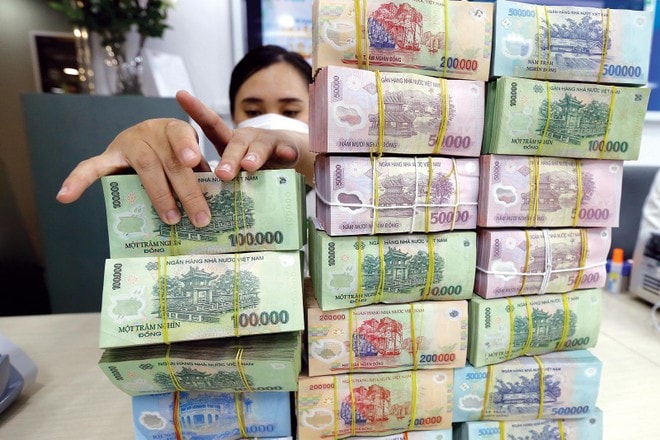
Statistics from ABS show that the structure of total revenue growth reflects a shift back toward a heavier reliance on traditional credit drivers.
Traditional Credit Drivers
Specifically, the state-owned banking group recorded positive total operating income, with VCB and CTG both increasing by approximately 22.7% YoY, while BID rose by 15.6%. The private commercial banking group continued to show greater divergence. A few small-cap commercial banks such as ABB, NVB, BVB, and VIB maintained strong growth, while many others remained under pressure due to weakening non-interest income and high capital costs, including STB, SSB, and SGB.
Statistics from ABS show that the structure of total revenue growth reflects a shift back toward a heavier reliance on traditional credit drivers.
In particular, the main growth engine came from net interest income, which saw a notable increase of 16.6% YoY in Q1/2026. Conversely, non-interest income growth narrowed significantly, rising by only 10.6% YoY. The growth in net interest income was primarily driven by state-owned banks and a few private banks.
Among them, the state-owned group saw VCB leading net interest income growth at 29.0% YoY. It was followed by CTG and BID with growth rates of 25.3% and 12.8%, respectively. At the same time, some large private banks like MBB and VPB also achieved outstanding growth rates of 27.5% and 27.0% YoY. Small and medium-sized private banks experienced relatively divergent net interest income growth; notably, MSB increased by 27.7% and LPB by 18.2% YoY. In contrast, some banks recorded flat or declining net interest income, such as NAB decreasing by 1.9% and SSB by 1.5% YoY.
According to Ms. Nguyen Thi Ky Duyen, an analyst at An Binh Securities (ABS), credit growth also played an important role in supporting net interest income in Q1/2026. The net interest income of most banks continued to grow positively, mainly thanks to the expansion of credit scale.
However, it is worth noting that this reflects a much larger outstanding debt base for banks. Banks generally did not just maintain positive credit growth in the first quarter; in reality, the total average outstanding debt scale over the past 12 months has expanded significantly, thereby creating a substantial impact on net interest income growth.
For example, by the end of May 2026, although system-wide credit only increased by 5.71% compared to the beginning of the year, the total outstanding debt scale reached approximately 19.6 million billion VND, equivalent to an increase of nearly 19% YoY. It is this swelling base of earning assets that played a major role in helping the industry's net interest income achieve a prominent growth rate of 16.6% YoY in Q1/2026.
In addition, the ability to optimize the cost of funds (COF)—especially in a context where mobilization growth is more difficult—means that banks with capital and CASA advantages, and the ability to control input costs well, can still record strong net interest income growth even if their lending volume is not very high.
Relative Divergence in Non-Interest Income
Regarding non-interest income, banks' business results were also quite polarized. VIB recorded an increase of 110.8% YoY due to a sharp rise in card service fees. OCB increased by 209.4% and SHB by 289.1%, primarily driven by capital trading activities, recovery of written-off debts, or irregular income items.
Meanwhile, significant declines were recorded at SSB (down 85.2%), EIB (down 67.3%), TPB (down 40.1%), and MBB (down 30.7%), reflecting weakness in the insurance segments, investment securities trading, or debt recovery.
Ms. Nguyen Thi Ky Duyen assessed that the slowdown in industry-wide non-interest income growth was mainly buffered by a strong recovery in net service income and other activities.
Net service income continued to be the largest contributor, accounting for about 13.7% of the industry's total operating income. This segment surged by 43.1% YoY, becoming the primary growth driver for non-interest income. Card payment services grew by 78% YoY, contributing 42% to total service operating income thanks to an increase in electronic transactions and card spending. Insurance revenue also rose by 21% due to improved bancassurance activities, while other service groups increased by 30%.
Notably, income from other activities grew by 39.6% YoY and contributed about 8.0% of total operating income. This growth mostly came from the recovery of bad debts that had been processed with risk provisions, reversals of provisions, and irregular income. Nonetheless, the growth rate of income from these non-recurring activities has decreased significantly compared to the previous quarter and the same period last year.
In this quarter, banks recorded a continuous 13.1% YoY decline in gains from foreign exchange trading, despite high exchange rate volatility. This was due to the high base effect from the previous year, one-way exchange rate movements, and regulatory measures implemented by the State Bank of Vietnam. Income from investment securities activities dropped sharply, as gains from buying and selling investment securities and trading securities plummeted by 92.1% and 91.2% YoY, respectively. This indicates that banks no longer record much windfall profit from realizing bond and securities portfolios as they did in previous periods, which aligns quite closely with developments on the stock market during Q1/2026.
Author: LE MY - TRUONG DANG
RELATED TOPICS
RECOMMENDED TOPICS