VN
VN
 EN
EN
09/07/2026, 11:15
Investment
Which bank holds the advantage for outstanding credit growth in 2H 2026?
With expectations that credit room may be loosened to expand growth in the second half of this year, banks possessing superior credit room advantages are promised to become the focal point of investment cash flows.
According to updated data from the Analysis and Investment Advisory Center of SSI Securities Joint Stock Company (SSI Research), credit growth reached 5.71% by the end of May 2026.
Based on the 15% credit growth scenario set by the State Bank of Vietnam (SBV) for the banking system in 2026, analysts believe that from the second half of the second quarter, and particularly in the second half of 2026, credit conditions are likely to ease, allowing banks to accelerate the expansion of their outstanding loan balances.
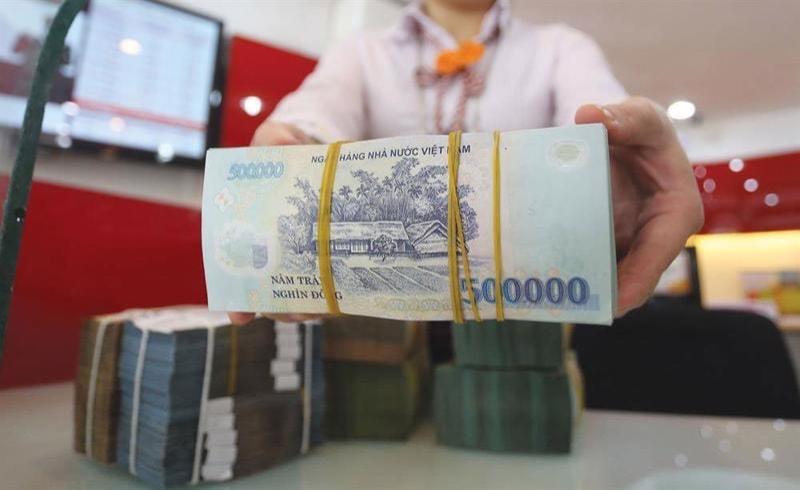
Banks with superior credit room advantages are forecast to accelerate in the second half of the year (Illustration photo: HDB)
Previously, in the first quarter of 2026, the State Bank of Vietnam required tight control mechanisms, ordering credit institutions not to utilize more than 25% of their assigned credit growth limit for the entire year. This policy aimed to curb overheating loan risks, ensure system safety, and control inflation.
Some recent policy signals indicate to experts that the regulatory body is actively supporting a trend toward easing and expanding credit growth rather than the tight control seen in Q1, in order to sustain the goal of supporting economic growth. For instance, on May 15, 2026, the SBV issued Circular 08/2026, amending safety ratio regulations in Circular 22/2019/TT-NHNN. Specifically, the amended regulation is highly beneficial to the "Big 4" group (Vietcombank, BIDV, VietinBank, Agribank) by loosening the calculation of the loan-to-deposit (LDR) ratio.
Most recently, the SBV continued to publish a Draft to amend Circular 22/2019, regulating limits and safety ratios in the operations of banks and foreign bank branches. In this draft, the SBV proposes increasing the maximum ratio of short-term capital used for medium- and long-term loans from the current 30% to 40%. The enacted and planned policies are viewed as providing significant liquidity support and freeing up substantial room for the banking system to expand lending.
Accordingly, banks with superior credit room advantages are expected to break ahead in the second half of the year. Shinhan Securities Vietnam pointed out that three banks receiving mandatory transfers of weak banks—MB Bank (MBB), HDBank (HDB), and VPBank (VPB)—will hold notable advantages and investment appeal.
MB Bank (MBB)
Specifically, for MBBank, Q1 2026 business results recorded total operating income of VND 17.4 trillion, up 14% year-on-year (YoY). Net interest income increased by 28% YoY, and fee income rose by 38% YoY, driven by payment services, treasury, and securities brokerage. The CAR ratio at the end of Q1 2026 stood at 10.9%.

For MBBank, Q1 2026 business results recorded total operating income of VND 17.4 trillion, up 14% year-on-year (YoY).
Credit growth reached 3.3%, primarily driven by medium- and long-term loans. NIM decreased slightly to 4.0% by the end of Q1 2026. MBB's funding in Q1 2026 mainly came from valuable papers, while Market 1 mobilization saw negative growth.
According to Shinhan Securities Vietnam, MBB will need to push Market 1 mobilization to achieve credit growth of around 30%. (Note: Above 35% is the credit growth target set by MBB for 2026, following strong credit growth in 2025).
Analysts also noted that the bank's cost of funds (COF) will face upward pressure, making it difficult for NIM to recover during the remainder of 2026. The non-performing loan (NPL) ratio remained stable at a low level of 1.4%; MBB's NPL ratio has decreased sharply since the end of Q3 2025. The bad debt coverage ratio stood at 92% at the end of Q1 2026.
Profit before tax reached VND 9,628 billion (15% YoY), fulfilling over 24% of the full-year profit plan. MBB's ROE stood at 21%, which is a high level among listed banks.
Overall, MBB possesses a highly comprehensive ecosystem with subsidiaries in insurance, securities, and consumer credit, and a top-tier CASA ratio in the industry. This helps its funding costs remain less volatile recently, maintaining its NIM among the highest in the sector.
With a higher credit room advantage compared to the industry average, MBB will have an edge in attracting new customers and projects in 2026. Asset growth will be the main driver for MBB this year.
Shinhan Vietnam observed that MBB plans to issue right offerings to existing shareholders at a 10% ratio and carry out a private placement of 200 million shares.
Asset quality ranks among the top in the industry and ROE is high, yet the 2026 forward P/B valuation is only at 1.17x.
With a forecasted credit growth for MBB at 30% in 2026—more conservative than management's 35% target due to signs of liquidity strain over recent quarters—experts project NIM to narrow slightly to 3.9% in 2026 as interest rates tend to edge up and MBB actively maintains low lending rates to prioritize scale growth. Leveraging certain growth advantages from participating in the restructuring of MBV bank, it is assumed that MBB will have room to increase its bad debt coverage ratio to 111% in 2026, while the CIR is maintained below 29% thanks to continued operational efficiency improvements. Consequently, 2026 profit before tax is projected at VND 39,995 billion, up 16.7% YoY.
According to Shinhan Securities, risks to watch out for include slower-than-expected credit growth, rising bad debt from large customers, and slower-than-expected funding mobilization.
Using the Residual Income (RI) method and P/B comparative valuation, the target price for MBB in 2026 is set at VND 34,100 per share. MBB's market price during the morning trading session on June 19 stands at VND 25,200/share, representing an upside potential of about 35% from the current price.
HDBank (HDB)
For HDBank, this bank pursues a versatile retail banking strategy targeting small and medium enterprises (SMEs) and individual customers in tier-two urban and rural areas by developing specialized financial products tailored to their needs. Concurrently, HDB is strengthening its digital banking platform to enhance customer accessibility. This targeted strategy is clearly demonstrated by its impressive track record, with asset and profit growth exceeding 25% annually over the 2019–2025 period.
In Q1 2026, HDB recorded credit growth of 8%, driven by corporate clients and the consumer finance segment, while the retail segment grew by just 4.8%. Total funding at HDB grew 11.9% YTD, thanks to attracting deposits from retail customers and issuing valuable papers. As a result, HDB’s LDR under Circular 22 dropped to 67.7%, a highly safe level compared to the industry average LDR of around 75–80%.
The bank's NIM at the end of Q1 2026 decreased to 4.6% from 4.8% at the end of Q4 2025. Consequently, net interest income grew by 15.1% YoY.
HDB’s NPL ratio stood at 2.6% at the end of Q1 2026, remaining stable around this mark over recent quarters. Operating expenses and provision expenses in Q1 2026 generally saw little volatility, increasing by 2.5% and decreasing by 5% YoY, respectively.
Profit before tax reached VND 6,107 billion (14% YoY), achieving 20% of the annual profit plan. HDB targets a 2026 profit of VND 30,100 billion (41% YoY) and a credit growth target of 37%.
Shinhan Securities' investment thesis for HDB is based on the following points: HDS and HD Saison are preparing for listing in 2026. HDB plans to increase its ownership stake in HDS to 90%, a transaction that was completed as of June 2026.
HDB is also in the process of selling capital to strategic investors in 2026. If successful, this transaction will further thicken its capital buffer and lay the groundwork for growth in subsequent years.
HDB was one of the banks that mobilized customer deposits quite well in Q1 2026, with an LDR ratio lower than the industry average.
Moody's upgraded its outlook to "Positive" based on expectations that HDBank will continue to strengthen its financial capacity through an equity capital increase roadmap, alongside maintaining robust profitability.
"We project more conservatively than the bank's plan, with loan and deposit growth at 30% for 2026. Given the context of deposit rates and valuable papers returning to high levels, we forecast HDB's NIM to drop slightly to 4.4%. The NPL ratio is expected to decrease to 2.2%. Credit costs are projected to decrease to 1.7%, with CIR around 25%. Accordingly, 2026 profit before tax is estimated at VND 27,654 billion, representing a growth rate of 30%," the analysts stated.
Despite noting risks including sustained high inflation, rising interest rates placing pressure on the bank's asset quality, and potentially insufficient funding to finance loan growth, experts believe that with its high credit ceiling advantage, HDB is expected to post favorable growth in 2026. Backed by multiple subsidiary listing deals and strategic capital sales, HDB is considered a highly potential stock for investment.
Analysts have set a 2026 target valuation for HDB at VND 34,000. The current price as of June 19 is VND 25,150/share, representing an upside potential of approximately 35.6%.
VPBank (VPB)
For VPBank, according to Shinhan Securities, impressive funding mobilization in the first half of the year lays the groundwork for growth in the second half of 2026.
In the market, VPBank follows a modern retail strategy. VPB has expanded rapidly thanks to its ability to scale its branch network and transaction points nationwide, combined with developing a diverse range of products.
Holding a leading position in consumer finance, FE Credit is expected to see a clearer recovery in the 2026-2028 period. Two other subsidiaries, VPBankS (Securities) and OPES (Insurance), are also gradually contributing more to the bank's operations.
In Q1 2026, VPB's consolidated loan growth reached 10.2%, and the bank outperformed in Market 1 funding mobilization with a growth rate of 11.8% YTD. Lending growth was led by corporate clients and SMEs, while individual clients grew at a lower rate of 8.4% and 7% compared to the beginning of the year, driven by home loans and unsecured loan products. Backed by solid funding growth, VPB maintained its LDR ratio at 82.7% and short-term funds for medium- and long-term loans at 28.3%, aligning with SBV regulations.
Net interest income increased by 26.7% in Q1 2026, though NIM faced downward pressure, sliding to 5.4%. Fee income grew by 80.8% off a low base. Total operating income reached VND 19,908 billion (27.9% YoY).
VPB's NPL at the end of Q1 2026 stood at 3.58%, up slightly from the end of 2025. Credit costs stood at 2.98%. Operating expenses were well-controlled, increasing by just over 11% in Q1 2026.
At the end of Q1 2026, VPB's profit before tax reached VND 7,921 billion (57.9% YoY), completing 19% of its profit plan. VPBankS recorded a profit of VND 515 billion, OPES insurance achieved VND 261 billion, and FE Credit brought in VND 77.5 billion.
VPB was highly proactive in funding mobilization during the first half of 2026 and is currently one of the banks seeing positive funding and credit growth. The bank also plans to raise foreign capital in 2026. Although pushing mobilization may increase COF, it gives VPB an excellent advantage in loan disbursements for the remainder of 2026, especially as VPB plans to grow its assets by over 30%.
It features a comprehensive ecosystem with favorable business outcomes across subsidiaries. VPBank expects to issue 624 million shares via a private placement to foreign investors to improve its capital buffer.
"Our core assumptions for VPB's 2026 business results include consolidated loan growth reaching 30% and deposit mobilization growing at a corresponding 30%. NIM is projected to drop slightly to 5.4% from 5.5%. CIR will hover around 24%. Credit costs over average outstanding credit will reach 2.7%. Consolidated bad debt will be controlled around 3.5%. VPB's 2026 profit before tax is thus projected to hit VND 38,790 billion (27% YoY), which is more conservative than VPB's own target plan.
Risks include high interest rates that could impact the asset quality of VPB's retail customer segment, and rising cost of capital continuing to erode VPB's NIM," the analyst explained.
Based on the residual income method and P/B comparison method, the estimated 12-month target price for VPB stands at VND 38,000 per share. With a market price of VND 26,200/share on June 19, this translates to a potential upside of approximately 45%.
Author: LE MY - TRUONG DANG
RELATED TOPICS
RECOMMENDED TOPICS