VN
VN
 EN
EN
25/07/2026, 02:38
Investment
Many meetings of central banks: No action expected
This week sees monetary policy meetings at all the major central banks: the Fed, ECB, BoJ and BoE. None are expected to move rates now. How these meetings impact the US dollar.
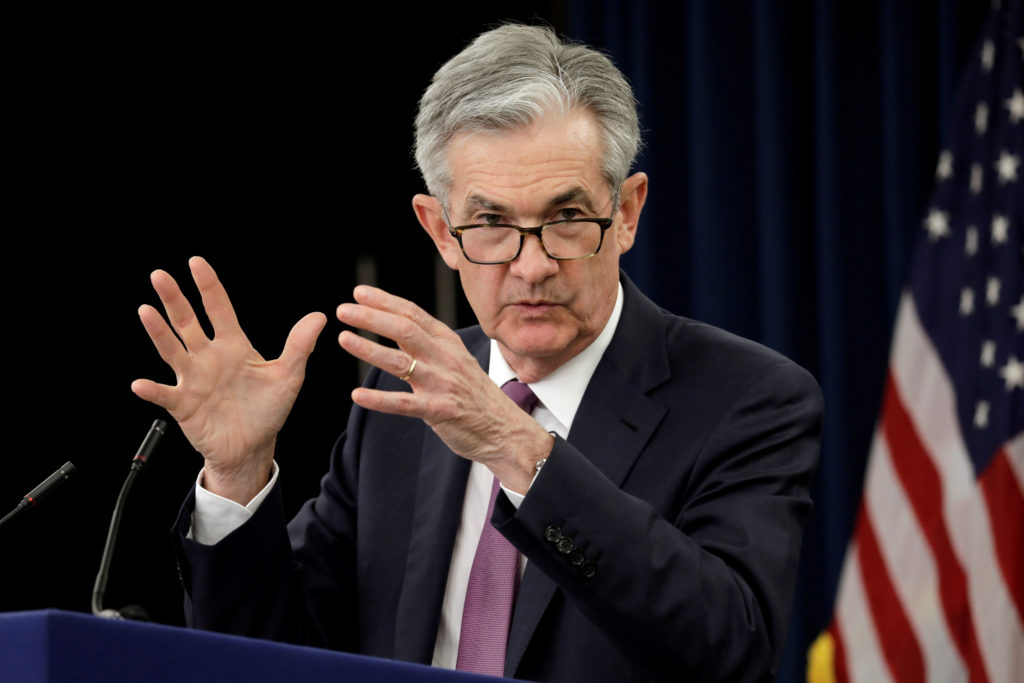
The Fed is expected to keep interest rates unchanged this week.
We see a number of reasons why these prospects for policy rate divergence won't weigh on the US dollar. The first and foremost is that the key issue weighing on markets' minds right now is the conflict in Iran and its impact on oil prices, not central bank policy.
Moreover, the Middle East conflict has clearly positive ramifications for the US dollar relative to the likes of the euro, pound, and yen. This is because US energy self-sufficiency means that America enjoys an improvement in its terms of trade compared to deterioration in the terms of trade for the euro zone, the UK, and Japan, which are far from self-sufficient. Japan is particularly vulnerable as it gets the vast bulk of its oil from Gulf countries, and virtually all of it comes through the effectively closed Straits of Hormuz.
Normally, we'd expect relative improvement in a country's terms of trade to lift the currency. Of course, that does not always happen. The currency market is a law unto itself, but in this case we would expect some support for the US dollar, as indeed we saw in the immediate aftermath of the Middle East conflict at the end of February. Not just this, we can see that other countries rich in energy resources and hence experiencing positive terms of trade effects have seen their currencies rise relative to those that suffer high dependency on imported oil.
The second factor is the fact that, if the ECB, BoE, and BoJ were to hike rates, it would be because they fear higher imported inflation from the conflict in Iran, not because their economies are strong.
In short, Steven Barrow, Head Strategist of the Standard Bank, thinks it matters why policy rates are rising, not just the fact that they might increase. Rate hikes might nip inflation problems in the bud before any second-round effects can start, but the cost of this is likely to be weaker economic activity, and that's not usually good for a currency, especially if that country is up against the fast-growing US economy.
This being said, a quick rate hike, or two, in the coming months from these central banks might prove prescient if inflation does, indeed, become a problem. In this case rate hikes might hold these currencies in good stead against the US dollar should the Fed hold firm or even cut rates, leaving it behind the curve. But that's going to take some time to work out. The chances are that rate hikes in Europe and Japan in the next couple of months will still look like something of a gamble, and we doubt that the market will give these central banks the benefit of the doubt when it comes to their currencies.
In the fullness of time, it might become clearer that the Fed has fallen behind the curve by leaving rates unchanged or cutting, and that could weaken the US dollar. But that's probably for much later this year or 2027; not now. Bearing in mind these considerations, where does it leave the outlook for the US dollar against these currencies and others?
In the near-term, the key is achieving a breakthrough in opening the Straits of Hormuz and getting the oil flowing. When, and if, that happens, Steven Barrow expects a short bout of US dollar weakness as ‘risk-on' sentiment pervades the market. But that still won't stop the economic damage from the conflict, and with this falling most heavily on Europe and Japan, he expects the US dollar to recapture any post-peace weakness.
“The euro, for instance, could head back to a 1.10-1.15 range over the summer, with dollar/yen making a break for 165. However, there's also a much longer-term structural issue that seems likely to be a headwind for the US dollar. This relates to the continued chipping away of US and US dollar hegemony, and we still expect that this will help push the euro to 1.25-1.30 and dollar/yen to 140-145 over the next couple of years," said Steven Barrow.
Author: NGOC ANH
RECOMMENDED TOPICS